An updated, data-driven overview of average salaries, regional differences, and key factors that shape income in Germany — including tips for negotiating your own pay.
1. Average salaries in Germany
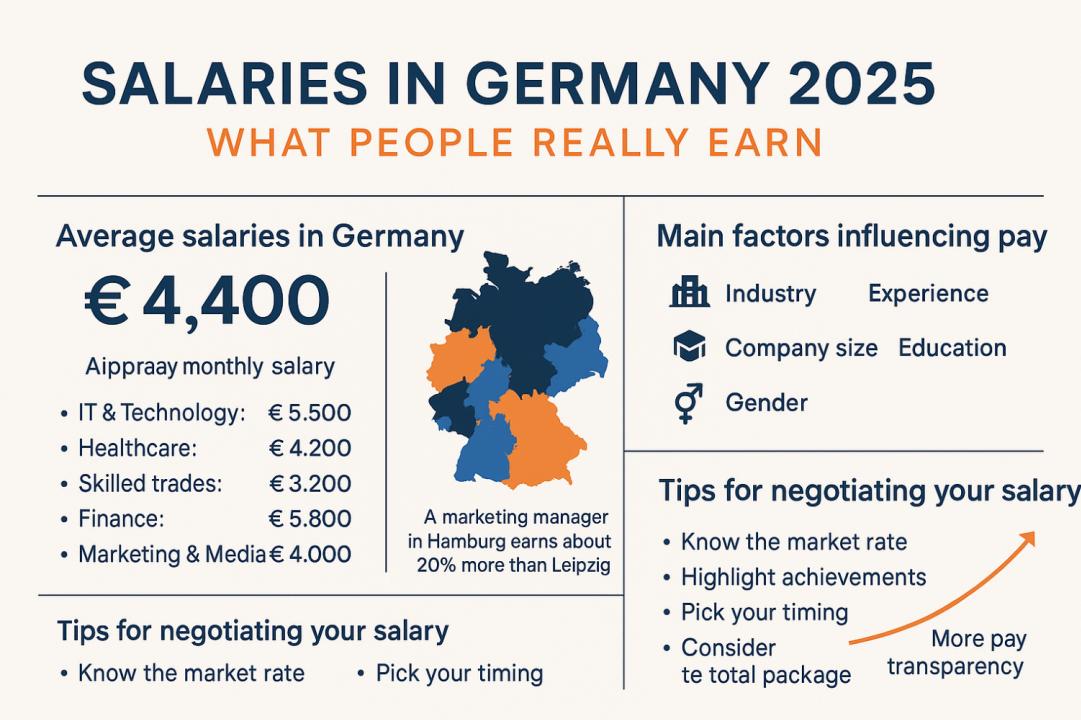
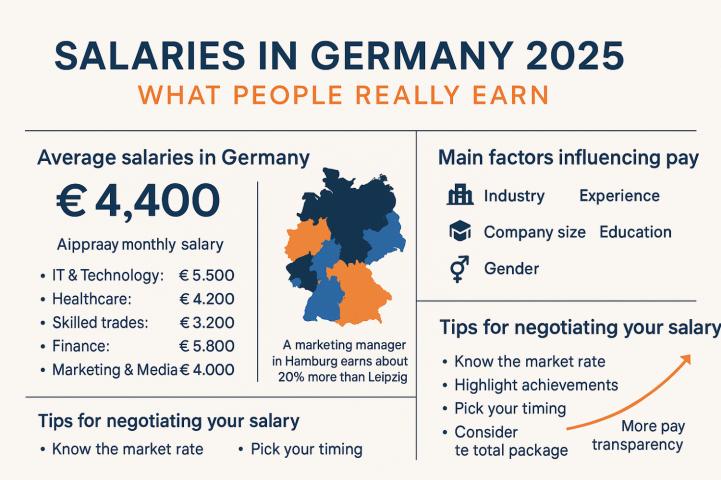
In 2025, the average gross monthly salary in Germany is around €4,400. However, this number varies widely depending on industry, experience, and region.
- IT & Technology: approx. €5,500
- Healthcare: approx. €4,200
- Skilled trades: approx. €3,200
- Finance: approx. €5,800
- Marketing & Media: approx. €4,000
These are national averages — in practice, income levels depend heavily on company size, education, and years of experience.
2. Regional salary differences
Salary levels in Germany still show a clear difference between eastern and western states, though the gap is closing. Major cities such as Munich, Frankfurt, and Hamburg offer the highest wages, while rural regions often lag behind.
Example: A marketing manager in Hamburg earns about 20% more than in Leipzig — even with identical experience.
3. The main factors influencing pay
Several elements determine how much people earn in Germany:
- Industry: Tech and finance tend to pay significantly above average.
- Experience: Professional experience remains one of the strongest salary drivers.
- Company size: Larger companies typically pay more but may offer less flexibility.
- Education: University degrees are still correlated with higher pay levels.
- Gender: The gender pay gap remains around 17%, although awareness and transparency are improving.
4. How to benchmark your salary
If you’re planning to work or relocate to Germany, online calculators can help you estimate what to expect. A practical and free tool is the salary calculator at gehalt-lohn.info.
It allows you to enter your profession, experience level, and region to see how your pay compares to the national average. It’s especially useful for expats, freelancers, or anyone negotiating a job offer in Germany.
5. Tips for negotiating your salary in Germany
- Know the market rate: Use reliable salary data — facts carry more weight than guesses.
- Highlight achievements: Show how you’ve added measurable value to past employers.
- Pick your timing: The best time to negotiate is after a successful project or at annual review time.
- Consider the total package: Benefits such as bonuses, vacation, and flexible work are part of your compensation.
- Stay professional and confident: Germans value preparation, honesty, and precision in negotiations.
6. Salary trends beyond 2025
Digital transformation, skilled labor shortages, and the rise of remote work will continue to shape salaries in the coming years. Jobs in software development, engineering, data analytics, and healthcare are expected to see above-average wage growth.
Companies in Germany are also becoming more transparent about pay structures, focusing on fairness and performance-based bonuses rather than rigid pay scales.