
In the ever-evolving digital era, content marketing has become the cornerstone of successful brand communication. However, as consumer expectations rise and digital platforms multiply, marketers face immense pressure to produce personalized, high-quality content at scale. Enter artificial intelligence — a transformative technology reshaping how brands plan, create, distribute, and analyze their marketing efforts. The integration of AI in content marketing is no longer a futuristic concept; it’s a reality that is redefining the rules of engagement and creativity.
The Evolution of Content Marketing
Content marketing has come a long way from simple blog posts and newsletters. Today, it’s about delivering value-driven, data-backed content that captures attention and builds trust. Modern audiences expect relevance, speed, and personalization — something traditional methods struggle to provide.
Artificial intelligence has emerged as the bridge between these growing demands and marketing capabilities. With the ability to process massive amounts of data, understand audience behavior, and even generate creative material, AI in content creation empowers marketers to work smarter, not harder.
Understanding the Role of AI in Content Marketing
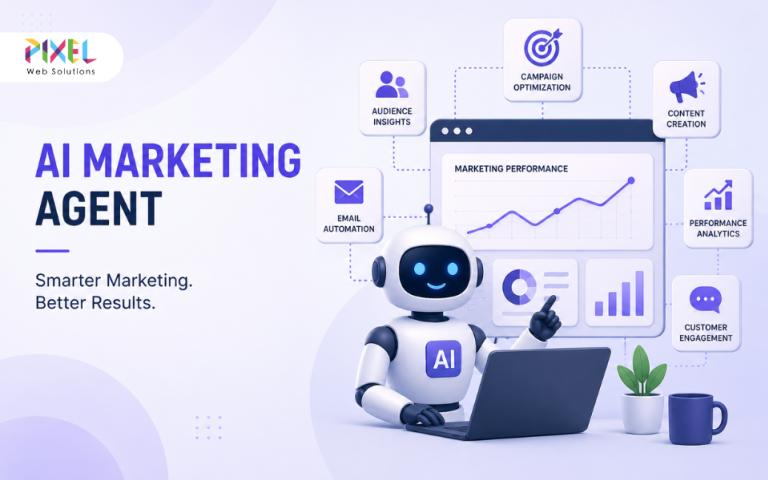
Artificial intelligence functions as a powerful assistant for marketers, enabling them to make informed, data-driven decisions. Through machine learning, natural language processing (NLP), and predictive analytics, AI can identify what content resonates best with specific audiences.
For instance, AI tools can analyze social media marketing, search intent, and user behavior patterns to reveal insights that guide strategy. This means brands no longer have to rely solely on intuition—they can now base decisions on real-time, actionable data.
Moreover, AI in content marketing extends beyond analytics. It helps automate repetitive tasks like keyword research, email segmentation, and A/B testing, freeing up human teams to focus on creativity and storytelling. The result is a more efficient workflow and a higher return on marketing investment.
AI in Content Creation: The New Creative Partner
Perhaps the most fascinating impact of AI lies in content creation itself. What once required hours of brainstorming and writing can now be supported by intelligent algorithms. Tools such as ChatGPT, Jasper, and Writesonic have revolutionized how brands produce written material, from blog posts to ad copy.
But AI’s role in content creation goes far beyond text generation. It can:
Analyze audience preferences to tailor messages for specific demographics.
Recommend topics based on trending searches and industry insights.
Optimize content for SEO, ensuring higher visibility and engagement.
Generate visuals and videos using AI-powered design tools like Canva’s Magic Studio or Runway ML.
With these innovations, marketers can maintain a consistent brand voice across multiple platforms while scaling content production effortlessly. The creative process becomes faster, more strategic, and aligned with measurable goals.
Personalization at Scale
One of the most powerful capabilities of AI in content marketing is personalization. Modern consumers want brands to understand their needs and deliver relevant content that feels tailor-made. Artificial intelligence makes this possible by analyzing user data to predict preferences and behaviors.
For example, AI systems can recommend products, articles, or videos based on a user’s previous interactions. Streaming services like Netflix and Spotify use this technique to great success, delivering personalized recommendations that keep users engaged. In marketing, the same principle applies — AI helps brands craft targeted emails, dynamic web pages, and customized ad campaigns that resonate deeply with each customer.
Personalization not only enhances user experience but also boosts conversion rates, as people are more likely to respond positively to content that speaks directly to their interests.
Predictive Analytics: Marketing That Anticipates Needs
AI’s predictive power is another game-changer for marketers. Instead of reacting to trends, brands can anticipate them. Through data analysis, AI can forecast what topics or keywords will be popular next, which marketing channels are most effective, and even what type of content will yield the highest engagement.
For instance, predictive models can help determine the best time to post on social media or identify the types of videos that perform best among specific audiences. This proactive approach enables marketers to stay ahead of the competition and maintain relevance in an ever-changing digital environment.
By leveraging these insights, businesses can fine-tune their content strategies, allocate budgets more efficiently, and ensure every marketing effort is optimized for success.
Enhancing Customer Engagement with AI
AI doesn’t just improve the back-end processes—it also enhances how brands connect with customers. Chatbots, virtual assistants, and AI-powered recommendation systems allow businesses to engage audiences in real-time, offering personalized responses and solutions instantly.
For instance, AI chatbots can handle customer queries, suggest products, and even guide users through the purchasing process — all while collecting valuable insights about their preferences. This creates a seamless customer experience that feels both personal and efficient.
Similarly, sentiment analysis tools help brands monitor public perception by analyzing social media comments and reviews. This enables marketers to adjust messaging or strategy based on audience feedback, fostering stronger, more authentic connections.
Balancing Automation with Authenticity
While the potential of AI in content creation is immense, it’s essential to strike the right balance between automation and human creativity. AI can generate grammatically flawless and data-optimized content, but it lacks emotional intelligence and cultural sensitivity — two elements that define genuine storytelling.
Marketers must therefore use AI as a tool to enhance creativity, not replace it. The human touch remains vital in crafting messages that evoke emotion, empathy, and connection. By combining AI’s efficiency with human imagination, brands can achieve the perfect blend of precision and personality.
The Future of AI in Content Marketing
As technology continues to evolve, AI in content marketing will only grow more sophisticated. Future tools may be capable of real-time campaign adjustments based on live audience reactions or creating immersive experiences through augmented and virtual reality.
Moreover, advancements in voice and visual recognition will transform how consumers interact with content, opening new opportunities for marketers to experiment with interactive storytelling. AI will become not just a support tool, but a creative collaborator that helps marketers innovate continuously.
Conclusion
Artificial intelligence is revolutionizing content marketing by blending data-driven precision with creative potential. From personalized campaigns and predictive analytics to intelligent content creation, AI enables brands to work smarter, faster, and more effectively.
By embracing AI in content creation, marketers can transform their strategies from reactive to proactive—crafting engaging, relevant, and personalized experiences that resonate with audiences across every platform. The future of marketing lies not in replacing human creativity, but in empowering it through intelligent technology that helps tell stories smarter than ever before.