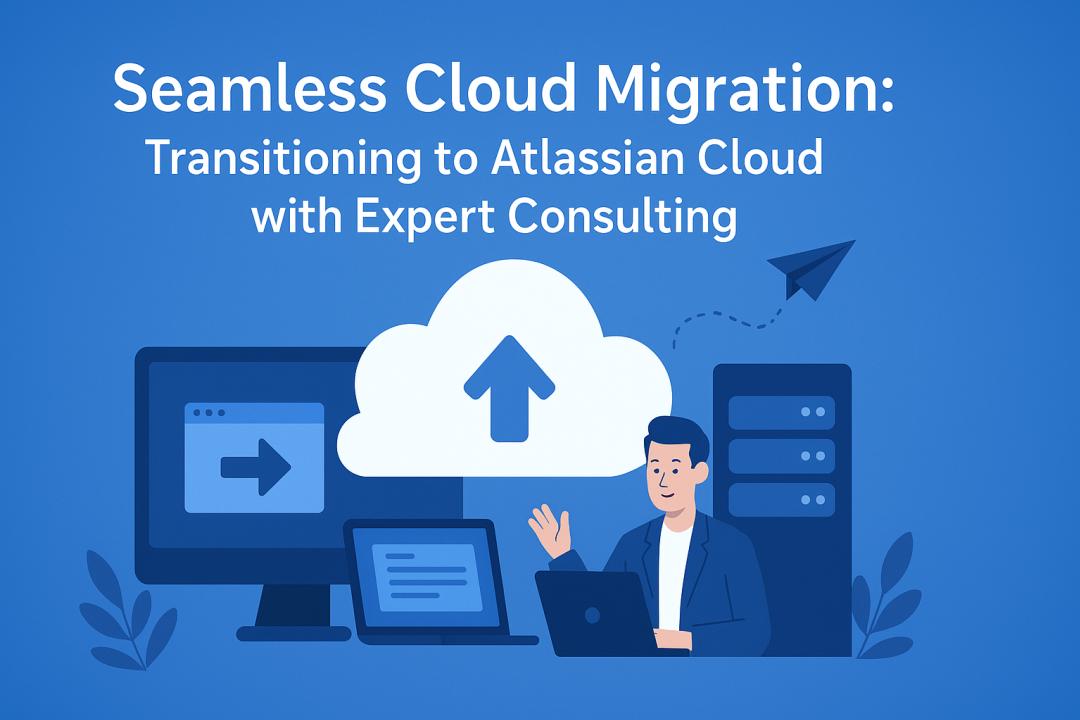
Migrating to the cloud offers enterprises unmatched flexibility, scalability, and collaboration potential. However, without a well-defined strategy, cloud migration can introduce risks like downtime, data loss, and workflow disruptions. This is where Atlassian consulting services come into play. By leveraging expert guidance, organizations can transition Jira, Confluence, Bitbucket, and other Atlassian tools to the cloud seamlessly, ensuring minimal disruption while maximizing efficiency and productivity. In this article, we explore a structured approach to Atlassian Cloud migration and the role professional consulting plays in its success.
1 . Why Organizations Are Moving to Atlassian Cloud
Enterprises are increasingly choosing Atlassian Cloud to overcome the limitations of on-premise deployments. Cloud-based tools provide automatic updates, secure remote access, and seamless integration with other collaboration platforms. Companies also benefit from reduced IT overhead since cloud hosting eliminates the need for hardware management and manual software upgrades.
Staying on-premise can be costly and restrictive. Teams often struggle with outdated infrastructure, limited scalability, and fragmented collaboration, making the move to the cloud a strategic priority for modern enterprises.
2 . Key Challenges in Atlassian Cloud Migration
Migrating Atlassian tools to the cloud is not without its hurdles:
Data Integrity: Ensuring all projects, spaces, and attachments are migrated accurately.
App Compatibility: Verifying that existing plugins and integrations work in the cloud environment.
User Adoption: Training teams to adapt to the cloud interface and features.
Integration Complexity: Maintaining connections with DevOps pipelines, ITSM systems, and third-party apps.
Security & Compliance: Safeguarding sensitive data while meeting industry regulations.
These challenges highlight the importance of a strategic, well-managed migration process.
3 . The Role of Atlassian Consulting Services in Cloud Migration
Professional Atlassian consulting services help organizations navigate every stage of the cloud migration journey. Consultants assess the current environment, plan migration roadmaps, mitigate risks, and provide user training for smooth adoption. Key services include:
Environment Assessment: Understanding current on-premise setups, workflows, and customizations.
Migration Planning: Prioritizing projects, apps, and data for phased transition.
Risk Mitigation: Implementing backup strategies, data validation, and rollback options.
Post-Migration Support: Optimizing workflows, automating reports, and monitoring adoption metrics.
With expert consulting, enterprises can ensure a secure and efficient migration that aligns with business objectives.
4 . Step-by-Step Cloud Migration Process
A structured migration framework is critical to success. Typical steps include:
Discovery & Assessment: Analyze current tools, data, and customizations to identify migration requirements.
Planning: Develop a detailed roadmap, including timelines, milestones, and risk management strategies.
Data Migration: Transfer projects, spaces, and attachments while maintaining integrity and structure.
App & Plugin Migration: Ensure all integrations and plugins are compatible with cloud versions.
Testing: Validate workflows, dashboards, and integrations to identify any gaps or issues.
Go-Live: Execute final migration, onboarding users and monitoring system stability.
Optimization: Refine workflows, implement automation rules, and analyze usage metrics for continuous improvement.
This step-by-step approach minimizes downtime and ensures that teams can continue working without disruption.
5 . Best Practices for a Successful Migration
Following proven best practices increases the likelihood of a smooth transition:
Start with a pilot migration for a small team or project to identify potential issues early.
Document workflows, dependencies, and configurations before migration.
Leverage Atlassian’s official tools, like Jira Cloud Migration Assistant and Confluence Cloud Migration Tool.
Conduct comprehensive user training to familiarize teams with cloud features.
Monitor system performance and gather feedback post-migration to drive continuous improvement.
Implementing these practices ensures that migration is not only technically successful but also widely adopted by teams.
6 . Real-World Case Study
A multinational enterprise recently migrated 500+ users and 200 projects from on-premise Jira and Confluence to Atlassian Cloud with the support of professional consulting. The results included:
Reduced downtime during migration to less than 2 hours.
Faster onboarding of remote teams through cloud-based collaboration.
Streamlined workflows with automated reporting and dashboards.
Improved security and compliance with centralized cloud governance.
This example illustrates how expert guidance can significantly simplify complex enterprise migrations.
Conclusion
Migrating to Atlassian Cloud is a strategic move that enhances collaboration, scalability, and productivity across teams. By following a structured migration process and leveraging professional guidance, organizations can mitigate risks, ensure seamless adoption, and unlock the full potential of Atlassian tools. Partnering with an experienced Atlassian consulting partner ensures your enterprise navigates this transformation efficiently and successfully.