Finding and hiring the right people is really hard, it’s like running another business. You get a lot of resumes that you don’t even know where to start, the interviews take forever, and sometimes the best people go away because the process is too long. AI recruitment software are designed to solve these problems.
They are not cool words to impress people or tools from the future. They are simple programs whose purpose is to speed up the hiring process, make it more efficient, and less painful for recruiters and candidates simultaneously. This guide explains to you the functions of these systems, their working mechanism, and the things that you should be aware of before buying one.
What is an AI-powered recruitment system?
An AI recruiting tool can be compared to a staff helper who is available 24 hours. This tool looks over resumes, identifies the skills most relevant to the requirements of the job, and thereby makes it easy for the recruiters to shortlist the candidates who are the best fit for the role.
Where they would have otherwise spent multiple hours in the process of screening applications, the HR teams receive at once the ranked lists of the possible candidates. This is the work that a recruiter would do which is now done at a much faster pace and with a level of accuracy in the data that cannot be matched by humans.
Big companies like IBM, Deloitte, and Unilever already use this technology to screen thousands of applicants in days. For smaller businesses, it’s now becoming affordable through best recruiting software for small business options that come with AI built in.
So it’s not about replacing recruiters. It’s about giving them more time for the part humans do best—talking to people and making judgment calls.
How AI fits into the recruitment process
Here’s what happens behind the scenes when you use an AI for recruitment software:
Step 1: Resume screening
The system scans every resume and picks out those that match the role’s core requirements. It looks at skills, years of experience, job titles, and education.
Step 2: Candidate scoring
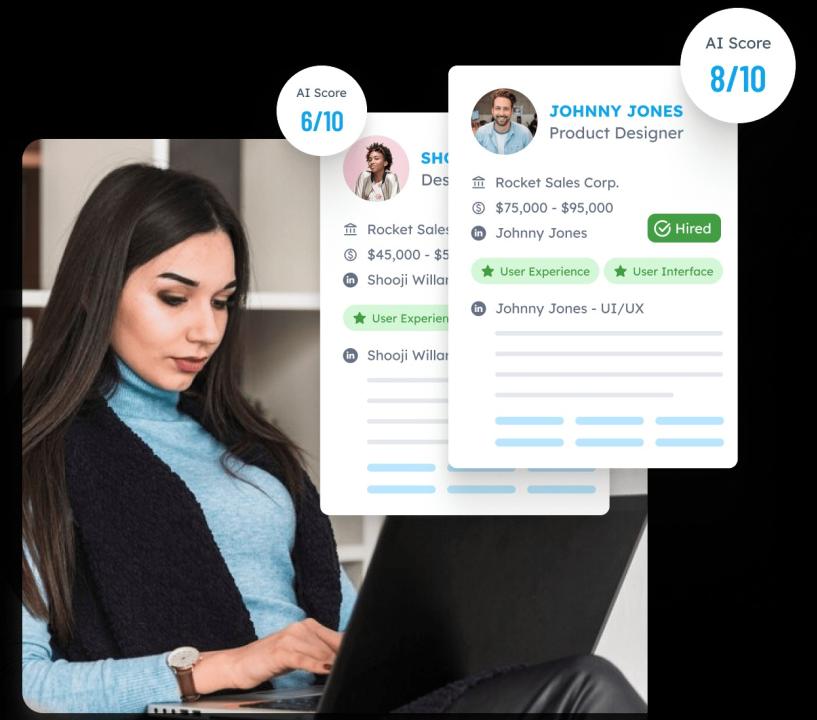
Each profile gets a score that shows how well it fits the role. Recruiters can focus on the top few instead of hundreds.
Step 3: Predictive matching
Some systems even learn from your past hires. They recognize traits of employees who’ve performed well and prioritize similar profiles.
Step 4: Communication automation
By automation, simple works such as organizing interviews or giving news to candidates are done. Thus, candidates are updated without the recruiter's time being consumed.
Each of these stages is linked to a single ultimate objective to facilitate recruiters in taking speedy, impartial, and well-informed hiring decisions.
Why companies are moving toward AI-based hiring
Recruitment takes time, and time is expensive. That’s why more companies are choosing AI for recruitment software to speed up the process without losing quality.
Here’s why it’s catching on:
- It saves hours. Recruiters don’t waste days filtering resumes.
- It cuts bias. Decisions are made on skill match, not assumptions.
- It scales easily. Whether you’re hiring one role or fifty, the process stays consistent.
A small IT firm in Pune shared that before automation, their average time-to-hire was 24 days. After switching to smart hiring tools, it dropped to 9. That difference meant they could fill roles before competitors even finished screening.
Advantages of AI-powered recruitment systems
Let’s break down what you actually gain by using these tools.
Better matching and fewer bad hires
The system checks for specific skills and patterns that align with the role. Instead of hiring based on gut feeling, recruiters see measurable data on each candidate’s suitability.
Lower hiring costs
According to LinkedIn’s Talent Trends report, companies using AI tools for recruitment save up to 35% on hiring expenses, mostly due to reduced screening time and fewer replacement hires.
Smoother candidate experience
When candidates get timely updates and instant feedback, they’re more likely to view the company positively—even if they don’t get hired.
More consistent results
AI ensures every applicant is reviewed fairly and equally, something human recruiters struggle with when the workload spikes.
These tools make hiring structured, predictable, and less prone to human fatigue.
What makes adoption tricky
AI in hiring looks great on paper, but it’s not always smooth in practice. Here’s where most businesses stumble:
Poor data
If the job descriptions or resumes are incomplete or inconsistent, even the smartest system will make weak matches.
Limited understanding
Recruiters sometimes treat AI scores as gospel. The scores are helpful, but human judgment still matters.
Integration issues
Older HR systems may not connect easily with AI software. The trick is to choose platforms that plug into your existing stack—something most best recruiting software for small business options already handle well.
Transparency concerns
Candidates have a right to know if they’re being assessed by algorithms. Being open about it builds trust and avoids confusion later.
So while the benefits are big, success depends on setup, data quality, and how teams use the insights.
How to choose the right AI hiring tool
There’s no single “best” AI recruiting tool. The right one depends on your team size, hiring needs, and budget. Here’s what to look for:
- Simple setup – You shouldn’t need a full IT team just to install it.
- Integration support – It should sync with your existing ATS or HR software.
- Transparent scoring – You should know why a candidate ranks high or low.
- Scalability – The tool should grow with your business.
- Training and support – Vendors who help your team learn and troubleshoot quickly are worth the investment.
Before signing up, test it with one or two roles. Track metrics like cost per hire and candidate response time. If the numbers move in the right direction, then scale it.
Future of AI recruitment systems
The following wave of AI for recruiting systems will be able to investigate more deeply a candidate's soft skills as well as their cultural fit. The idea behind some devices is that the tone of the writing in the e-mails and the >
Such firms as HireVue and Pymetrics are using behavioral data to forecast employee performance. These instruments are far from flawless, but they are becoming more precise with the increasing number of users.
What matters now is balance. AI can rank and recommend, but the final choice still belongs to people. Hiring is both science and instinct—and that’s something no machine should replace.
Conclusion
AI is not coming to replace recruiter jobs. It is coming to replace those boring parts that slow down recruiters. AI-powered recruitment systems bring hiring to the next level by making it data-driven, quick, and fair while giving HR teams the freedom to engage in the most valuable conversations.
Have you been doing everything manually? Then you are already behind. Make a small start, understand how the system operates, and then you can expand. The sooner you get on board with the change, the sooner you will experience the difference - in speed, quality, and team efficiency.
Read more: How AI Hiring Tools Help Recruiters Find Hidden Talent in 2025