
Artificial intelligence is no longer merely a prospect for the future – it is a real, revenue-driving force for organisations throughout Australia. Whether you are a tech startup in Sydney, a mining business in Western Australia, or a healthcare provider in Melbourne, the only way to stay ahead is to understand how AI is evolving and consulting services to assist you in harnessing it safely and profiting from it. Below are the top AI consulting trends in Australia that all organisations should be aware of.
1. Industry-specific AI strategies are becoming the norm
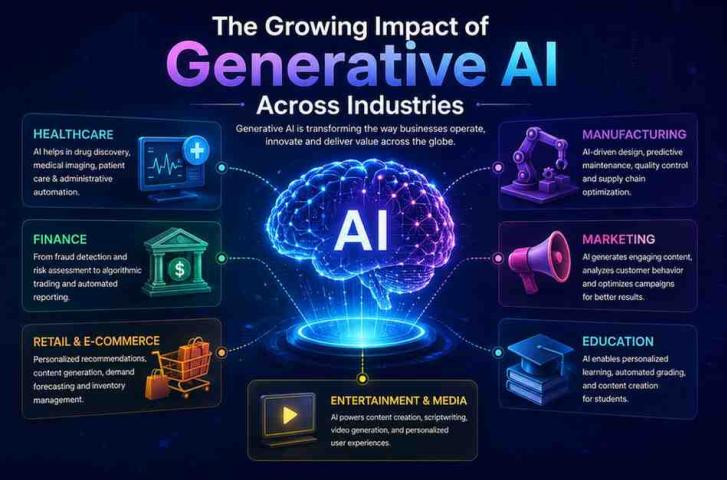
Australian organisations have begun to move away from one-size-fits-all AI projects. The leading consultants are now building their solutions tailored to the nuances of creating solutions based in industries, and that is certainly the case in mining, finance, healthcare, agriculture, retail and the like. This move toward industry-first solutions reduces solution discovery and deployment time, drives better ROI, and improves regulatory compliance – especially in industries such as finance and healthcare where regulation is tight.
2. Responsible AI and governance framework
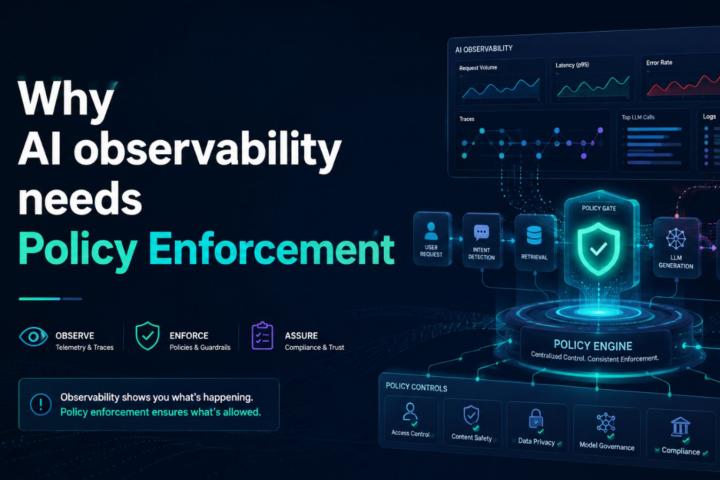
Responsible AI can no longer be considered optional, determining a whole new level of scrutiny with respect to evolving data privacy expectations. Australian organisations are engaging consulting services to build governance frameworks encompassing data lineage, bias audits, explainability, and human-in-the-loop processes. Consulting organisations that provide comprehensive audits, compliance, and ethical design are becoming more valuable as organisations begin to embrace the risks associated with poor reputation and legal risks.
3. MLOps and production-grade ML engineering
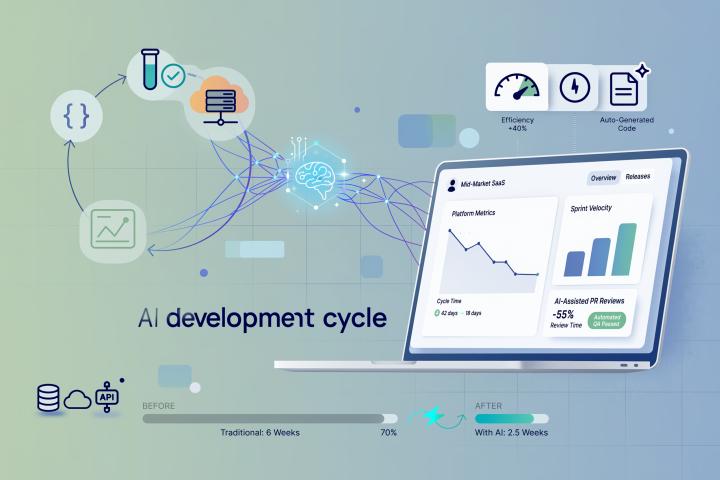
Prototypes and experiments are no longer enough. The industry has shifted to (productionising) machine learning solutions with competent engineering practices (MLOps), meaning continuous training, a deployment pipeline, monitoring, and rollback practices. This has led organisations to embrace cloud-native MLOps stacks, or at least trusted multi-tenant MLOps products with versioned data pipelines and observable model health metrics, with the same consulting organisation helping them produce the documents showing the approaches they followed so their models are relevant after entering production, showing the processes are effective and still improving.
4.Hybrid cloud and edge AI deployments
It is common for Australian companies to experience connectivity issues across vast distances with remote areas (such as mining camps or a local hospital). A hybrid architecture was suggested because data for AI models are better hosted in a centralized cloud for significant training and then hosting edge AI models on-site that are latency sensitive to inference. This retains resiliency in mission-critical systems, while meeting various Australian glide-paths for where data should reside given they are essential for compliance or other practises for many organisations.
5. Generative AI with clear guardrails
Generative AI and Generative AI capabilities, such as text assistants and image generators, are transforming customer service, marketing, and content workflows. It is important for firms in Australia to focus on governance of their use cases: what outputs are acceptable, best practice filtering, and where provenance needs to be tracked so Generative Systems can be successful while not exposing the organization to hallucinations, IP leakage, or brand risk.
6. Democratizing AI with low-code/no-code
For enterprises wanting to scale AI use cases across a variety of teams, many organizations are using low-code/no-code to allow their domain-users to generate workflows and simple models with less need of involvement from engineering teams that had previously held access to the remorseless tools. This means many consulting services of AI origin in Australia are also backed with change management programs and training regimes for business users safe access to Gen AI consulting, as engineering could continue to oversee more broadly.
7. Data centric AI and synthetic data
Quality data is everything. The consultants also told their client to invest more in observability, cleaning, and enrichment, and stop chasing the biggest model forever.In areas with limited data availability, or where data reside within process, synthetic data generation and privacy-preserving methods (differential privacy, for example) are being made to bootstrap models while still following privacy legislation.
8. Be ROI-oriented — outcome-based engagements
Australian organisations are moving procurement toward outcome-based AI projects. Businesses no longer want to pay for the hours someone has worked, they want to pay for the consultant to obtain a definite business outcome — lower churn, faster claims processing, or predictive maintenance to avoid downtime. This approach aligns incentives and forces both parties to define measures of success in the beginning.
9. Talent/skill augmentation and cross-functional teams
AI project outcomes are strongest when product, domain experts, data engineers, and ethicists work in concert. Consultants are now offering talent/skill augmentation – freelance staff who work within project teams to embed cross-functional teams into client organisations for the length of a project. This model assists in skills transfer, meets the demand for institutional learning at pace, and significantly reduces reliance on consultants in the long-term.
10. Cyber security for AI systems
AI systems are garnering trust as decision-makers, but they are also attractive attack surfaces. AI consulting services in Australia are now bundling adversarial testing, model integrity checks, and secure deployment practices to reduce the attractive threats of intentional data poisoning or model extraction.
What does it mean for Australian businesses
When exploring AI, focus on outcomes rather than models. Go with partners who provide domain expertise combined with engineering competence, ethical considerations, and operational readiness. Ask to see case studies that show tangible benefits, include governance frameworks from the beginning, and ensure there is a plan to maintain the models in production.
A quick checklist before engaging with a consultant for projects involving AI
Can the AI consultant provide case studies from your (or a similar industry)?
Do they demonstrate MLOps and how they deploy to production?
Are they providing responsible AI governance and bias audit?
Are we clear on what ROI means in terms of KPIs?
If relevant, do they support deploying an AI process which includes hybrid cloud/edge?
Conclusion
The pace of maturity of AI applications in Australia is remarkable. The best businesses will be those that have relevant practical approaches to industry problems and cohesive and disciplined engineering/foundational discipline with strong governance and measures of success. For organisations that are investigating or are expanding into the AI space, finding good ai consulting services in australia and leveraging some or all of these trends will turn AI from curiosity to competitive advantage.