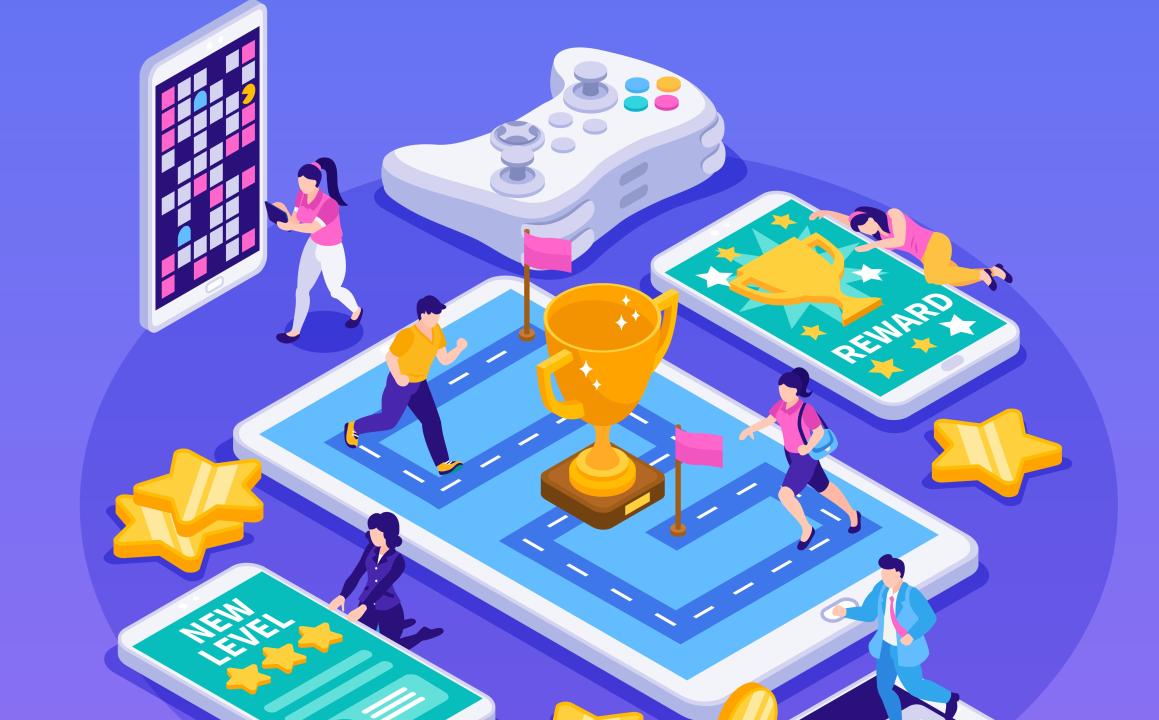
When users log into your app or visit your website, you want more than just clicks — you want them engaged, returning, and even smiling. Gamification offers a powerful way to transform routine experiences into playful, fulfilling journeys. By borrowing game-mechanics and tailoring them to your product, you can unlock stronger retention, deeper engagement, and even advocacy.
Why gamification works
Gamification taps into human psychology: our love of achievement, competition, progress, social status, and surprise rewards. The design framework Octalysis Framework by Yu‑Kai Chou lays out eight core drives that motivate behaviour in gamified systems — including epic meaning, development & accomplishment, social influence, unpredictability & curiosity, and more. Wikipedia
In more practical terms, research shows tactics like progress tracking, leaderboards, social elements, unlockables and time-limited events boost retention on apps and websites. gamesforapps.com+1
Key strategies to consider
For your startup’s app or web product, here are strategies that work:
Progress indicators, levels & feedback loops
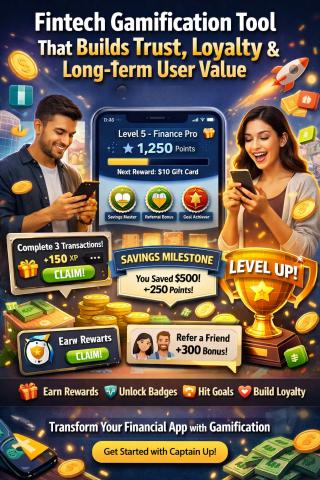
Show users their journey: levels, milestones, progress bars. For example Nike Run Club uses achievements and milestones tied to runs.
This gives users a sense of “I’m moving forward” rather than just “I logged in”.Badges, trophies & status
Award visual status markers when users hit notable achievements. In the language-learning world, Duolingo uses badges, weekly leagues, daily streaks and avatar customisation to keep learners engaged.Leaderboards & social competition
When appropriate, show users how they compare (friends, global users, cohorts) to add friendly competition or social proof. For example, many fitness / wellness apps embed challenges among friends.
Important: use competition carefully so it motivates rather than alienates slower users.Quests, challenges & timed events
Offer specific tasks or missions (e.g., “complete 5 tasks this week”, “log in three days in a row”) and optionally make them time-limited. This increases urgency and returns.
Example: On e-commerce or loyalty platforms, tasks like “complete your profile”, “make first purchase”, “refer a friend” can be gamified.Social sharing & community mechanics
Let users invite friends, share badges, join teams or compete in groups. Social reinforcement amplifies engagement and virality.Unlockable content or tiers
Give users access to exclusive features, content or rewards if they engage steadily. Unlocking gives a feeling of progression and reward.Onboarding gamified
The first experience should feel light, fun and rewarding rather than heavy. Gamified onboarding (mini-challenges, progressive reveal) helps reduce drop-off.
For example, you might convert “complete your profile” into a mission with points and reward.
Real-world examples
Here are some actual use-cases that illustrate these strategies:
Habitica – A task-management / habit tracker that turns daily to-dos into an RPG. Users complete tasks (daily, to-do, habits) and earn experience, level up their avatar, join guilds and compete with others. clevertap.com+1
This is a great example of turning mundane tasks into game->Sephora (Beauty Insider Challenges) – On their website and app, Sephora uses “Beauty Insider Challenges” where members earn points by completing tasks (e.g., signing up for alerts, doing shade-match in store). This significantly increased participation among younger users. snipp.com+1
Fitbit – In addition to tracking steps, Fitbit uses badges, milestones, challenges among friends, and themed journeys (for example “climb the height of Everest” equivalence) to make fitness feel like an adventure rather than a chore. clevertap.com
M&M’s Eye Spy Pretzel – Gamified brand campaign built as hidden-object game online to drive awareness and social shares. snipp.com
While this is more marketing than core app UX, it shows how even small gamified mechanics can spark engagement.
Best practices & pitfalls
When implementing gamification, startups should keep in mind:
Align game mechanics with real value: Gamification must support business goals (e.g., retention, conversion, habit formation). If badges are meaningless, users will lose interest.
Keep the core experience simple: Don’t distract users from their main goal. If the game overlay is too heavy, users might skip the value they came for.
Segment users: Not everyone is motivated by competition or leaderboards. Offer different modes (social vs solo) or let users opt into gamified paths.
Avoid over-gamification or misuse: Research shows that in some cases gamification can mislead or distract users from the actual goal (for example in learning apps).
Ensure feedback is timely and meaningful: Rewards should feel relevant and frequent (especially early on) to build habit loops.
Use data and iterate: Track metrics like retention, session length, conversion after gamified features. A/B test different mechanics to see what works with your user base.
How startups can get started
Map the user journey: Identify the key moments you want to encourage (e.g., first sign-up, first purchase, monthly revisit).
Choose 1-2 game mechanics to implement first: e.g., streaks, badges + levels, or a simple challenge/quest.
Prototype and test: Launch to a subset of users, see how behavioural metrics move (return rate, session length, conversion).
Iterate and expand: If the mechanics drive value, gradually add social elements, leaderboards, unlockables.
Maintain surprise/inflow: Add seasonal events, time-limited quests or special editions to keep the experience fresh.
Final thoughts
Gamification is not about turning everything into a video game. It’s about making meaningful progress feel fun and giving users reasons to come back. For startup apps and websites that need to convert casual visitors into engaged users, the right gamified touch can be the difference between “visit once” and “visit often”.
By combining psychology-driven mechanics (like progress, status, social) with thoughtful product design and real business goals, you can craft digital experiences that feel lively, motivating and sticky.