
If you’ve ever tried to work, stream, or video call from a rural area, you know the struggle: slow-loading pages, videos that buffer, and connections that drop. It’s frustrating, and it affects everything from school and business to health and staying in touch with family. Rural broadband access is no longer just a nice-to-have; it’s a necessity. Yet millions of people face rural internet issues every day.
So, why is rural internet so behind? And more importantly, what can we do about it? Let’s break it down simply and look at real solutions that help people stay connected.
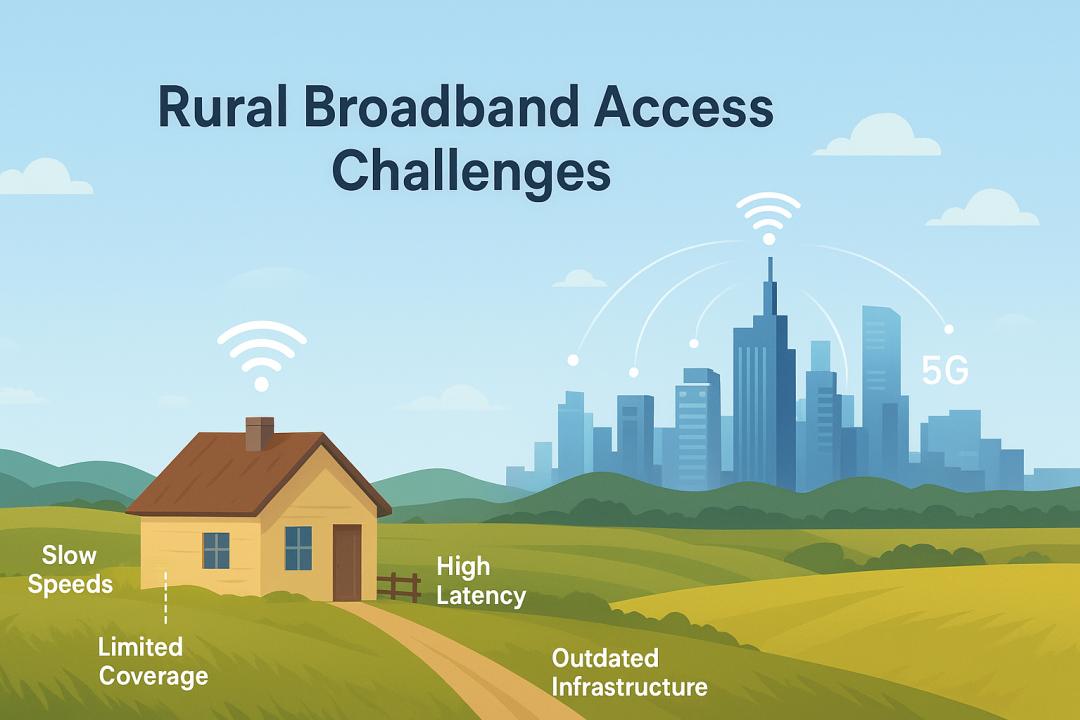
Why Rural Broadband Access Falls Behind
When people ask why rural internet access is a problem, the quick answer is infrastructure. But that doesn’t explain everything.
Here’s the real challenge:
- Low population density means providers don’t earn enough to cover the cost of expanding networks.
- Long distances between homes make wiring and signal coverage difficult.
- Terrain and geography, such as hills, forests, and mountains, weaken internet signals.
- Limited competition among providers leads to slower service and higher prices.
In cities, competition encourages providers to innovate and keep costs down. In rural areas, one provider may control the market, and without competition, there’s little motivation to improve. This leads to slow speeds, unreliable service, data caps, and fewer options.
The Impact of Rural Internet Challenges
Slow or unreliable internet does more than cause buffering; it holds people back.
- Remote workers can’t stay connected
- Students struggle with online learning
- Telehealth becomes difficult or impossible
- Small businesses miss growth opportunities
- Families can’t use normal everyday tech services
In today’s world, a lack of broadband isn’t just inconvenient; it shapes economic opportunities, access to education, and quality of life.
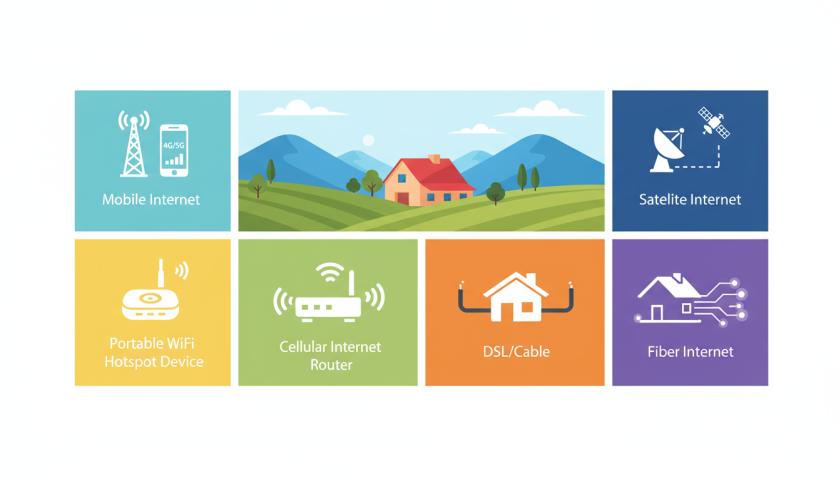
Types of Internet Commonly Used in Rural Areas (and Their Limits)
Let’s discuss what’s available in many rural communities and why performance can vary.
Satellite Internet
Satellite internet can reach almost anywhere, which is why it’s often considered the standard rural solution. But it has drawbacks:
- High latency (lags during video calls and gaming)
- Weather interference
- Data caps
- Higher monthly costs
Good for: Basic browsing and email
Not great for: Streaming, gaming, or work-from-home video meetings
DSL or Cable
Some rural towns have DSL or outdated cable lines, but speeds can differ greatly depending on how far you are from the provider’s hub.
Good for: Small towns
Weak when: Homes are miles away from town centers
Fiber Internet
Fiber is the fastest option but also the most costly to install. That's why it's still uncommon in rural areas, although many government-funded projects are underway.
Good for: Everything—if you can get it
Mobile / Cellular LTE Internet
This is one of the fastest-growing solutions for better rural broadband access. It uses 4G/5G cellular towers.
Strengths:
- Quick installation (no cables needed)
- Works in remote areas where towers exist
- Often supports streaming, work-from-home, and gaming
- Can be used at home and on the go
Weakness:
- Performance depends on tower coverage strength
This category includes cellular routers, portable hotspots, and unlimited LTE home internet plans, which are gaining popularity for their speed and flexibility.
Fixes and Solutions That Actually Work Today
Here are practical ways rural households and campers are improving internet performance without waiting for government infrastructure upgrades.
1. Try a Cellular-Based Home Internet Router
A cellular internet router connects to nearby 4G/5G towers and broadcasts Wi-Fi inside your home,
Why it works:
- No wires needed
- Faster than satellite and often faster than DSL
- Supports multiple devices at once
This is one of the most effective solutions for rural internet access issues.
2. Boost Your Signal With an External Antenna
Even if you already use LTE internet, adding:
- A directional antenna, or
- A signal booster
which can significantly boost your speed, especially if you live in a valley, wooded area, or down a long country road.
3. Use a Portable Wi-Fi Hotspot Device
Great for travelers, RVers, or those with flexible internet needs, these hotspots pick up cellular signals and provide Wi-Fi wherever there’s cell coverage.
4. Consider a Fixed Wireless Provider
Fixed wireless internet links your home to a nearby transmission tower using a small outdoor antenna. Speeds can vary, but when available, this option is often faster and more stable than DSL or satellite.
5. Research New Fiber Expansion Programs
Fiber is expanding, albeit slowly. Check local co-ops, municipal networks, and electric companies, many of which are building fiber where larger providers won’t.
6. Use Satellite Only as a Backup
Satellite should now be considered a fallback solution not the first choice.
Choosing the Best Option: What Really Matters
Before picking a provider, ask yourself:
No two rural homes are the same when it comes to terrain or coverage. The key is to test which network—Verizon, AT&T, T-Mobile, etc.—has the strongest signal at your location and then choose the best equipment to take advantage of that signal.
Conclusion
Rural broadband challenges are real, and they won’t be solved overnight. But you have options. From LTE routers and signal boosters to expanding fiber networks and fixed wireless, rural communities now have more choices than ever.
Understanding your location, signal strength, and internet habits will help you choose a solution that fits your life>
Frequently Asked Questions (FAQs)
1. Why is rural internet often slower than city internet?
Providers have less incentive to invest in costly infrastructure in areas with low populations.
2. Is satellite internet good for rural homes?
It works anywhere, but lag and data caps make it less than ideal for work, gaming, and streaming.
3. Can LTE home internet really replace wired internet?
Yes, many rural households now use LTE routers as their main internet source.
4. How can I find the best signal in my area?
Check coverage maps, test different carriers’ SIM cards, or use a signal booster.
5. Will rural fiber internet become widely available?
Yes, but it will take time as expansion happens through government grants and rural co-ops.