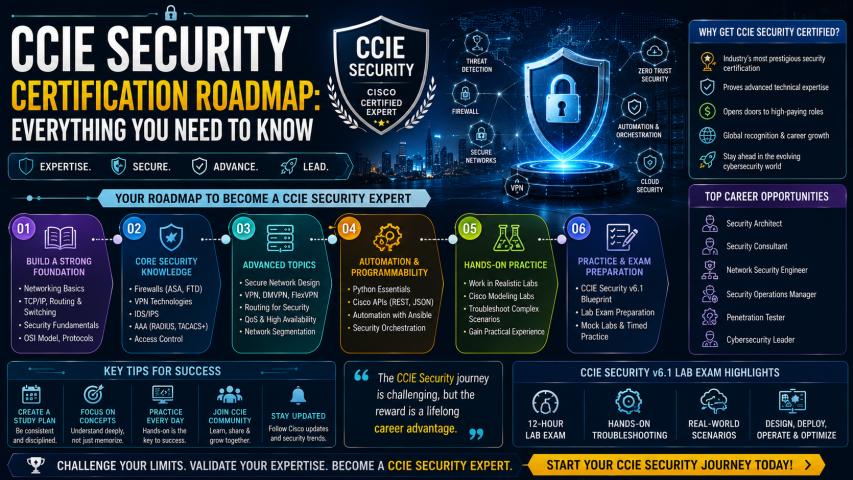
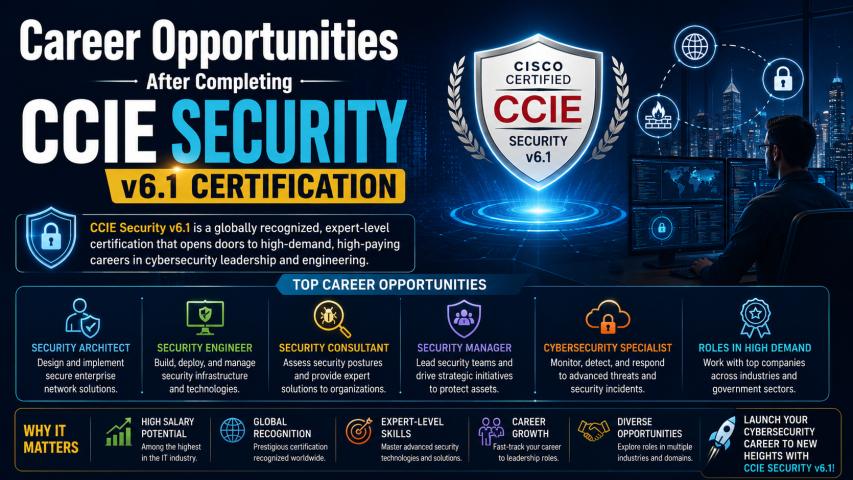
Preparing for the CCIE Security certification requires more than theoretical knowledge—it demands an immersive, hands-on environment where candidates can simulate enterprise-grade architectures and develop operational command over Cisco’s advanced security technologies. For professionals across Virginia, building a high-performance home lab has emerged as a strategic investment that not only strengthens exam readiness but also enhances long-term career capability. Within the foundational sections of CCIE Security Training in Virginia, learners gain structured guidance, toolkits, and planning frameworks that empower them to design home labs mirroring real-world security ecosystems.
A well-designed home lab offers candidates continuous access to configurations, troubleshooting scenarios, policy workflows, and security automation drills. It enables aspirants to refine their expertise in technologies such as Firepower Threat Defense (FTD), Identity Services Engine (ISE), ASA, VPNs, and secure segmentation—all core to the CCIE Security Lab blueprint. This controlled practice environment reduces dependency on external lab rentals, accelerates conceptual mastery, and ensures learners can revise critical topics on demand.
Core Components of a High-Performance CCIE Security Home Lab
Building a CCIE-ready home lab requires a strategic, phased approach. Below are the essential components that form the backbone of a robust learning environment.
1. A Reliable Virtualization Platform
The virtualization layer is the foundation upon which all simulations operate. CCIE aspirants typically build their home labs on battle-tested platforms such as:
VMware Workstation
VirtualBox
Proxmox
VMware ESXi
Among Virginia-based learners, VMware Workstation and ESXi remain the preferred choices due to their stability, expansive feature set, and seamless handling of resource-intensive Cisco security appliances. The ability to run multiple nodes simultaneously, create snapshots, and emulate complex topologies makes VMware an industry-aligned choice for CCIE preparation.
2. A High-End Workstation or Dedicated Server
CCIE Security simulations—especially those running FMC, FTD, and ISE—consume substantial resources. To create an efficient, lag-free home lab, the following specifications are recommended:
Minimum 64 GB RAM
8-core processor (Intel or AMD)
1 TB SSD or NVMe storage
No GPU required
Many learners across Virginia procure cost-effective custom-built machines from local computer markets, which often provide optimized configurations tailored for virtualization workloads. A scalable workstation ensures that candidates can progressively expand their lab setup as they advance deeper into the CCIE blueprint.
3. Cisco Software Images and Virtual Appliances
A comprehensive home lab must include virtual images aligned with the CCIE Security exam technologies. Commonly deployed components include:
Cisco Modeling Labs (CML) or EVE-NG
Firepower Threat Defense (FTD)
Firepower Management Center (FMC)
Cisco Identity Services Engine (ISE)
IOS-XE/IOS-XR routers
ASA virtual appliances
Candidates must ensure all images are licensed, legitimate, and fully compliant with Cisco standards. Institutions offering CCIE Security Training in Virginia often assist learners by guiding them through image acquisition, licensing, and configuration best practices.
4. Blueprint-Aligned Lab Topology
The CCIE Security Lab exam evaluates architecture-level thinking, not isolated device configuration. Therefore, your home lab topology should mirror enterprise-scale environments and integrate all major blueprint domains, including:
Secure routing and switching
Firewall policies and NAT translation
VPN configurations (site-to-site, remote access, FlexVPN)
FTD access control policies
ISE authentication and authorization flows
Secure access, segmentation, and TrustSec
IPS/IDS and threat detection modules
Training institutes across Virginia frequently provide battle-tested topologies that closely resemble enterprise networks, enabling learners to practice in real-world conditions.
5. Network Segmentation and Storage Architecture
Effective network segmentation enhances operational clarity and isolates lab traffic. Candidates typically implement:
VLAN-based segmentation
Multi-bridge virtual networks
Isolated management planes
Separate storage for snapshots
Maintaining structured snapshots allows candidates to revert configurations instantly—an invaluable advantage during troubleshooting or iterative practice.
Why Home Labs Accelerate CCIE Success in Virginia
Home labs offer transformative advantages for CCIE Security aspirants, particularly in Virginia’s competitive cybersecurity landscape:
1. Round-the-Clock Practice Flexibility
Learners can engage in high-frequency practice sessions without scheduling constraints or rental fees.
2. Full Control Over Devices and Topologies
Candidates can freely modify, break, rebuild, and optimize their labs—mirroring real engineering environments.
3. Enhanced Troubleshooting Capabilities
Repetition builds muscle memory, enabling aspirants to isolate issues rapidly and confidently during the lab exam.
4. Cost-Effective Exam Preparation
A one-time investment creates long-term value, reducing the need for recurring external lab subscriptions.
5. Stronger Technical Branding During Interviews
In Virginia’s evolving cybersecurity labor market, home lab experience demonstrates initiative, capability, and operational readiness.
Employers value candidates who can demonstrate more than theoretical proficiency—they look for professionals who can simulate and manage real-world security architectures independently.
Pro Tips to Maximize Home Lab Efficiency
To unlock the full value of your home lab, incorporate the following best practices:
1. Start Small and Scale Gradually
Begin with foundational ASA and FTD setups before progressing to multi-node enterprise architectures.
2. Organize Your Configurations and Documentation
Track your progress using GitHub, Notion, or structured local documentation templates.
3. Join Virginia-Based CCIE Security Communities
Local peer groups provide feedback, share troubleshooting stories, and accelerate your learning curve.
4. Integrate Automation Tools Early
Incorporate Python, Ansible, APIs, and DevNet-aligned practices to build a modern, automation-centric skill set.
Conclusion
A high-performance CCIE Security home lab is more than a technical setup—it is a long-term investment in your professional growth. For aspirants across Virginia, this ecosystem enables strategic thinking, hands-on mastery, and an enterprise-level understanding of Cisco’s latest security technologies. By integrating strong infrastructure, disciplined documentation, scalable topologies, and blueprint-aligned modules, candidates position themselves for excellence in both the CCIE Security Lab exam and real-world deployment environments. Ultimately, a well-built home lab accelerates your readiness, strengthens your adaptability, and fuels long-term career advancement powered by CCIE Security Lab Training USA.