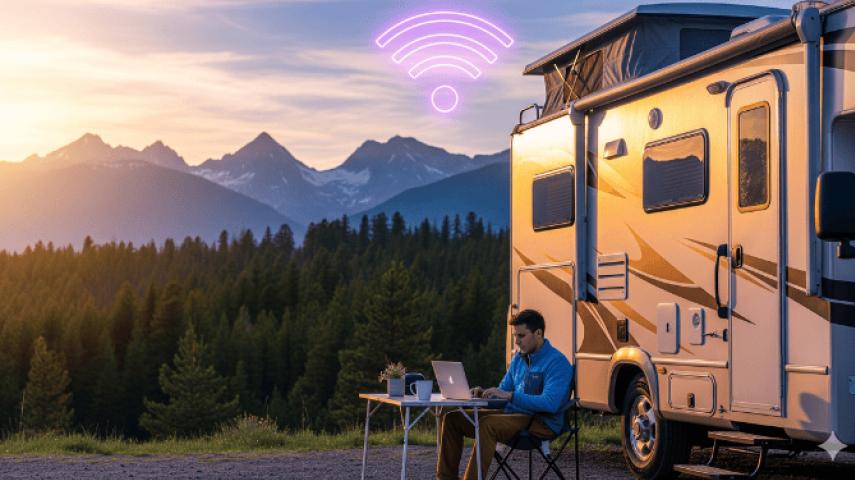
Ever tried sending an email or loading a map from your van, only to watch the loading wheel spin endlessly? Whether you’re a full-time nomad or a weekend RV traveler, having stable internet is no longer a luxury; it’s essential. From remote work to navigation to entertainment, staying connected on the road matters more than ever. But many travelers ask a simple question: How do you get reliable Wi-Fi in a Van or RV?
In this guide, we’ll break down the smartest, most dependable ways to stay online. Whether you're parked in the desert, camping in the woods, or cruising down long highways, you’ll learn about the best RV internet options, how each one works, and which setups make the most sense for different types of internet for travelers.
Why Wi-Fi in a Van or RV Is Tricky
Unlike homes, vans and RVs don’t stay in one place. You’re constantly moving between regions, towers, and networks. This means your internet must be flexible, portable, and strong enough to handle changing conditions. Mountains, trees, and remote landscapes can weaken signals, so choosing the right setup is essential.
Luckily, today’s technology gives nomads more options than ever.
Best Ways to Get Reliable Wi-Fi in a Van or RV
1. Mobile Hotspots: The Most Popular Option
One of the easiest ways to get Wi-Fi in a van is by using a mobile hotspot either from your smartphone or a dedicated hotspot device.
How it works
A hotspot connects to a nearby cellular tower and broadcasts a mini Wi-Fi network for your devices.
Pros
- Simple and portable
- Easy to set up
- Works wherever there's cell coverage
Cons
- Speed varies by carrier
- May struggle in remote areas
- Data plans can get expensive
Best for: Travelers who stay mostly near towns or highways.
Hotspots remain a popular choice because they combine reliability with convenience. But if you want something stronger, you’ll likely need more than just this.
2. Cellular Routers: Upgraded Internet for Travelers
If you want better range, performance, and more stable connectivity, a cellular router is one of the best RV internet options.
What it is
A cellular router works like a home Wi-Fi router but is designed for vans, RVs, and mobile setups. Many have multiple SIM card slots and external antenna ports.
Why it’s better than a hotspot
- Stronger internal radios
- Connects to multiple networks
- Allows multiple devices at once
- More consistent speeds
Cellular routers help smooth out inconsistent coverage, which is a big relief when you're working remotely.
3. Signal Boosters: Improve Weak Cellular Coverage
Even the best device won’t help if your signal is awful. That’s where a cell signal booster comes in.
How boosting works
A booster captures weak outside signals, amplifies them, and redistributes the stronger signal inside your van or RV.
Benefits
- Better call quality
- Faster data speeds
- Fewer dropped connections
Best for: Travelers who frequent forests, mountains, deserts, or rural towns.
Combined with a hotspot or router, boosters create a more reliable mobile setup.
4. Public Wi-Fi: The Free but Unreliable Option
Places like coffee shops, campgrounds, libraries, and visitor centers often offer free Wi-Fi. But free doesn’t always mean good.
Pros
- Free or cheap
- No equipment needed
Cons
- Slow, crowded networks
- Security risks
- Not available everywhere
If you use public networks, always protect yourself with a VPN and avoid sensitive tasks like banking or typing passwords.
5. Starlink for RVs: High-Speed Satellite Internet Anywhere
Satellites are changing the game for people living or traveling off-grid. Starlink RV or Starlink Mobility offers high-speed satellite internet that works in many remote areas.
Why travelers love it
- Works where cell networks fail
- Great for remote work
- Fast speeds for streaming and uploading
Downsides
- Higher upfront cost
- Requires clear view of the sky
- Needs power and space for setup
This is currently the most powerful option for van lifers who camp far from civilization.
6. Campground Wi-Fi: Convenient but Hit-or-Miss
Many campgrounds claim to offer Wi-Fi, but the experience varies wildly.
Why?
Hundreds of RVs share the same small connection, often leading to slow speeds.
Good for: Light browsing or checking email.
But for Zoom calls, gaming, or uploading large files, campground Wi-Fi alone won’t cut it.
7. Combining Options: The Smartest Way to Stay Connected
The truth is, there’s no single perfect way to get Wi-Fi in a Van or RV. But the best solution is a combination of tools.
Most reliable and popular setup includes:
- A cellular hotspot or router
- A signal booster
- Starlink for remote areas
- Public Wi-Fi as backup
This hybrid approach ensures you have options no matter where the road takes you.
Choosing the Best RV Internet Options for Your Life>
Your ideal setup depends on how you travel:
- Weekend travelers: A simple phone hotspot works great.
- Part-time RV travelers: A cellular router + booster is a smart upgrade.
- Full-time digital nomads: Starlink + cellular router = best of both worlds.
- Remote explorers: Starlink is almost essential.
Tips to Improve Wi-Fi in a Van or RV
- Park near cell towers when possible
- Avoid valleys and heavily wooded areas
- Use roof-mounted antennas
- Keep devices updated for better connectivity
- Choose flexible data plans
Even small changes can make a big difference in your daily connection.
Conclusion
Staying connected on the road doesn’t have to be stressful. From hotspots to satellite internet to boosters, there are more ways than ever to get reliable Wi-Fi in a van or RV. Whether you’re working remotely, navigating the next stop, or streaming a movie under the stars, the right internet setup brings comfort and convenience to life on wheels.
By understanding each option and mixing the best tools, you can enjoy fast, dependable internet for travelers, no matter where your journey leads.
FAQs About Wi-Fi in a Van or RV
1. What is the best way to get Wi-Fi in a Van or RV?
The most reliable setup combines a cellular hotspot or router with a signal booster and Starlink. This mix keeps you connected in cities, rural areas, and completely off-grid locations.
2. Is Starlink worth it for RV travelers?
Yes, Starlink is great for remote and off-grid travelers who need fast, stable internet. It delivers strong speeds in places where cellular networks struggle or don’t exist.
3. Can I use my phone hotspot full-time?
You can, but it may not be reliable enough for heavy use because speeds vary and data limits kick in quickly. A router or dedicated device offers more stability and flexibility.
4. What’s the cheapest way to get Wi-Fi in a Van?
Using your smartphone hotspot or public Wi-Fi is the most affordable choice. These options work well for light browsing or occasional travel.
5. Do RV parks provide reliable Wi-Fi?
Some RV parks offer Wi-Fi, but many networks are slow due to congestion. It’s best used as a backup rather than your primary internet source.