In several BPT Colleges in Chennai, you can sense this gentle shift toward child-centric physiotherapy. It’s not uniform or perfectly structured — some colleges started with tiny lab experiments, others with those informal discussions that happen after class when someone wonders why a child responds differently to a certain stretch. And slowly, this curiosity has turned into an emerging space for pediatric innovation.
Why Pediatric Rehabilitation Needs Its Own Kind of Innovation
Kids don’t move, respond, or heal the way adults do. Anyone who’s worked with them — even briefly — knows this natural unpredictability. Some faculty members in these colleges often mention how a therapy that looks great on paper changes completely once a child decides to turn it into a game.
This unpredictability has pushed departments to rethink methods, and that rethinking is where much of the recent innovation started to grow.
New Learning Labs & Small Experiments That Spark Bigger Ideas
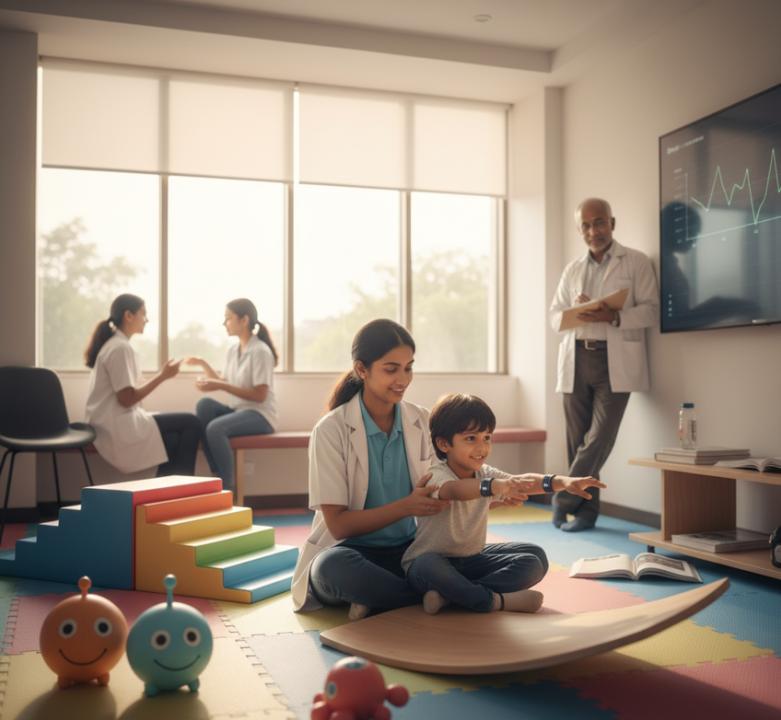
A few campuses have set up small “play-based rehab corners” — not official labs at first, more like improvised spaces where students observe how children interact with custom tools. One professor described how a simple foam cube turned into a whole postural-control activity because a child kept trying to balance on it.
These tiny experiments, though uneven and sometimes messy, are shaping new therapy modules.
Technology Sneaking Its Way Into Pediatric Care
Some colleges have begun integrating motion-tracking tools, soft robotics, or just simple sensor-based toys. It isn’t always high-end technology — sometimes it’s an adapted version that fits classroom budgets.
Students often share that these devices help them notice micro-movements they’d usually miss. And once you see these patterns, you start understanding pediatric motor development a little differently.
Research That Evolves Organically, Not in a Straight Line
Most pediatric physiotherapy ideas here don’t begin with a formal research proposal. They start with questions — often small ones — like “Why does this child fatigue faster on the left?” or “What if we change the game instead of the exercise?”
Projects take shape gradually, sometimes doubling back to earlier assumptions. This back-and-forth rhythm feels more human than systematic, but it’s leading to thoughtful breakthroughs.
Training Students to Work With Real Families
Something many students mention in feedback sessions is how colleges now encourage more interaction with caregivers. The training isn’t only about therapy; it’s also about listening to parents talk about what happens at home — the challenges, the small wins, the unexpected behaviors.
These conversations quietly shape how students design home-based routines for kids, making the care more grounded and practical.
Collaborations Spreading Across Specialties
You’ll see pediatric physiotherapy slowly merging with speech therapy units, occupational therapy labs, or even psychology departments. Not every college does it in a structured way; sometimes it’s a spontaneous cross-discipline session that simply worked well and kept happening.
This mix of perspectives helps students think beyond textbook motor milestones.
A Future That’s Slowly Taking Shape
It’s still early, and not every innovation is breakthrough-level, but there’s a noticeable direction forming. BPT Colleges in Chennai are nurturing a generation of physiotherapists who understand children not as “smaller adults,” but as individuals with their own rhythms, quirks, and healing patterns.
And this change — a bit uneven yet sincere — feels like the beginning of something meaningful in pediatric rehabilitation.