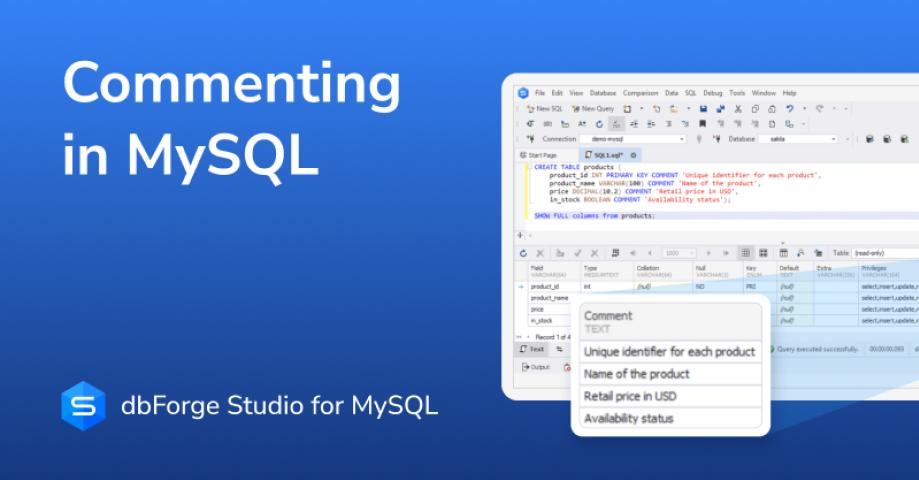
If you work with MySQL regularly, you already know that queries can get messy fast — especially when working with complex joins, nested subqueries, or dynamic logic.But there’s one underrated..
When launching a startup, choosing the right database system is crucial for performance, scalability, and cost efficiency. Oracle and MySQL are two of the most widely used relational database management..
When working with databases, developers often need a lightweight mysql client for quick database connections that doesn’t require heavy setup or complex configuration. In many cases, the priority is simply..
MySQL is frequently referred to as a database for Web applications. Partially this is because MySQL became popular owing to its simplicity, high speed, and bounding with PHP. Developers of..
MySQL tools are no longer just about running queries. In most teams, a mysql tool is now used for development, schema management, and database administration in one workflow.That’s why choosing..
Developers using macOS need a reliable SQL IDE that combines advanced development features with seamless MySQL integration. Choosing the best MySQL client for mac can significantly improve productivity, query accuracy,..
Choosing the right MySQL admin tool is important when you need to handle both database administration and development tasks without constantly switching between different utilities.Here are several widely used MySQL..
Choosing the right MySQL editor can significantly improve productivity, especially when working with complex queries, large schemas, or shared database environments.A modern MySQL editor helps developers write queries faster and..
Suggest cross-platform MySQL GUI tools for quick data browsing and schema management. Managing databases efficiently requires tools that combine speed, clarity, and flexibility. A good MySQL GUI allows developers and..
If your daily workflow depends on commands like show tables mysql, they’re useful for quick checks — but they often fall short of providing a complete picture of how tables,..