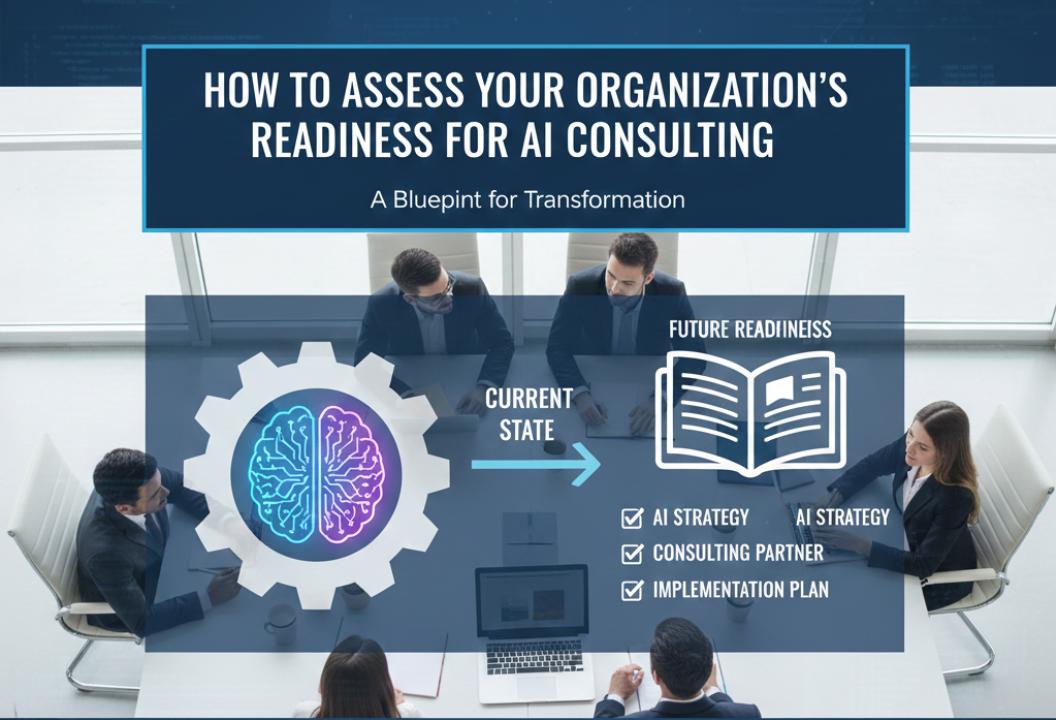
Organizations across the world are exploring AI to improve efficiency, reduce operating costs, and strengthen decision making. Before investing heavily, leaders must understand how prepared their company truly is for AI engagement. Partnering with an AI Consulting Company often starts with a readiness review that evaluates data, processes, people, and technology. This early assessment helps enterprises and strong startups gain clarity on whether AI initiatives can deliver meaningful outcomes. A structured evaluation also ensures that future programs align with business priorities and generate measurable value.
Understanding the Current Level of AI Maturity
AI maturity varies widely across industries and organizational structures, which makes a systematic review essential. Leaders should begin by examining how their digital systems currently support operations, where manual work still dominates, and what bottlenecks prevent data driven decisions. The maturity stage provides a realistic picture of how soon AI can be adopted and where investments are necessary.
A practical maturity assessment includes:
- Reviewing existing analytics capabilities
- Evaluating the consistency of operational processes
- Understanding dependency on legacy applications
- Checking availability of internal teams for AI projects
- Identifying gaps in automation
- Examining past innovation or modernization attempts
Short internal workshops often help surface hidden issues across teams. In many enterprises, maturity differs between departments, so the organization may be ready for AI in some areas while others require foundational improvements. Once maturity is mapped, leaders can prioritize use cases that match current capabilities.
Evaluating the Strength and Reliability of Organizational Data
Data is the backbone of any AI system, and understanding its condition is one of the most important indicators of readiness. Many AI initiatives fail or stall due to incomplete, inconsistent, or inaccessible datasets. Organizations that invest early in structured data environments gain faster returns and experience fewer implementation delays.
A clear data assessment should include:
- Identifying primary data sources across business units
- Evaluating quality issues like duplication or missing values
- Reviewing compliance requirements
- Determining ownership and governance responsibilities
- Checking how easily teams can access critical datasets
- Assessing integration between systems
Leaders should pay close attention to how long it takes to gather data for analysis. If teams rely heavily on manual extraction, the organization may need foundational data engineering work before considering advanced AI initiatives. Many enterprises refine data ecosystems first to ensure smoother engagement with Custom AI and machine learning consulting services.
Aligning Leadership and Preparing for Organizational Change
AI adoption succeeds when leadership shares a unified vision and commitment. Without alignment, teams often face unclear priorities or inconsistent direction. Strong leadership support reduces risk, accelerates execution, and helps create a culture that encourages experimentation and continuous improvement.
Important alignment indicators include:
- Agreement on the purpose and scope of AI investments
- Clarity on measurable business outcomes
- Willingness to evolve workflows and decision structures
- Budget and resource allocation strategies
- Communication plans for organization wide change
- Preparedness for cross functional collaboration
Enterprises typically experience resistance during transitions, especially when automation affects daily routines. Preparing early conversations about growth opportunities, new roles, and productivity improvements helps reduce uncertainty. Organizations that invest in communication and alignment are more likely to maintain momentum throughout the AI adoption cycle.
Assessing Infrastructure and Technology Capabilities
Technology readiness influences the speed and scale at which AI programs can operate. Modern AI models require flexible infrastructure, efficient integration layers, and reliable security frameworks. Legacy systems often introduce delays or prevent real time data flows necessary for advanced automation.
Technology assessments normally include:
- Cloud maturity and scalability
- Security and compliance posture
- Integration capabilities between platforms
- Network performance and storage availability
- Automation tools used within the organization
- Ability to support Full-Stack AI Development
If infrastructure is outdated or fragmented, modernization becomes a strategic first step. Enterprises that invest in scalable environments experience smoother implementation cycles and fewer operational hurdles as AI projects expand. A strong technical foundation also reduces long term maintenance complexity and cost.
Evaluating Workforce Capability and Skills Readiness
People play a central role in sustaining AI initiatives beyond the initial deployment. Even highly advanced models require teams who understand how to operate, monitor, and continuously improve them. Workforce assessments reveal whether internal teams can take ownership of AI solutions or whether external guidance will be required for longer periods.
Key indicators of workforce readiness include:
- Availability of analytical or technical talent
- Familiarity with automation and data workflows
- Collaborative ability between functional and technical teams
- Understanding of performance metrics and KPIs
- Willingness to adopt new tools and methods
- Existing training programs for digital skills
If capability gaps exist, many companies adopt a hybrid model where internal teams work closely with consulting partners before gradually taking over. Developing internal capability early contributes significantly to long term ROI and reduces dependence on external support.
FAQs
1. How can a company identify whether it is ready to engage an AI Consulting Company?
Organizations can review their data quality, digital maturity, and alignment on business goals. If leadership support and foundational infrastructure are in place, the company is typically ready to begin consulting discussions. A short internal audit often gives early clarity on readiness levels.
2. What benefits do AI Consulting Services offer during early planning stages?
Consulting support helps validate use cases, prioritize opportunities, and build a roadmap aligned with measurable outcomes. Early involvement reduces risk, strengthens investment decisions, and ensures that teams begin with realistic expectations based on current capabilities.
3. Why is data maturity important before adopting Custom AI and machine learning consulting services?
Strong data maturity ensures faster model development, higher accuracy, and smoother deployment. When data is inconsistent or scattered, projects face delays and added costs. Reviewing data early allows organizations to identify gaps that need improvement before beginning advanced AI work.
4. How does Full-Stack AI Development contribute to enterprise scale adoption?
This approach covers the entire lifecycle from design to deployment and monitoring. It ensures systems integrate properly, remain scalable, and perform consistently. Enterprises benefit because it reduces fragmentation and improves long term sustainability of AI programs.
5. How can startups prepare for AI consulting engagements?
Startups can prepare by organizing data, documenting workflows, and defining measurable goals. Alignment among founders or leadership groups helps ensure clarity during consulting sessions. Early preparation supports more accurate assessments and smoother onboarding with external experts.
Conclusion
Evaluating AI readiness gives enterprises and strong startups a clear understanding of where to focus their efforts and how to approach future investments. By reviewing maturity, data quality, leadership alignment, infrastructure, and workforce capability, organizations can create a realistic pathway for successful AI adoption. Once these foundations are in place, teams can confidently explore AI Consulting Services to design strategic programs that support growth, efficiency, and long term competitiveness.
