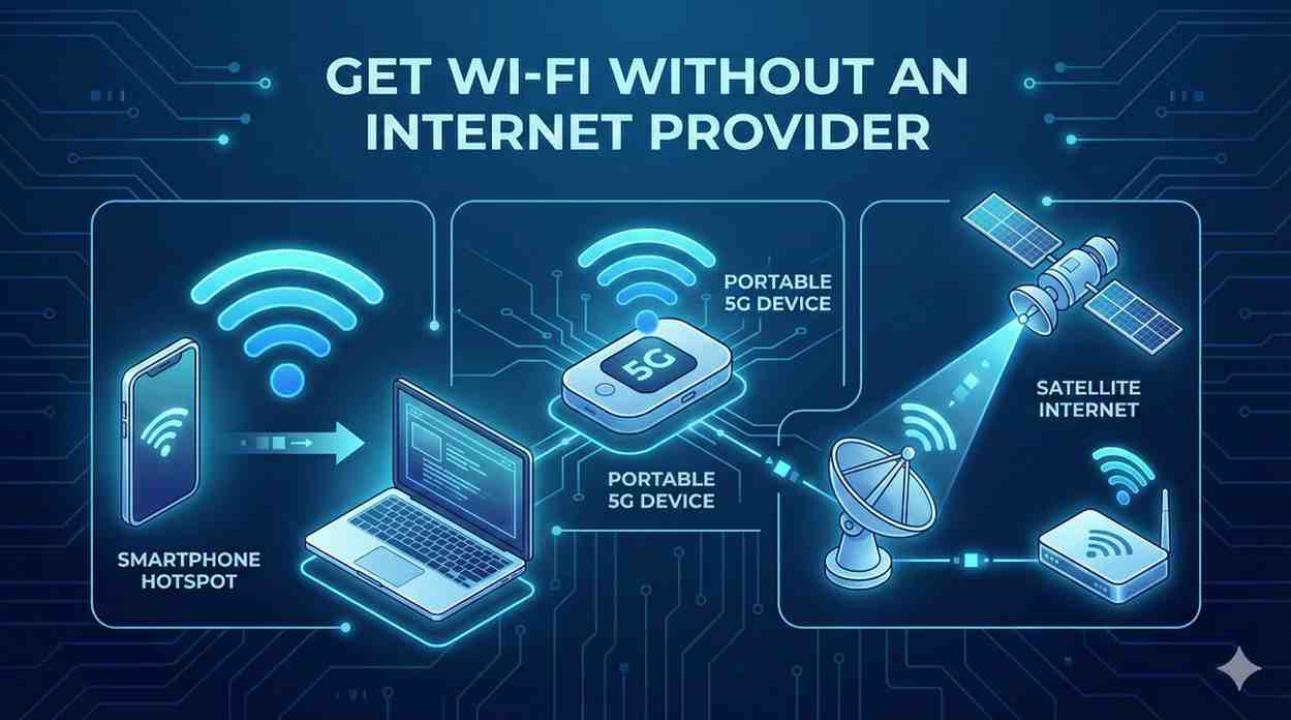
Imagine this scenario: You’re at a cabin in the woods, camping in your RV, or trying to set up a temporary home office, but there’s no internet service provider available. You need to connect your devices, stream content, or work remotely but can you actually use Wi-Fi without an internet provider? The answer might surprise you: yes, it’s possible! Wi-Fi doesn’t always need a traditional ISP to function. In this guide, we’ll explore how to use Wi-Fi without an internet provider and the best ways to get Wi-Fi without internet so you can stay connected wherever you are.
Why You Might Want Wi-Fi Without an Internet Provider
Many people assume that Wi-Fi automatically means internet access. However, Wi-Fi is just a wireless network that allows devices to communicate with each other—it doesn’t have to connect to the web. There are many situations where Wi-Fi without an internet provider comes in handy.
Local file sharing: Transfer photos, videos, and documents between devices without relying on cloud storage.
Smart home control: Operate devices like cameras, lights, and thermostats on a local network.
Gaming: Play multiplayer games with friends on a local area network (LAN).
Travel or remote living: Stay connected in RVs, cabins, or temporary setups without a traditional ISP.
By understanding the best ways to get Wi-Fi without internet, you can stay connected for work, entertainment, or communication even in areas without broadband.
1. Mobile Hotspots and Cellular Data
One of the easiest methods to use Wi-Fi without an internet provider is through a mobile hotspot. Both smartphones and dedicated hotspot devices can turn cellular data into Wi-Fi for multiple devices.
How it works: Your device connects to a 4G or 5G network and broadcasts that connection as Wi-Fi.
Advantages: Portable, simple to set up, works almost anywhere there’s cellular coverage.
Limitations: Dependent on signal strength, data caps may apply, and battery life can be drained quickly.
For a more reliable solution, consider dedicated cellular routers like UbiFi. They provide stronger, more dependable Wi-Fi while traveling or in off-grid locations. Mobile hotspots are among the best ways to get Wi-Fi without internet where a traditional ISP isn’t available.
2. Satellite Internet Options
If you’re in a remote area with weak cellular coverage, satellite internet is a great alternative for Wi-Fi without an internet provider.
How it works: A satellite dish connects with orbiting satellites, providing internet that can be shared as a Wi-Fi network.
Advantages: Works in rural and off-grid locations, suitable for streaming, working remotely, and staying connected.
Limitations: Higher latency than cable or fiber, installation can be more involved, and monthly fees may apply.
Satellite setups work well for RVs, cabins, and off-grid places that traditional ISPs don’t serve. They help you establish a dependable Wi-Fi network without needing phone lines or cable.
3. Offline Local Networks
Sometimes, internet access isn’t necessary at all. You can still enjoy Wi-Fi without an internet provider by setting up a local network.
Use cases:
Share files between laptops, tablets, or smartphones
Multiplayer gaming on a local network
Operate smart home devices locally
How it works: Set up a router or access point to create a Wi-Fi network. Devices can communicate with each other on the network without needing the internet.
Offline networks are ideal for situations where local device connectivity is necessary without external internet access. This is one of the best ways to get Wi-Fi without internet in homes, cabins, or RVs.
4. Public Wi-Fi Networks
Public Wi-Fi networks are another option for temporary Wi-Fi without an internet provider. While they depend on an ISP somewhere, you don’t need your own subscription.
Examples: Cafes, libraries, hotels, coworking spaces
Advantages: Convenient, often free or low-cost, widely available
Limitations: Less secure, bandwidth may be limited, and connection reliability can vary
Using a VPN while connected to public Wi-Fi enhances security, allowing you to safely use the internet even without a personal ISP.
5. Device Tethering and Peer-to-Peer Sharing
You can also create Wi-Fi without an internet provider by sharing connections between devices.
Methods:
Tether a laptop or tablet to your smartphone hotspot
Use Wi-Fi Direct or Bluetooth Wi-Fi to connect devices directly
Benefits: Efficient for a small number of devices, simple setup, no need for a full network
Limitations: Best for local tasks like file sharing or gaming, not for full internet access
Tethering and peer-to-peer sharing are particularly handy for temporary setups or when only a few devices need connectivity.
6. Mesh Networks for Local Connectivity
Mesh networks are a modern solution for extending Wi-Fi coverage across large spaces without relying on a traditional ISP.
How it works: Multiple nodes communicate with each other to create a larger local network. Devices stay connected even without internet access.
Advantages: Strong coverage for large homes, RVs, or cabins; great for smart home devices and gaming
Limitations: Only local connectivity internet access requires cellular or satellite solutions
Mesh networks are one of the best options for strong local connectivity across multiple rooms or spaces, even when there’s no internet..
Conclusion
So, is it possible to use Wi-Fi without a traditional internet provider? Absolutely! From mobile hotspots and satellite connections to offline networks, public Wi-Fi, device tethering, and mesh setups, there are several ways to stay connected without paying for a traditional ISP. The key is finding the best way to get Wi-Fi without internet and choosing the solution that fits your needs. Whether you’re traveling, living off-grid, or just want a local network at home, you can enjoy the convenience of Wi-Fi anywhere—without a cable or phone line.
FAQs On Get Wi-Fi Without Internet
1. Can I have Wi-Fi without paying for an internet provider?
Yes, it’s possible. You can use mobile hotspots, phone tethering, satellite services, or create offline Wi-Fi networks. These options let you connect devices without a traditional ISP.
2. How does offline Wi-Fi work?
Offline Wi-Fi creates a local network that connects devices even without internet access. It’s great for file sharing, multiplayer gaming, or managing smart home devices. Everything stays within your local system—no online data needed.
3. Can I stream videos on Wi-Fi without internet?
You can’t stream from online platforms like Netflix or YouTube without internet. But offline Wi-Fi allows you to watch videos saved on your device or shared from another device on the network. It works well for local media libraries.
4. Are mobile hotspots faster than traditional ISPs?
Sometimes, especially with strong 4G/5G coverage. However, speeds depend on network congestion, signal strength, and data limits. Home ISPs usually provide more consistent performance.
5. Is satellite Wi-Fi reliable in remote areas?
Yes, satellite internet works well where cable or cellular networks don’t reach. It provides dependable coverage almost anywhere. Just keep in mind it may have higher latency compared to fiber or cable.