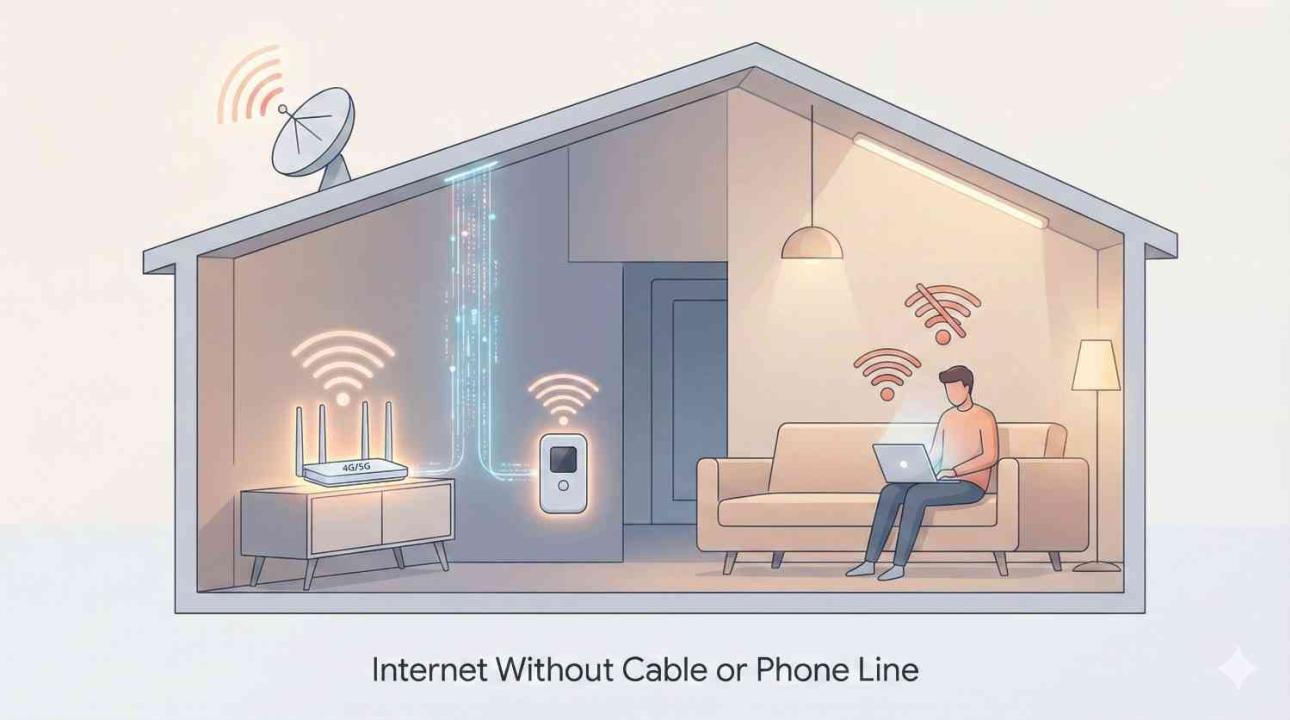
If you’ve ever moved into a new place only to find no cable jack or active phone line, you know that sinking feeling. No cable, no phone line, and suddenly, no internet. In today’s world, where tasks like paying bills and streaming your favorite shows happen online, being disconnected is not just inconvenient; it’s stressful.
The good news is that you can stay connected without traditional wiring. Whether you work from home, travel often, live in a rural area, or want a cheaper, more flexible option, there are reliable ways to get the internet without a cable or phone line. You also don’t need a technician drilling holes in your walls or a long-term contract to make it happen.
This guide outlines your best options for getting the internet without a cable or a phone line. It explains how each option works and helps you choose the right fit for your life>
Let’s dive in!
Why More People Are Ditching Cable and Phone Lines
Not long ago, the only way to connect was through DSL phone lines or cable internet. Today, wireless technology has changed everything.
People increasingly prefer:
Portability – Take your internet with you anywhere.
No-installation setups – No wires, no drilling, no appointments.
Lower monthly costs – No phone line or cable bundle required.
Faster, modern options – Especially in rural or underserved regions where cable can’t reach.
This shift is why searches for terms like internet without a cable, internet without a phone line, and Wi-Fi without an internet provider have surged.
Best Ways to Get Internet & Wi-Fi Without Cable or a Phone Line
Below are the most practical and widely used solutions today. Each option naturally answers the question: How do I get the internet without a cable or phone?
1. 4G LTE or 5G Home Internet (Best for Homes, RVs & Rural Areas)
4G LTE and 5G home internet work like your smartphone; they use nearby cell towers instead of physical lines. You simply plug in a wireless router, and just like that, you’ve got Wi-Fi without internet cables.
Why people love it:
No installation or wiring
Works anywhere with decent cell coverage
Fast enough for streaming, gaming, Zoom, and remote work
Great for rural communities where cable isn’t available
This is one of the most popular ways to get the internet without a cable or phone because it’s simple and reliable.
2. Mobile Hotspot Devices (Portable Wi-Fi Everywhere)
Also known as MiFi or hotspot routers, these compact devices connect to cellular networks and give you wifi without internet provider wiring.
Perfect for:
Digital nomads
RV travelers
Students
Temporary housing
Backup internet during outages
Hotspots offer a fully wireless way to get internet and Wi-Fi without a cable or a phone line, with speeds depending on your carrier.
3. Smartphone Hotspot Tethering (Fast and Easy)
Most smartphones can create a personal hotspot. While it’s not ideal as your main home internet, it’s very handy when you need internet without cable for short periods, especially if you have an unlimited data plan.
You can use it for:
Working on a laptop
Streaming in moderate quality
Emergency internet backup
If you want wifi without internet equipment, this is the fastest way to get connected.
4. Satellite Internet (Best for Remote & Off-Grid Areas)
If you live off-grid or in a heavily wooded or mountainous area where cell signals are weak, satellite internet is an option. Providers deliver the internet through satellites instead of towers or cables.
Pros:
Available almost anywhere in the country
Works where all other options fail
Great for RVs, cabins, and rural properties
Cons:
Higher latency compared to LTE/5G
Requires installing a small dish
More expensive
Still, it remains one of the strongest solutions for the internet without cable availability.
5. Public Wi-Fi or Community Networks (Free or Low-Cost)
Not a long-term solution, but good for quick access.
You’ll find public Wi-Fi in:
Cafes
Libraries
Airports
Shared workspace hubs
Community centers
You won’t get the privacy or speed of home internet, but it serves as a solid backup when you need Wi-Fi without internet provider access quickly.
How to Choose the Best Option for Your Needs
Here’s a quick guide to help you decide:
If you live rural → Choose 4G LTE home internet or satellite internet
These options are optimized for long distances and no existing infrastructure.
If you travel → Choose mobile hotspot devices
Portable, flexible, and can be used across states.
If you need temporary access → Choose smartphone tethering
Fast, simple, and instant.
If you want the most reliable connection → Choose 5G home internet
Great for streaming, gaming, and large households.
Does It Really Work Without a Provider or Wires?
Absolutely. Modern wireless tech makes it possible to:
get internet without a cable or phone,
enjoy internet without a cable installation,
run internet without phone line requirements, and
even get wi-fi without an internet provider using hotspot devices.
All without waiting for a technician, paying setup fees, or being forced into bundled cable services you don’t want.
Conclusion
You don’t need cable lines, landlines, or complicated setups to stay connected. Thanks to today’s wireless technology, getting internet and Wi-Fi without a cable or a phone line has never been easier at home, on the road, or off-grid.
From LTE home routers and 5G hotspots to satellite internet and smartphone tethering, you have flexible options that fit your needs and location. Modern connectivity is simple, wireless, and accessible, no cables required.
FAQs On Get Internet Without a Cable or Phone
1. How can I get internet without cable or a phone line?
You can get online with several wireless options that don’t require cables or landlines. Popular choices include 4G/5G home internet, mobile hotspot devices, and smartphone tethering. Satellite internet and public Wi-Fi are also good alternatives depending on your location.
2. What is the best wireless internet option for homes without cable?
For most homes, the best overall option is 4G LTE or 5G home internet. It offers reliable speeds, wide coverage, and easy setup with no wiring needed. This makes it ideal for rural, suburban, and temporary living situations.
3. Can I get Wi-Fi without internet service providers?
Yes, you can create Wi-Fi without a traditional ISP connection. Devices like mobile hotspots or a smartphone’s tethering feature provide a Wi-Fi signal using cellular data. This allows you to stay connected without installing cables or long-term service contracts.
4. Does mobile hotspot internet work for streaming or gaming?
Yes, a strong 4G or 5G hotspot can handle everyday streaming and casual gaming. You’ll experience smoother performance with a strong, consistent cellular signal. Heavy online gaming may require low-latency networks, which 5G handles best.
5. What’s the fastest no-cable internet option?
Currently, 5G home internet is the fastest wireless option that doesn’t need cables or phone lines. It can deliver speeds similar to or even faster than traditional cable internet. Availability depends on your region, but coverage is expanding rapidly.