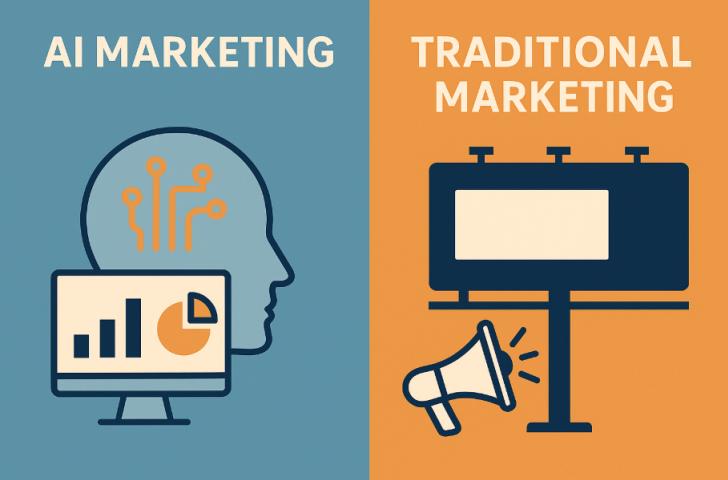
Artificial Intelligence (AI) is reshaping the world of Search Engine Optimization (SEO). From content creation to keyword research to ranking predictions, AI is changing how businesses plan and execute their SEO strategies. As search engines evolve, especially with AI-driven features like Google’s Search Generative Experience (SGE), marketers need to understand how AI impacts SEO and how to use it effectively. This guide explains the role of AI in SEO and how you can adapt your strategy for better results.
How AI Is Transforming SEO
AI has become a core part of modern search engines. Google uses machine learning systems like RankBrain, BERT, and MUM to understand user intent and deliver more accurate results.
This means SEO is no longer about stuffing keywords or building random backlinks—it’s about providing high-quality, relevant, and helpful content.
Marketers can use AI tools to analyze large sets of data, predict search trends, and optimize content faster than before. AI helps simplify SEO, but it also raises the bar for quality and user experience.
Smarter Keyword Research
AI tools can scan millions of search queries to suggest the best keywords for your content. Unlike traditional tools, AI understands:
Search intent
Topic clusters
Long-tail queries
Voice search patterns
Question-based keywords
This helps you discover what people really want, not just what they type.
For example, instead of targeting a broad keyword like “digital marketing,” AI might suggest intent-based queries such as “how to start digital marketing for a small business.”
AI for Content Creation and Optimization
AI-powered writing tools make content creation faster, but human editing and strategy are still essential.
AI helps by:
Generating content outlines
Suggesting headlines
Improving readability
Identifying missing keywords
Analyzing competitors
Optimizing meta tags
The key is to use AI as a support tool, not a full replacement. Search engines prioritize authenticity, usefulness, and depth—qualities that still require human input.
Improving User Experience with AI
User experience (UX) is now a major ranking factor.
AI can help improve UX by:
Analyzing user behavior
Identifying pages with high bounce rates
Suggesting layout improvements
Predicting what users want next
Enhancing website navigation
A better user experience leads to longer site visits, higher engagement, and better rankings.
AI and Technical SEO
AI tools can scan your website and automatically detect:
Broken links
Slow pages
Duplicate content
Indexing issues
Schema markup suggestions
This helps you fix issues quickly, ensuring your site is technically strong and search-engine friendly.
Preparing for AI-Driven Search (SGE and Beyond)
Google’s AI-driven search (SGE) changes how results appear. AI-generated answers will often appear above organic results, meaning businesses must adapt.
To stay visible:
Focus on E-E-A-T (Experience, Expertise, Authoritativeness, Trust).
Create content with deep insights.
Use question-based headings.
Optimize for conversational and long-form queries.
Strengthen your local SEO and brand signals.
Brands that publish helpful, high-quality content will still succeed—even with AI-powered search taking a bigger space.
Conclusion
AI is transforming SEO, but it doesn’t replace the fundamentals. It enhances keyword research, boosts content quality, improves user experience, and helps fix technical issues faster. The future of SEO belongs to marketers who combine AI efficiency with human expertise to create content that truly serves users. By embracing AI responsibly and strategically, you can stay ahead in a rapidly evolving search landscape.