Scaling an Online Business means increasing revenue without dramatically increasing costs. It is not just about getting more traffic. It’s about operational efficiency. Knowing the right time to scale is critical. Many businesses try to grow too fast. They end up breaking their systems or sacrificing customer service.
The right time to scale is when you have three clear metrics:
Consistent Profit: You have a steady, reliable income every month.
Defined Processes: Your sales, fulfillment, and customer service are standardized and documented.
High Customer Satisfaction: Your current customers are happy and providing positive reviews.
My expert advice is to only scale what is proven. Do not invest heavily in advertising until your funnel is converting consistently. Scaling prematurely often leads to burnout and financial strain.
The Power of Automation in Scaling Operations
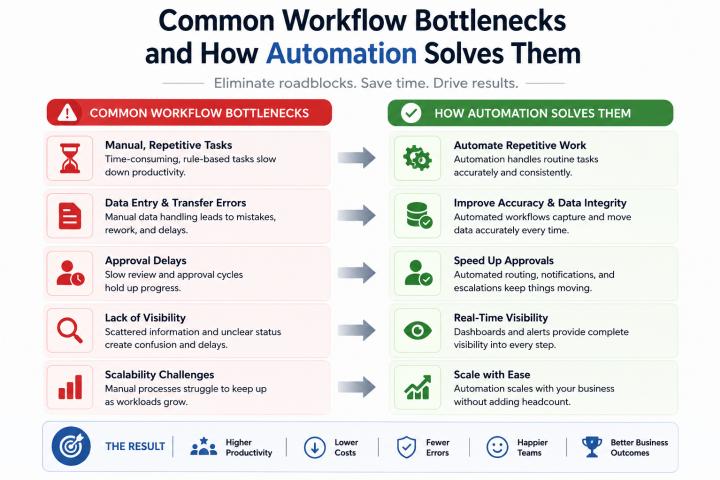
Automation is the key to decoupling revenue from your time. It is how an Online Business truly grows. You must automate repetitive, low-value tasks. This frees up your energy for strategic work. Automation allows you to serve 1,000 customers as easily as you serve 10.
H3: Streamlining Customer Communication
Use Digital Marketing automation for email sequences. This includes welcome emails, abandoned cart reminders, and follow-up surveys. Implementing chatbots can handle 80% of routine customer inquiries instantly. This ensures customers feel supported 24/7.
H3: Inventory and Fulfillment
For E-commerce, integration between your storefront and warehousing is essential. Automated systems can generate shipping labels and update inventory levels instantly. This prevents selling out-of-stock items, which damages customer trust. This reduces manual labor dramatically.
H3: Marketing and Advertising Bids
Artificial Intelligence tools automatically adjust ad bids in real-time. They optimize campaigns based on performance data. This ensures your ad budget always goes to the best-performing audience. This is one of the most powerful uses of automation in modern Digital Marketing.
Advanced Strategies for Traffic and Lead Generation
Once your systems are automated, you can focus on driving higher volumes of qualified traffic. Scaling requires moving beyond basic SEO. You need diversified, high-intent traffic sources.
PPC Remarketing: Target users who visited your site but did not buy. These ads follow them across the internet. Remarketing campaigns have much higher conversion rates than cold advertising.
Affiliate Marketing: Recruit other people or websites to sell your product for a commission. This provides risk-free exposure. You only pay when a sale is actually made.
Omnichannel Presence: Do not rely on one platform. Be active on YouTube, Pinterest, and TikTok if your audience is there. Your Online Business should meet customers where they already spend their time.
Leveraging Data for Hyper-Personalization
Scaling an Online Business successfully means making every customer feel unique. You must move from generalized messaging to hyper-personalization.
Use your CRM and analytics to segment your audience into very specific groups. For example, segment customers who bought product A but abandoned product B. You can then send them a highly specific email offer. This precise segmentation boosts conversion rates significantly Source: CRM Institute Report. The data shows that personalization increases user engagement.
Diversification and Advanced Monetization
A mature Online Business rarely relies on just one stream of income. Diversification protects you from market changes and ensures stability.
Subscription Models: Convert one-time purchases into recurring revenue. This could be a monthly box, a software license, or exclusive membership content. Subscriptions build predictable income.
High-Ticket Offers: Introduce a premium product or service. This could be a one-on-one coaching package or an advanced masterclass. Higher-priced items require fewer sales to meet financial goals.
Licensing and Partnerships: License your digital content to other brands. Partner with non-competing businesses to co-promote. This uses your existing assets to generate new, passive revenue.
My perspective is that a diverse income portfolio is the best defense against market volatility. Never put all your financial eggs in one E-commerce or product basket.
Conclusion
Scaling an Online Business is a calculated process, not a sudden leap of faith. It starts with solid profits and standardized procedures. Success is achieved through mastering automation, especially in Digital Marketing and fulfillment. By strategically diversifying your revenue and using data for hyper-personalization, you can transition from a small venture to a large, efficient, and highly profitable digital enterprise.
Frequently Asked Questions (FAQs)
Q: What is the primary difference between growth and scaling?
A: Growth means increasing revenue by adding resources (e.g., hiring staff). Scaling means increasing revenue without adding significant resources. Automation is essential for true scaling.
Q: What is a CRM and why is it needed for a scaling business?
A: CRM stands for Customer Relationship Management. It is software that tracks all customer interactions and sales activities. It ensures consistent, personalized follow-up as your customer base expands.
Q: How do I calculate Customer Lifetime Value (CLV)?
A: CLV is the total revenue a customer is expected to generate for your Online Business over the entire time they remain a client. It helps determine how much you can afford to spend on new customer acquisition.