The current dynamic business world has made it impossible to use conventional operating models by organizations. Enterprises are being forced to rethink their operations, value delivery and innovation by digital disruption, customer expectations and competitive pressure. Enterprise transformation as the digital-first to the traditional process has become necessary and not an option. It is not a mere transformation of the use of new technologies, but a transformation of workflow, culture, decision-making, and long-term strategy to remain relevant in a digital economy.
Understanding Traditional Enterprise Models
Conventional businesses are characterized by strict hierarchies, manual processes, departmentalization, and old systems. Although these models have worked in the past they tend to have problems with:
Ineffective decision-making.
Limited scalability
High operational costs
Absence of real-time data insight.
Poor customer experience
Paper-based documentation, manual approvals, and systems that are disconnected lead to reduced efficiency and make organizations hard to adapt to changes in the market as fast as possible.
What Motivates the Digital Enterprise Change?
Enterprises are being driven towards digital transformation by a number of forces:
Customer Expectations:
The customers are now demanding quick, customized, and smooth experiences in the digital channels.
Technological Advancements:
Cloud computing, artificial intelligence (AI), big data, and automation are the latest technologies that transform the way businesses are conducted.
Operational Efficiency:
Digital tools minimize the human error, enhance speed and efficiency, and maximize the use of resources.
Competitive Pressure:
Digitally mature corporations have better agility and innovativeness compared with their traditional counterparts.
Key Pillars of Enterprise Digital Transformation
1. Automation and optimization of the processes.
Streamlining of internal functioning is one of the initial stages in enterprise transformation. Enterprise workflow automation is important as it substitutes manual work with automated workflows that are free of manual repetitive chores. This will allow organizations to:
Reduce operational delays
Enhance adherence and accuracy.
Enhance the productivity of employees.
Have real time process visibility.
Information technology Workflows can be automated to enable businesses to concentrate on strategic efforts instead of management.
2. Data-Driven Decision Making
Digital business organizations are data-driven to make decisions. High-tech analytics and artificial intelligence enable leaders:
Identify trends and risks
Predict customer behavior
Optimize supply chains
Monitor real time performance.
Having all the data at one place and reachable, the organization will be able to shift to the proactive mode of decision-making.
3. Intelligent Automation and Artificial Intelligence.
The transformation of enterprises in modern times is based on AI. Chatbots and recommendation engines are just a few examples of how AI can make operations smarter, as well as predictive analytics.
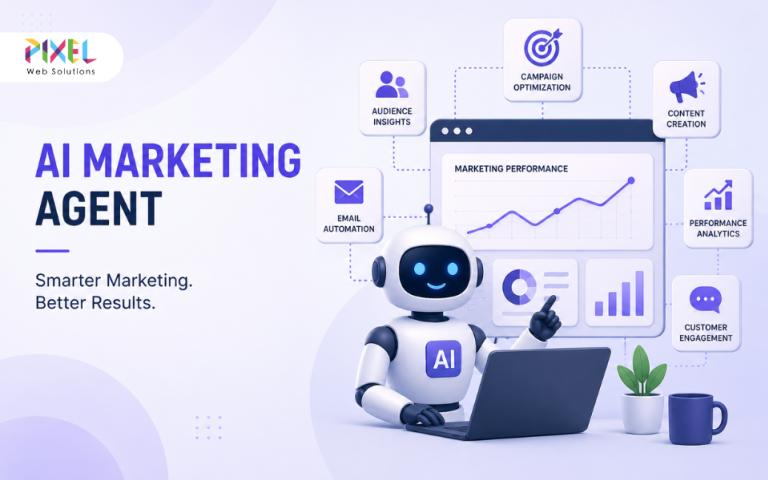
More organizations are spending on AI agent development Services to develop smart systems that will be able to perform tasks like customer support, process monitoring, and decision assistance without human intervention. These artificial intelligence agents are hired to collaborate with human teams to enhance efficiency and consistency at a lower cost.
4. Scalable Infrastructure and Cloud.
The cloud-based platforms are flexible, scalable and secure. Enterprises are able to quickly roll out new solutions, scale their operations and work together across geographies without investing heavily in infrastructure. The introduction of cloud technology also facilitates the easy incorporation of automation systems, AI and data infrastructures.
5. Organizational Change, Cultural.
Transformations cannot be brought about by technology. There is an organisational culture of innovation, agility and constant learning in the successful digital enterprises. This includes: Training workers to work in the digital world. Promoting interfunctional teamwork. Adopting experimentation and change. Leadership is critical towards influencing the teams through this transition.
The advantages of Digital Enterprise Change.
Digital transformation can also provide quantifiable business value when implemented successfully:
Enhanced productivity due to automation of work processes and operations that are driven by AI.
Improved customer services through bespoke and responsive services. Increased responsiveness to changes in the market.
Economies of scale through lessening manual work and work inefficiencies. Innovation and speed enhance strong competitive advantage.
Companies investing in the automation of workflow, intelligent systems are in better positions to grow in the long term.
Challenges in the Transformation Journey
Notwithstanding its advantages, there are challenges involved in enterprise transformation:
Employee resistance to change.
Lagacy system integration problems.
Information protection and adherence issues.
Huge initial investment costs.
To overcome these challenges, it is necessary to have a clear roadmap, align stakeholders and have trusted technology partners.
The Future of Digital Enterprises
The prospective business will be smart, responsive, and automated. With the development of AI technologies, companies will find it easier to depend on the services of enterprise workflow automation and development of AI agents to develop self-optimizing systems that can learn and improve over time.
Those Organizations that embark on the digital transformation path now will be in a better position to succeed in the AI-driven, digital-first economy.
Conclusion
Digitization of enterprise is a strategic pressure that is occurring in the contemporary business environment. Organizations can open the doors to a new era of efficiency, innovation, and customer satisfaction by adopting automation, AI, cloud technologies, and data-driven decision-making. Digital change is not a project and is a continuous process of making smarter and more resilient enterprises in the future