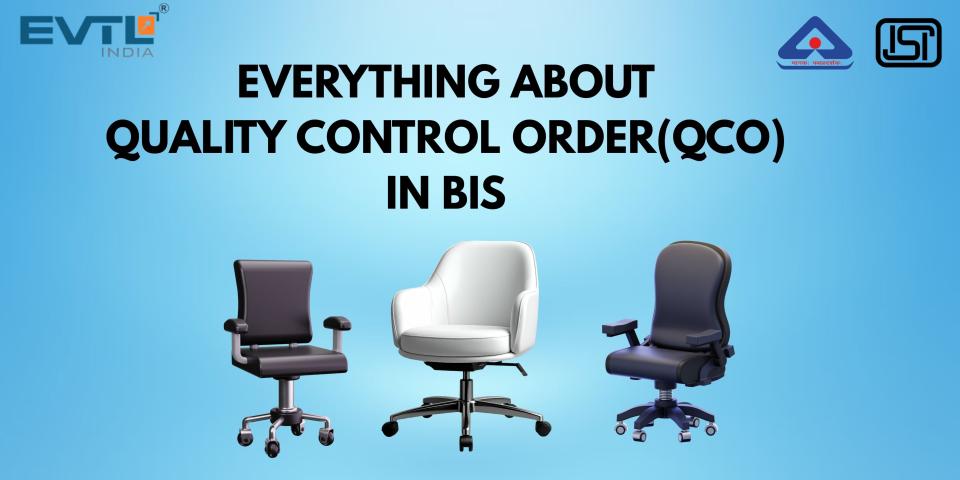
The Indian office furniture market is rapidly evolving with a strong focus on ergonomics, safety, and durability. To ensure consistent product quality, the Bureau of Indian Standards has introduced IS 17631: 2022, a dedicated standard for work chairs. For manufacturers and importers, obtaining BIS Certification for Work Chairs is becoming essential to maintain credibility and regulatory compliance.
Understanding IS 17631: 2022 for Work Chairs
IS 17631: 2022 lays down detailed technical requirements for office and work chairs, covering aspects such as structural strength, stability, material performance, and user safety. The objective of this standard is to ensure that chairs used in professional environments offer adequate support, minimize injury risks, and maintain durability under regular use.
The standard evaluates:
- Load-bearing capacity of the chair
- Strength of seat and backrest
- Stability against tipping
- Durability of moving components
- Overall ergonomic performance
Meeting these benchmarks helps brands position their products as high-quality and reliable.
Why BIS Certification for Work Chairs Matters for Your Business
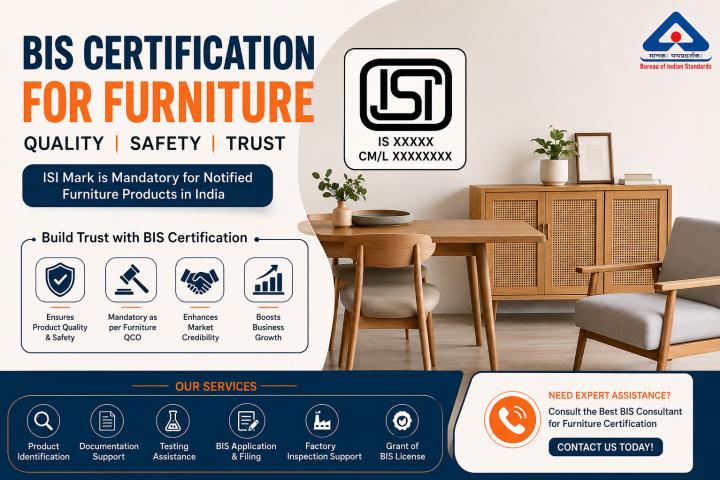
Securing BIS Certification for Work Chairs goes beyond compliance—it directly impacts market perception and sales growth. Buyers today, especially corporates and institutions, actively prefer ISI-marked products.
Key advantages include:
- Improved brand trust and product credibility
- Access to government and large enterprise tenders
- Compliance with regulatory mandates
- Competitive advantage over non-certified brands
- Long-term customer satisfaction
With growing awareness, ISI Certification for Work Chairs is increasingly viewed as a quality seal rather than just a legal requirement.
BIS License vs BIS Registration for Work Chairs
There is often confusion between BIS Registration for Work Chairs and licensing. Work chairs fall under the ISI Mark Scheme, meaning manufacturers must obtain a BIS License for Work Chairs to legally use the ISI mark.
The license confirms that the product complies with IS 17631: 2022 and that the manufacturing unit consistently follows approved quality control practices.
Impact of BIS QCO for Work Chairs
The introduction of BIS QCO for Work Chairs signifies the government’s intention to regulate product quality across the furniture sector. Once the QCO is implemented, selling non-certified work chairs in India may lead to penalties, product seizures, or legal action.
Early adoption of certification ensures:
- Business continuity
- Risk-free market access
- Stronger positioning with distributors and buyers
Role of BIS Consultant and BIS Agent for Work Chairs
Navigating certification procedures can be technically demanding. A professional BIS Consultant for Work Chairs or experienced BIS Agent for Work Chairs helps manufacturers avoid common mistakes and accelerate approval timelines.
- Their support typically includes:
- Technical gap assessment as per IS 17631: 2022
- Documentation and application support
- Coordination with BIS-recognized testing laboratories
- Factory audit preparation
- End-to-end follow-up with BIS authorities
With the guidance of a skilled ISI Consultant for Work Chairs, businesses can achieve certification smoothly without operational disruption.
Who Should Apply for BIS License for Work Chairs?
You should initiate the process of BIS Certification for Work Chairs if you are:Manufacturing office or ergonomic chairs in India
- Importing work chairs from overseas markets
- Supplying chairs to corporate offices or institutions
- A brand owner using third-party manufacturing
Certification ensures that your products are aligned with both customer expectations and regulatory requirements.
Conclusion
EVTL India is one of the leading BIS Consultant in India, helping manufacturers obtain their BIS licences hassle-free.
As quality standards become stricter, aligning your products with IS 17631: 2022 is a strategic investment in brand reputation and long-term growth. Proactive compliance with ISI Certification for Work Chairs not only safeguards your business from regulatory risks but also strengthens customer confidence in your offerings.