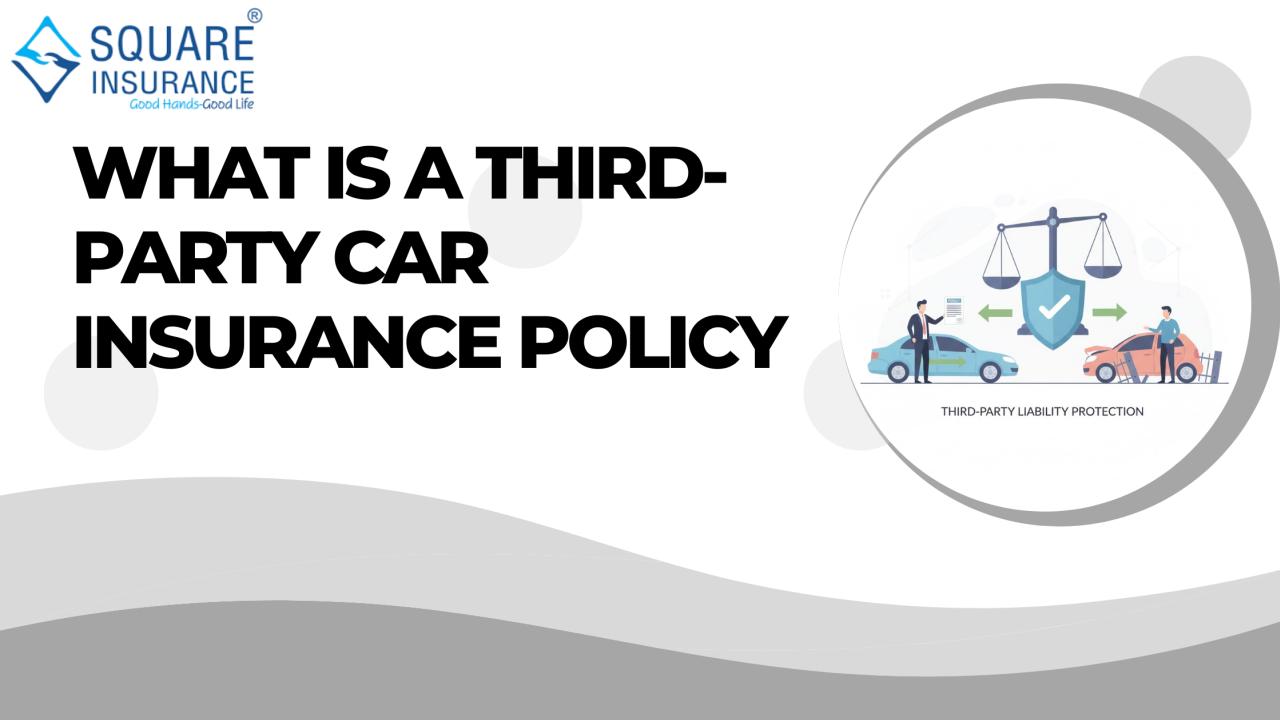
A third-party car insurance policy is the most basic and legally required form of motor insurance in India. It protects you from financial liabilities if your vehicle causes injury, death, or property damage to another person. In such cases, the affected person is called the “third party,” and your car insurance provider pays compensation on your behalf as per legal guidelines.
This type of car insurance is designed to safeguard accident victims and ensure that compensation is not dependent on the financial capacity of the vehicle owner. However, it is important to understand that this car insurance policy does not offer any protection for your own vehicle or personal losses.
Why
Is Third-Party Car Insurance Mandatory in India?
According to the Motor Vehicles Act,
every vehicle operating on public roads must carry at least third-party
insurance coverage. The purpose of this law is to protect road users and
provide financial support to victims of road accidents.
Driving without valid third-party
insurance can result in:
- Monetary penalties
- Disqualification from driving
- Legal complications after accidents
- Direct liability to pay compensation from personal
funds
This makes third-party insurance not
just a formality, but a critical legal safeguard.
What
Does Third-Party Car Insurance Cover?
Third-party car insurance offers
protection against liabilities related to others involved in an accident caused
by your vehicle.
1.
Bodily Injury or Death of Third Party
If a person is injured or loses
their life due to the accident, the policy covers compensation as decided by
the Motor Accident Claims Tribunal. There is no fixed upper limit for such
compensation.
2.
Third-Party Property Damage
If your car damages someone else’s
property such as another vehicle, a boundary wall, or public infrastructure,
the insurer covers repair costs up to the legally specified limit.
3.
Legal Expenses
Any legal costs arising from
third-party claims are also covered under the policy, reducing the financial
burden of court proceedings.
What
Is Not Covered Under Third-Party Insurance?
While third-party insurance is
essential, its scope is limited. It does not cover:
- Damage to your own car
- Theft of your vehicle
- Loss due to floods, fire, or earthquakes
- Riots or vandalism
- Mechanical or electrical failure
- Personal medical expenses of the owner-driver (unless
personal accident cover is included)
This is why it is often referred to
as liability-only insurance.
Who
Should Consider Third-Party Car Insurance?
Third-party insurance may be
suitable for:
- Owners of older vehicles with very low resale value
- Drivers who use their car occasionally
- Those looking for the lowest-cost legal compliance
- Vehicles nearing deregistration or scrappage
However, for most daily drivers,
relying only on third-party coverage can lead to significant out-of-pocket
expenses if the car is damaged or stolen.
How
Is Third-Party Insurance Premium Calculated?
The premium for third-party
insurance is fixed by regulatory authorities and is not decided by individual
insurance companies. It depends mainly on:
- Engine capacity of the vehicle
- Type of vehicle (private or commercial)
- Vehicle category and usage
Because the rates are standardized,
the policy price remains largely the same across insurers, though service
quality and claim assistance may differ.
How
Does a Third-Party Insurance Claim Work?
Third-party claims are processed
through legal channels. The general steps include:
- Filing an FIR after the accident
- Submitting claim details to the insurer
- Claim registration in the Motor Accident Claims
Tribunal
- Tribunal determines compensation amount
- Insurer pays compensation as per court order
Since the process involves legal
evaluation, settlement may take longer compared to own-damage claims.
Limitations
of Relying Only on Third-Party Insurance
Depending only on third-party
insurance can expose you to:
- Full repair costs of your own car
- Loss due to theft or natural disasters
- No access to cashless garage facilities
- No protection against expensive spare parts
- Higher financial stress after accidents
Modern vehicles have costly
components, and even minor accidents can result in large bills.
Conclusion
Third-party car insurance is
essential because it fulfills legal requirements and protects you from
financial liability toward others. However, it does not safeguard your own
vehicle or personal expenses. For many car owners, this limited protection may
not be sufficient in real-life accident situations.
To ensure broader financial safety
and smoother claim experiences, many drivers prefer upgrading to comprehensive
coverage based on their vehicle value and usage. If you are evaluating
different insurance options and coverage types, Square Insurance can
help you compare policies and choose a plan that aligns with your protection
needs and budget.
Frequently
Asked Questions
1.
Is third-party car insurance compulsory in India?
Yes, it is mandatory for all
vehicles under the Motor Vehicles Act.
2.
Does third-party insurance cover my car repairs?
No, it does not cover damage to your
own vehicle.
3.
Can I add zero depreciation or other add-ons to third-party insurance?
No, add-on covers are available only
with comprehensive policies.
4.
Is third-party insurance enough for new cars?
For new or expensive cars,
third-party insurance is usually not sufficient because it does not cover own
damages or theft.
5.
Can I upgrade from third-party to comprehensive insurance later?
Yes, you can switch to comprehensive
insurance at the time of policy renewal.
6.
Who pays compensation in a third-party claim?
The insurance company pays
compensation as directed by the Motor Accident Claims Tribunal.
7.
Does third-party insurance cover damage to another vehicle?
Yes, it covers repair costs of the
third-party vehicle involved in the accident.