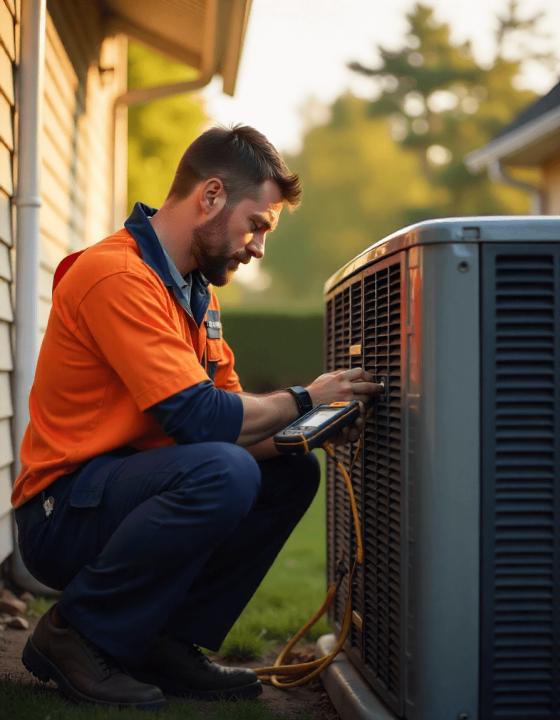
HVAC systems are not designed to fail early. When they do, it is rarely because of age alone. In most cases, premature breakdowns happen due to neglect missed inspections, dirty components, low refrigerant levels, and small issues that compound over time. Preventive HVAC maintenance directly addresses these risks, often extending system lifespan by five to ten years while preserving efficiency and reliability.
This is not a marketing claim. It is a mechanical reality backed by manufacturer data, field experience, and warranty requirements.
Why Preventive Maintenance Is Not Optional
Many property owners treat HVAC maintenance as an expense instead of a protection strategy. That mindset leads to higher operating costs, unpredictable failures, and early system replacement. Preventive maintenance flips this equation by keeping systems within design tolerances year after year.
A structured program such as the Comprehensive Gold Maintenance Plan ensures that inspections, cleanings, and adjustments happen on schedule rather than after damage has already occurred.
Skipping maintenance does not save money. It delays costs until they become unavoidable and significantly higher.
How HVAC Systems Actually Wear Out
HVAC systems fail due to stress, not time. Stress comes from friction, heat imbalance, airflow restriction, electrical strain, and moisture-related corrosion. Preventive maintenance reduces each of these factors before they reach failure thresholds.
When systems are left unchecked, the following patterns emerge:
- Dirty coils force compressors to work harder
- Restricted airflow overheats motors and heat exchangers
- Loose electrical connections cause voltage imbalance and component failure
- Improper refrigerant levels shorten compressor life
- Condensate buildup leads to rust, mold, and water damage
Over time, these issues turn a 20-year design lifespan into a 10–12 year reality.
Coil Cleaning: Protecting the Compressor
The compressor is the most expensive and critical component in any HVAC system. It is also the most sensitive to operating conditions.
Dirty evaporator and condenser coils reduce heat transfer efficiency. This causes the compressor to run longer cycles under higher pressure, accelerating internal wear. Preventive maintenance includes coil inspection and cleaning, which directly lowers compression ratios and thermal stress.
Field data consistently shows that systems with regularly cleaned coils experience significantly fewer compressor failures and maintain stable performance deeper into their service life.
Airflow Management and Motor Longevity
Airflow problems are silent system killers. Clogged filters, blocked returns, and dirty blowers force motors to operate outside their designed load range. This increases amperage draw, raises operating temperatures, and degrades insulation on motor windings.
Preventive maintenance ensures:
- Filters are replaced before pressure drop becomes harmful
- Blower assemblies are cleaned and balanced
- Duct restrictions are identified early
Motors that run cooler and within rated amperage last years longer than those under constant strain.
Electrical Inspections Prevent Sudden Failures
Electrical components rarely fail without warning those warnings are just often ignored. Loose terminals, pitted contactors, and capacitor degradation are all detectable during routine inspections.
Preventive maintenance identifies and corrects these issues before they cause:
- Hard starts that damage compressors
- Voltage imbalance that burns motors
- Intermittent shutdowns that stress controls
Replacing a capacitor during maintenance is inexpensive. Replacing a compressor after repeated electrical stress is not.
Refrigerant Levels and System Balance
Low refrigerant is not normal and should never be treated as routine. It indicates leaks, improper charging, or previous service errors. Operating with incorrect refrigerant levels leads to oil dilution, overheating, and mechanical damage inside the compressor.
Preventive maintenance includes refrigerant pressure and temperature analysis to confirm the system is operating within manufacturer specifications. Catching a slow leak early can extend compressor life by years and prevent catastrophic failure during peak demand.
Heat Exchanger and Safety Preservation
In heating systems, neglected maintenance can be dangerous. Cracked heat exchangers reduce efficiency and pose serious safety risks. Preventive inspections detect early signs of metal fatigue, corrosion, and improper combustion.
By maintaining clean burners, proper airflow, and correct fuel-to-air ratios, systems avoid thermal stress that shortens exchanger life and compromises safety.
Reduced Short Cycling and Control Stress
Short cycling frequent on-off operation wears systems faster than long, stable run cycles. It stresses compressors, relays, and control boards.
Preventive maintenance corrects the root causes of short cycling, including:
- Oversized or undersized components
- Faulty sensors or thermostats
- Dirty coils and airflow restrictions
Systems that cycle correctly experience less mechanical and electrical fatigue over time.
Manufacturer Warranties Depend on Maintenance
Most HVAC manufacturers explicitly require documented preventive maintenance to honor extended warranties. Skipping service can void coverage, leaving owners fully exposed to replacement costs.
From an EEAT standpoint, this is not opinion it is written into warranty terms. Preventive maintenance protects not only the equipment but also the financial safeguards attached to it.
Why 5–10 Extra Years Is Realistic
A well-maintained HVAC system typically reaches or exceeds its expected service life:
- Residential systems: 18–25 years with consistent maintenance
- Commercial systems: 20–30 years depending on load and environment
In contrast, neglected systems often fail 5–10 years early due to avoidable stress-related damage. The lifespan extension comes from cumulative protection small corrections made repeatedly over time.
Preventive Maintenance vs Reactive Repairs
Reactive maintenance focuses on restoring function after failure. Preventive maintenance focuses on preserving condition before failure occurs.
The difference is not subtle:
- Preventive maintenance lowers total cost of ownership
- Reactive repair increases downtime and replacement risk
- Preventive maintenance stabilizes performance and comfort
- Reactive repair introduces uncertainty and emergency costs
From a system engineering perspective, preventive maintenance is the only rational long-term strategy.
Final Takeaway
HVAC systems do not wear out because they get old. They wear out because they are pushed beyond safe operating limits for too long. Preventive maintenance keeps those limits in check.
Extending system lifespan by five to ten years is not optimistic it is the predictable result of reduced stress, controlled operating conditions, and early intervention. For property owners serious about reliability, cost control, and long-term value, preventive HVAC maintenance is not optional. It is foundational.