We’ve all done it. You’re driving home, the radio is low, and you hear it, a faint, metallic chirp from somewhere near your wheels. You tap the brake, the sound disappears, and you tell yourself: “I’ll have the mechanic look at that during the next oil change.”
But that tiny, intermittent noise is often the first warning of a looming mechanical disaster. Most drivers view brake maintenance as an optional "up-sell" at the shop, but ignoring the early signs of wear is the fastest way to turn a routine maintenance task into a catastrophic repair bill.
To understand why brake inspection service matters, we have to look past the brake pedal and into the physics of how your vehicle actually survives the road.
The Anatomy of the Slow Burn
A braking system is a marvel of physics, but it is also a system designed to destroy itself. Every time you slow down, you are essentially converting kinetic energy into thermal energy, heat. This heat is the enemy of every component involved. Understanding the parts helps demystify the "why" behind the wear:
Brake Pads:
Think of these as the "sacrificial lambs" of your vehicle. They are comprised of various compounds, ceramic, semi-metallic, or organic, designed to wear away so your more expensive components don't have to.
The Rotors:
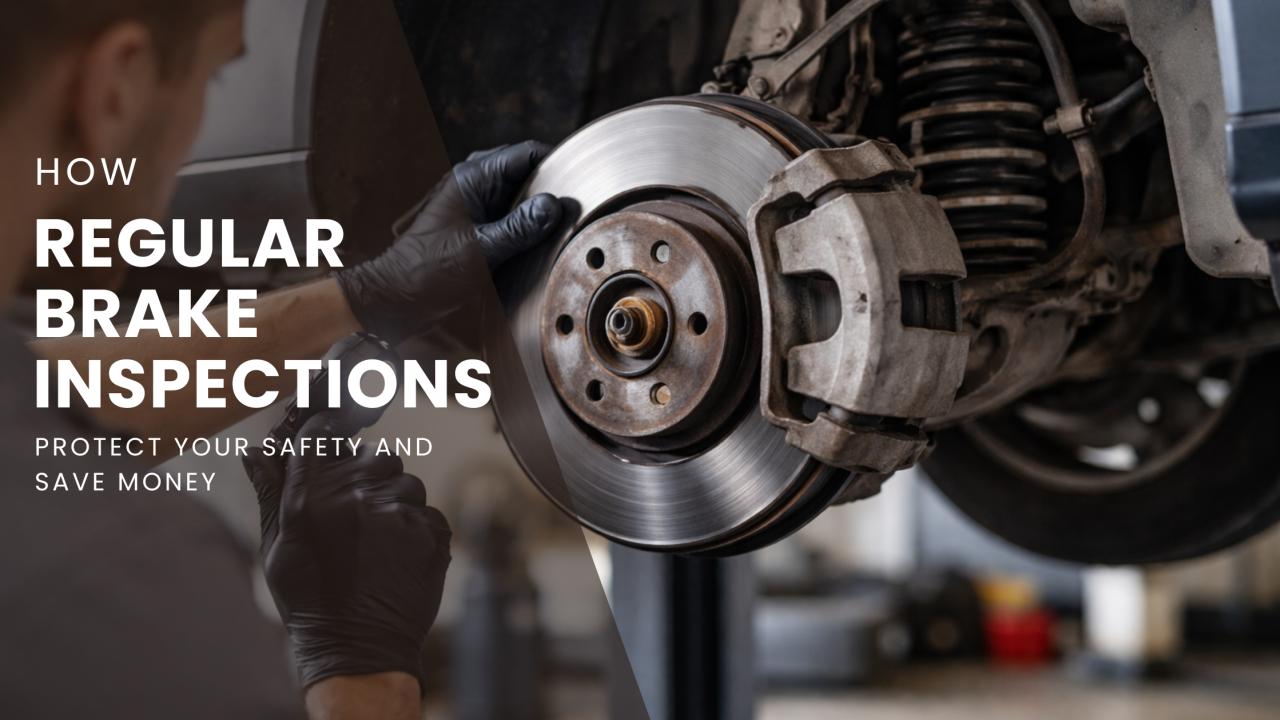
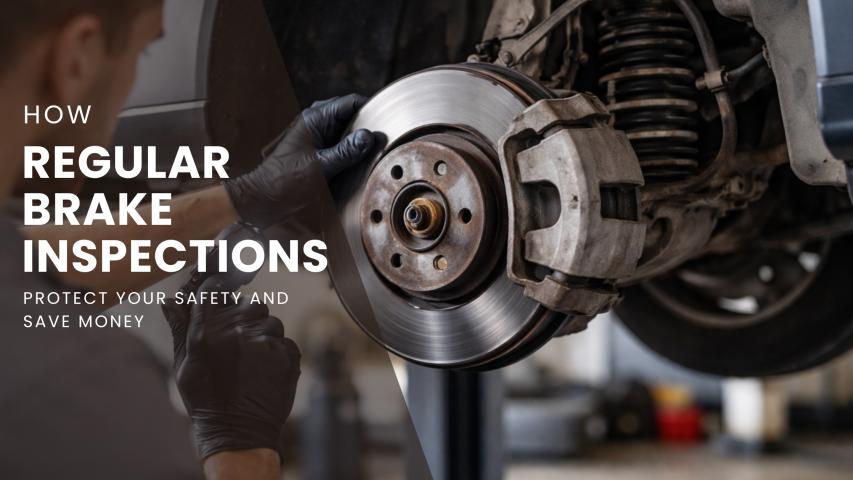
These are the heavy metal discs that spin with your wheels. If your pads get too thin, the metal backing plate scrapes directly against the discs, gouging their surfaces. This is where "maintenance" turns into "replacement."
The Calipers:
These act like a clamp, using hydraulic pressure to squeeze the pads against the rotors. If a caliper "sticks" due to debris or age, it will keep your brakes partially engaged, dragging your fuel economy down and melting your pads in a matter of miles.
The Fluid:
This is the most overlooked part of the system. Brake fluid is hygroscopic, meaning it literally absorbs moisture from the air. Over time, that water corrodes your internal lines and lowers the fluid's boiling point. In heavy braking situations, this moisture can turn to steam, leading to a terrifying loss of pedal pressure.
Science Behind Different Materials
During a professional inspection, a technician isn't just looking at if you have pads left, but how they are wearing. This often brings up the question of material choice, which significantly impacts your maintenance schedule.
Ceramic pads are quiet and produce very little dust, making them a favorite for luxury car owners. However, they don't handle extreme heat as well as Semi-Metallic pads, which are found on heavy-duty trucks and performance cars. If an inspection reveals that your pads are "glazing", becoming smooth and shiny like glass, it means they’ve been overheated.
This reduces friction and increases your stopping distance, even if the pad still looks thick. Understanding these nuances is why a professional eye is superior to a simple "is there still meat on the bone" check.
The Warning Signs
Cars are surprisingly good at communicating; the challenge is learning the language. Here is a translation guide for what your vehicle is trying to tell you:
- The High-Pitched Chirp: This is the "Wear Indicator." It’s a small metal tab that hits your rotor when the pad is low. It isn’t a suggestion; it’s a timer.
- The Steering Wheel Shivers: If your car shakes or pulses when you’re slowing down from highway speeds, your rotors are likely warped or have uneven deposits of brake material. You’re no longer braking on a flat surface; you’re braking on a wave.
- The Spongy Pedal: If you feel like you have to "pump" the brakes or if the pedal sinks toward the floor at a red light, you have a hydraulic issue. This is the most critical sign, it means your stopping power is literally leaking away.
- The "Pull" to One Side: If the car pulls slightly to one side when you hit the brakes, you likely have a collapsed brake hose or a frozen caliper. This uneven braking is dangerous in wet or icy conditions.
The Math of Procrastination
The financial argument for regular inspections is hard to ignore. A standard brake pad replacement is one of the most affordable and predictable routine brake repair services you can get. It is a controlled cost.
However, once you cross the threshold into "metal-on-metal" grinding, the price doesn't just double, it often quadruples. You aren't just paying for pads anymore; you’re paying for rotors, calipers, and the increased labor time required to fix the heat damage.
Furthermore, worn brakes put an incredible amount of stress on your tires and suspension. When your brakes aren't doing their job, your tires have to work harder to maintain grip, and your shocks have to manage more weight transfer. By neglecting a $150 pad change, you are effectively accelerating the wear on $1,000 worth of tires.
Environmental Factors Are The Silent Killers
Maintenance schedules aren't just about mileage; they are about geography. If you live in an area where roads are salted in the winter, your brake lines and calipers are under constant chemical attack. Salt accelerates rust, which can cause brake lines to become brittle and eventually burst under pressure.
Similarly, if you live in a hilly or mountainous region, your brakes experience "heat cycling" much more frequently. This constant expansion and contraction of the metal rotors can cause microcracks that are invisible to the untrained eye but can lead to total rotor failure under stress.
A regular inspection accounts for these environmental variables that a standard "mileage-based" manual might miss.
The Psychology of the Stop
Beyond the mechanics, there is a specific kind of "driving fatigue" that comes from subconsciously knowing a vehicle isn't 100%. You start braking earlier. You leave ten car lengths of space because you don't fully trust the pedal. You avoid certain routes or steep hills.
Investing in a brake inspection isn't just about buying car parts; it’s about reclaiming confidence. There is a profound difference between hoping a car will stop and knowing it will. Reliability on the road translates directly to a lower stress level behind the wheel, making you a more observant and safer driver.
Get Your Brakes Regularly Inspected
You don't need to be a mechanic every time your vehicle needs repair. A professional at a vehicle repair shop can do it for you.
Have your brakes checked whenever your tires are rotated, usually every 6 months or 10,000 kilometers. Since the wheels are already off, most technicians can perform a visual inspection in minutes.
Don't wait for a dashboard light to tell you there is a crisis. Many older vehicles don't even have sensors for pad wear; they rely entirely on the driver’s ears and the mechanic’s eyes.
By the time the hardware indicates a failure, the damage to your safety and your wallet has already been done. Handling the "small" things ensures they never have the chance to become "big" things. Your car, your passengers, and your savings account will thank you.