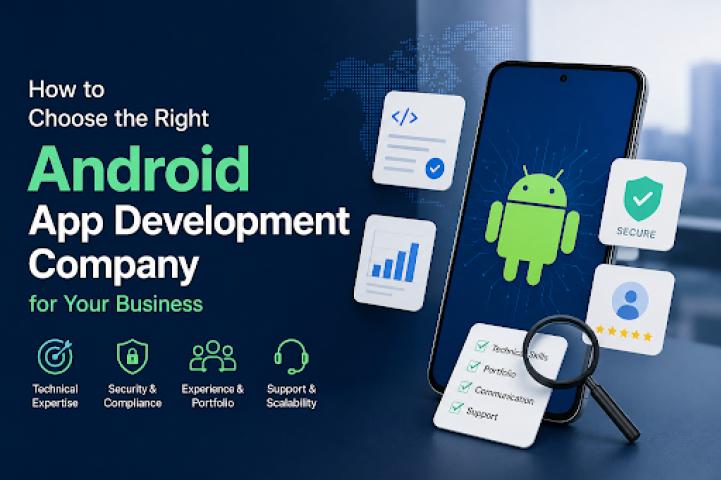
Choosing the right company to develop a native Android app is a crucial step for businesses looking to create a successful mobile application. The right development partner can make the difference between an app that performs well and one that fails to meet expectations. Native Android apps are designed specifically for Android devices, which means they offer better performance, smoother operation, and direct access to device features like the camera, GPS, notifications, and sensors.
Selecting a development company requires careful consideration of several factors, including technical expertise, process transparency, and ongoing support. This guide provides practical advice for evaluating potential partners and making a well-informed decision.
Understand Your App Requirements
Before approaching any development company, it’s important to have a clear understanding of your app’s requirements. Consider the following:
-
Purpose of the App: Determine whether the app is meant for e-commerce, social networking, healthcare, education, finance, or internal business operations.
-
Target Audience: Knowing who will use your app helps developers design user-friendly interfaces and incorporate relevant features.
-
Key Features: List all the essential functionalities, such as offline use, notifications, camera access, location tracking, or payment integration.
-
Platform Compatibility: Decide if the app will be exclusively for Android devices or if cross-platform compatibility may be needed in the future.
Having a detailed outline of your app’s goals and features will help you communicate your vision clearly to potential development partners.
Evaluate Technical Expertise
A company’s technical skills are a fundamental factor in delivering a high-quality app. Look for teams with experience in:
-
Android Programming Languages: The company should be proficient in Java and Kotlin, the official languages for Android development.
-
Android SDK and Tools: Familiarity with Android Studio, libraries, and frameworks ensures efficient app creation.
-
Hardware Integration: Apps may require interaction with device features like GPS, accelerometer, camera, or sensors. Developers must be able to implement these properly.
-
Performance Optimization: Efficient coding ensures faster load times, smooth animations, and reduced app crashes.
Requesting technical documentation or examples of previous work can help gauge their capabilities without focusing on client testimonials or cost.
Check the Development Process
Understanding how a company manages its projects can reveal whether they can deliver an app efficiently and reliably. A well-structured process usually includes:
-
Requirement Analysis: The team should start by analyzing your app goals and determining the most suitable approach.
-
Design Phase: A clear plan for creating the user interface and experience should be in place.
-
Development: The company should follow organized coding practices, version control, and documentation.
-
Testing: Rigorous testing ensures the app works properly on different Android devices and versions.
-
Deployment: The team should manage app submission to the Google Play Store according to guidelines.
-
Post-Launch Support: Ongoing maintenance, updates, and bug fixes help keep the app functional and secure.
A transparent development process demonstrates professionalism and reduces the risk of misunderstandings during the project.
Review Security Practices
Security is a critical aspect, especially for apps handling sensitive information like personal details, payments, or health records. When evaluating companies, consider whether they:
-
Follow Android’s security protocols for data protection.
-
Implement encryption and secure storage for sensitive data.
-
Ensure secure communication between the app and servers or external services.
-
Conduct regular security testing to identify potential vulnerabilities.
A company with strong security practices can prevent data breaches and protect both your business and your users.
Assess Design Capabilities
An app’s design greatly influences user satisfaction and engagement. The company should demonstrate the ability to:
-
Create user-friendly layouts that are easy to navigate.
-
Design responsive interfaces that adapt to different screen sizes.
-
Incorporate visual elements that are consistent with your brand.
-
Enhance usability without overcomplicating interactions.
Good design is not just about aesthetics—it impacts functionality and user retention.
Consider Integration Capabilities
Most apps need to work with other services or systems, such as payment gateways, analytics tools, social media platforms, or internal databases. A capable company should be able to:
-
Integrate third-party services smoothly.
-
Ensure data is transmitted securely and efficiently.
-
Maintain functionality even when connected to multiple systems.
Proper integration increases the app’s versatility and usefulness for both businesses and users.
Verify Ongoing Maintenance and Support
Developing an app is only the first step. Over time, updates, bug fixes, and compatibility adjustments will be necessary. A reliable company should offer:
-
Regular maintenance to keep the app compatible with the latest Android versions.
-
Prompt issue resolution to fix bugs or errors.
-
Performance optimization to maintain speed and responsiveness.
Knowing that the company provides continuous support can give you peace of mind that your app will remain functional and secure.
Evaluate Communication and Collaboration
Effective communication between your team and the development company is essential. Look for a partner that:
-
Responds quickly to questions and updates.
-
Provides clear progress reports and documentation.
-
Listens to your feedback and incorporates it appropriately.
-
Uses project management tools to track tasks and milestones.
A collaborative approach ensures your vision is implemented accurately and reduces the chance of delays or misunderstandings.
Understand Pricing and Project Scope
While cost should not be the primary factor, understanding the pricing model is important to avoid surprises. Discuss:
-
How the project will be billed (fixed price, hourly rate, or milestone-based).
-
What is included in the scope of work, such as design, development, testing, and support.
-
Policies for additional features or changes during development.
A clear agreement on pricing and scope ensures both parties have aligned expectations.
Look for Industry Knowledge
Certain apps require familiarity with specific industries, like healthcare, finance, or education. A company with relevant experience can better anticipate challenges, comply with regulations, and recommend appropriate solutions. For instance:
-
Healthcare apps may need secure patient data management and offline functionality.
-
Finance apps require secure transactions and integration with banking systems.
-
Educational apps benefit from interactive content and offline access for learners.
Understanding the nuances of your industry can improve the app’s effectiveness and reliability.
Conclusion
Choosing the right company to develop a native Android app is a critical decision that can determine the success of your project. By focusing on technical expertise, structured development processes, strong security practices, effective design, integration capabilities, ongoing support, and communication skills, you can select a partner capable of delivering a high-quality app.
Taking the time to evaluate these aspects ensures that the app not only functions well but also provides a seamless experience for users. With the right development partner, your app can meet business objectives, maintain high performance, and adapt to future technological changes. Let’s Build Your Android App.