
User experience plays a critical role in how customers interact with an online store and whether they complete a purchase. Businesses that apply ecommerce ux best practices for growth often see measurable improvements in engagement and sales.
Online shoppers expect fast, simple, and intuitive shopping journeys. Poor design, slow-loading pages, or confusing navigation can quickly lead to abandoned carts.
This guide explains how UX affects conversion rates and outlines practical strategies based on ecommerce ux best practices for growth that help online stores improve performance and revenue.
Understanding the Relationship Between UX and Conversion Rates
User experience (UX) refers to how easily customers can interact with an online store while browsing products, adding items to their cart, and completing a purchase.
A smooth experience reduces friction and encourages visitors to continue moving through the purchase funnel.
When stores follow eCommerce ux best practices for growth, they remove obstacles that prevent users from completing transactions.
Well-designed stores focus on clarity, usability, and simplicity throughout the customer journey.
Why UX Is a Key Driver of eCommerce Conversions
UX directly influences how customers perceive a brand and how comfortable they feel making a purchase.
If a store is difficult to navigate or takes too long to load, visitors often leave before exploring products.
First Impressions Influence Trust
Customers form an opinion about a website within seconds.
A clean layout, consistent design, and clear messaging help create confidence in the brand.
Ease of Navigation Encourages Product Discovery
Users should quickly find categories, filters, and product pages.
If navigation feels confusing, visitors are less likely to continue browsing.
Reduced Friction Improves Purchase Completion
A simple checkout process removes barriers that stop customers from buying.
Removing unnecessary steps is one of the most important ecommerce ux best practices for growth.
Key UX Factors That Affect Conversion Rates
Several UX elements play a direct role in improving online store performance, particularly for brands that plan to develop a multi-vendor eCommerce website and manage a large catalog of products from multiple vendors.
Businesses should continuously optimize these areas to create a better shopping experience.
Website Speed and Performance
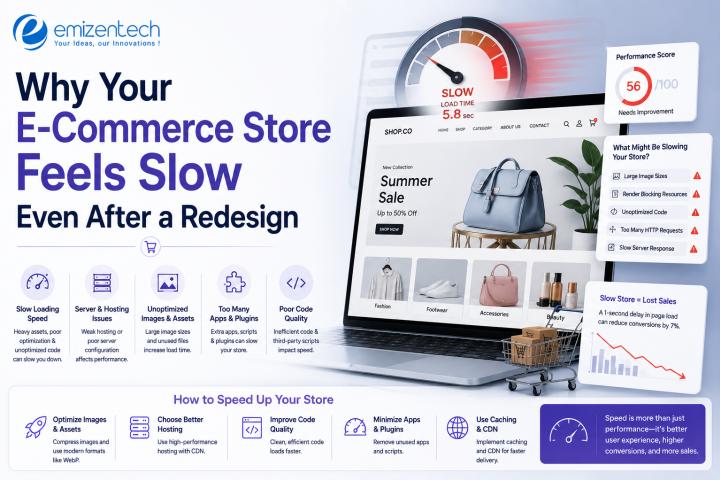
Page speed strongly influences user satisfaction and conversion rates.
Slow websites increase bounce rates and cause shoppers to abandon sessions before exploring products.
Improving loading speed is one of the most impactful ecommerce ux best practices for growth.
Mobile-Friendly Design
A large portion of eCommerce traffic comes from mobile devices.
Stores must ensure their design adapts smoothly to different screen sizes.
Mobile-friendly navigation and faster loading pages improve the mobile shopping experience.
Clear Product Information
Customers rely on product descriptions, images, and specifications when making purchase decisions.
Detailed information helps reduce uncertainty and increases trust.
Simple Checkout Experience
Complicated checkout processes cause many users to abandon their carts, as highlighted in research by the Baymard Institute checkout usability study.
Reducing the number of fields and steps improves purchase completion.
How Navigation Design Influences Online Store Conversions
The navigation structure determines how easily visitors can explore an online store.
Well-organized menus and categories help customers quickly find relevant products.
Logical Category Structure
Products should be grouped into clear and intuitive categories.
This allows users to browse quickly without confusion.
Search Functionality
Search bars help customers find specific products instantly.
Advanced filters and suggestions improve the overall browsing experience.
Breadcrumb Navigation
Breadcrumbs show users where they are within the website structure.
This helps customers easily return to previous categories while browsing.
Optimizing Product Pages for Better UX
Product pages are often the most important part of the customer journey.
Well-optimized product pages guide users toward making a purchase decision.
High-Quality Product Images
Clear product images allow customers to visualize the item before buying.
Multiple image angles improve confidence in the purchase.
Detailed Product Descriptions
Descriptions should clearly explain product features, benefits, and specifications.
Concise information helps users make informed decisions.
Social Proof and Reviews
Customer reviews provide credibility and reassurance.
Positive feedback often influences purchase decisions.
Clear Call-to-Action Buttons
Buttons such as “Add to Cart” or “Buy Now” should be visible and easy to find.
Strong call-to-action elements guide users toward conversion.
Reducing Cart Abandonment Through Better UX
Cart abandonment is a major challenge for many eCommerce stores.
Improving UX during checkout can significantly reduce abandonment rates.
Transparent Pricing
Unexpected costs during checkout can cause customers to leave.
Displaying shipping fees and taxes early prevents surprises.
Guest Checkout Options
Requiring account creation can discourage first-time buyers.
Guest checkout options make purchasing faster and easier.
Simplified Form Fields
Checkout forms should request only essential information.
Reducing input fields speeds up the checkout process.
Secure Payment Indicators
Security badges and trusted payment methods build customer confidence.
Trust signals reassure users that their data is protected.
Personalization and UX in eCommerce
Personalized experiences help customers discover relevant products more easily.
When stores tailor content based on user behavior, engagement increases.
Product Recommendations
Showing recommended items based on browsing history encourages additional purchases.
Personalized suggestions often increase average order value.
Dynamic Content
Dynamic homepage banners and product listings can adapt to user preferences.
This creates a more relevant and engaging shopping experience.
Using Data to Improve UX and Conversions
UX optimization should always be supported by real user data.
Analytics tools help identify where customers experience friction.
Behavior Tracking
Tracking clicks, scrolling patterns, and navigation paths reveals user behavior.
These insights help identify usability issues.
Heatmaps and Session Recordings
Heatmaps show where users focus their attention on a page.
Session recordings help businesses understand where customers struggle.
A/B Testing UX Changes
Testing different layouts, buttons, and navigation structures allows businesses to measure improvements.
A/B testing is a practical method for applying ecommerce ux best practices for growth.
Practical UX Tips for Improving eCommerce Conversions
Online stores can implement several UX improvements to increase conversion rates.
These small changes often lead to noticeable performance gains.
Important UX improvements include:
- Optimize page loading speed
- Simplify navigation menus
- Improve mobile usability
- Reduce checkout steps
- Use clear product imagery
- Display trust signals and reviews
- Provide easy return policies
These strategies align with widely recommended ecommerce ux best practices for growth used by successful online retailers.
Future UX Trends in eCommerce
User expectations continue to evolve as technology advances.
Businesses must adapt their UX strategies to remain competitive.
AI-Driven Personalization
Artificial intelligence helps stores deliver tailored product recommendations and content.
Personalized experiences increase engagement and repeat purchases.
Voice Commerce
Voice search and smart assistants are gradually influencing online shopping behavior.
Stores that optimize for voice interactions can improve accessibility.
Visual Search Technology
Visual search allows customers to find products using images rather than text queries.
This technology simplifies product discovery and improves user experience.
Conclusion
User experience plays a central role in how customers interact with online stores and whether they complete a purchase. Businesses that prioritize usability, clarity, and performance create smoother shopping journeys.
Implementing ecommerce ux best practices for growth helps reduce friction throughout the buying process and encourages customers to move confidently toward checkout.
From improving navigation and product pages to simplifying checkout and personalizing experiences, each UX improvement contributes to higher conversion rates.
Review your store’s current experience, apply these strategies, and continuously test improvements to unlock stronger eCommerce growth.