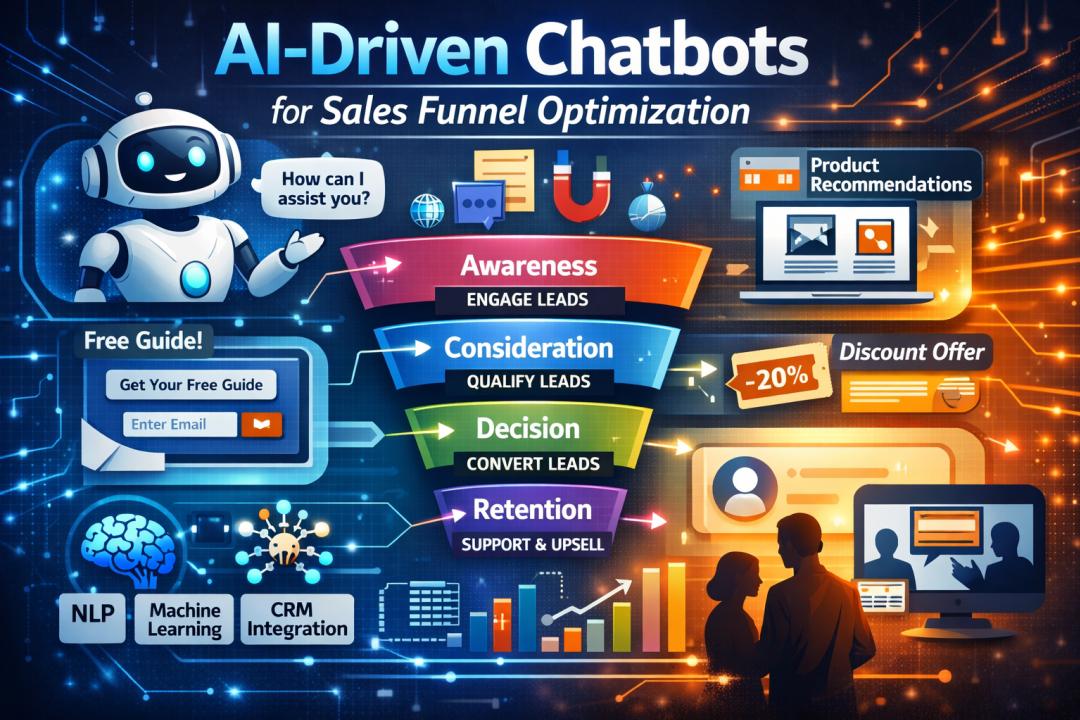
In today’s fast-paced digital landscape, businesses are constantly seeking innovative ways to streamline their sales processes and improve customer engagement. One of the most transformative technologies driving this shift is artificial intelligence (AI), particularly in the form of AI-driven chatbots. These intelligent systems are no longer limited to answering basic queries—they are now playing a crucial role in optimizing the entire sales funnel.
From capturing leads to nurturing prospects and closing sales, AI-powered chatbots are redefining how businesses interact with their customers. In this article, we will explore how AI-driven chatbots enhance each stage of the sales funnel and why they are becoming indispensable for modern businesses.
Understanding the Sales Funnel
Before diving into the role of chatbots, it's important to understand the structure of a typical sales funnel. The funnel generally consists of the following stages:
Awareness – Potential customers discover your brand.
Interest – They show interest in your product or service.
Consideration – They evaluate your offerings against competitors.
Intent – They demonstrate a clear intent to purchase.
Purchase – The final conversion stage.
Retention – Post-purchase engagement and loyalty building.
Optimizing each of these stages is critical for maximizing conversions—and this is where AI-driven chatbots come into play.
The Rise of AI-Driven Chatbots
AI chatbots leverage technologies such as natural language processing (NLP), machine learning (ML), and data analytics to simulate human-like conversations. Unlike traditional rule-based bots, AI-driven chatbots can understand context, learn from interactions, and deliver personalized responses.
This makes them highly effective in engaging users, answering queries, and guiding prospects through the sales journey.
How AI Chatbots Optimize the Sales Funnel
1. Enhancing Awareness Through Instant Engagement
At the top of the funnel, the goal is to attract and engage visitors. AI chatbots can greet users the moment they land on a website, offering assistance and initiating conversations.
Instead of waiting for users to explore on their own, chatbots can:
Ask relevant questions
Recommend content or products
Provide instant information
This proactive engagement significantly reduces bounce rates and increases the chances of capturing leads.
2. Capturing and Qualifying Leads
One of the biggest challenges in sales is identifying high-quality leads. AI chatbots simplify this process by interacting with visitors and collecting essential information.
They can:
Ask qualifying questions (budget, needs, timeline)
Segment users based on responses
Store data for future interactions
By automating lead qualification, businesses can ensure that their sales teams focus only on high-potential prospects.
3. Personalizing User Experience
Personalization is key to moving prospects down the funnel. AI chatbots analyze user behavior, preferences, and past interactions to deliver tailored recommendations.
For example:
Suggesting products based on browsing history
Offering customized solutions
Sending targeted messages
This level of personalization enhances user experience and builds trust, making customers more likely to move to the next stage.
4. Supporting Consideration with Instant Information
During the consideration stage, users often have multiple questions and concerns. Delayed responses can lead to lost opportunities.
AI chatbots provide:
Instant answers to FAQs
Product comparisons
Detailed explanations
They act as 24/7 virtual assistants, ensuring that users receive the information they need without delays.
5. Driving Intent with Smart Recommendations
At this stage, users are close to making a decision. Chatbots can influence their intent by offering timely suggestions and incentives.
Examples include:
Highlighting popular products
Offering discounts or limited-time deals
Providing testimonials or case studies
These strategies help nudge users toward making a purchase.
6. Streamlining the Purchase Process
A complicated checkout process can lead to cart abandonment. AI chatbots simplify this by guiding users through the purchase journey.
They can:
Assist with order placement
Answer payment-related queries
Provide real-time support
This reduces friction and increases conversion rates.
7. Improving Retention and Customer Loyalty
The role of chatbots doesn’t end after the purchase. They are equally valuable in retaining customers and building long-term relationships.
Post-purchase support includes:
Order tracking updates
Feedback collection
Personalized recommendations
Satisfied customers are more likely to return and recommend your brand to others.
The Role of Data in Chatbot Effectiveness
AI-driven chatbots rely heavily on data to function effectively. Every interaction provides valuable insights into customer behavior and preferences.
Businesses can use this data to:
Refine marketing strategies
Improve product offerings
Enhance customer experience
Over time, chatbots become smarter and more efficient, continuously improving sales funnel performance.
Integration with Business Systems
To maximize their impact, chatbots should be integrated with existing business systems such as CRM platforms, marketing automation tools, and analytics software.
This allows for:
Seamless data flow
Better customer insights
Improved decision-making
Many businesses today are leveraging AI chatbot app development services to build customized solutions that align with their specific sales and operational needs. These tailored chatbots ensure deeper integration and more effective funnel optimization.
Benefits of AI-Driven Chatbots in Sales Funnel Optimization
✔ 24/7 Availability
Chatbots are always active, ensuring that no lead is missed.
✔ Cost Efficiency
They reduce the need for large customer support teams.
✔ Scalability
Chatbots can handle multiple conversations simultaneously.
✔ Consistency
They deliver accurate and consistent information every time.
✔ Faster Response Times
Instant replies improve user satisfaction and engagement.
Challenges to Consider
While AI chatbots offer numerous advantages, businesses should also be aware of potential challenges:
Initial setup and training can be time-consuming
Poorly designed bots may frustrate users
Continuous updates are required for optimal performance
However, with the right strategy and implementation, these challenges can be effectively managed.
Future of AI Chatbots in Sales
The future of AI-driven chatbots looks incredibly promising. Advancements in AI and machine learning will further enhance their capabilities, making them even more intuitive and human-like.
Emerging trends include:
Voice-enabled chatbots
Emotion recognition
Hyper-personalization
Deeper integration with AI ecosystems
As these technologies evolve, chatbots will play an even more central role in shaping customer journeys and driving business growth.
Conclusion
AI-driven chatbots are no longer just a support tool—they are a powerful asset for optimizing the entire sales funnel. By enhancing engagement, automating processes, and delivering personalized experiences, they help businesses convert more leads and build stronger customer relationships.
From awareness to retention, chatbots add value at every stage, making them an essential component of modern sales strategies. Businesses that embrace this technology early will gain a significant competitive advantage in an increasingly digital marketplace.
Investing in AI chatbot solutions is not just about keeping up with trends—it’s about transforming the way you connect with your customers and drive sustainable growth.