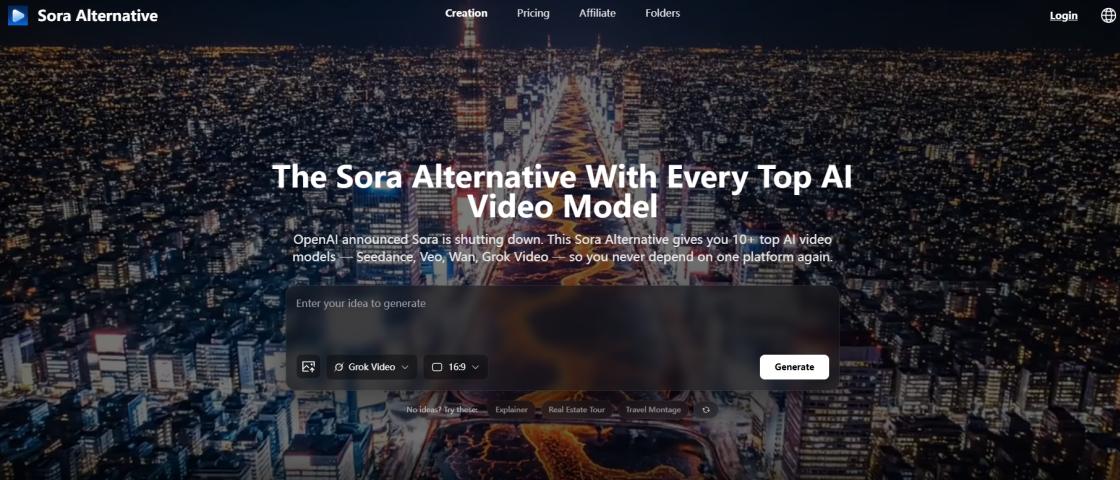
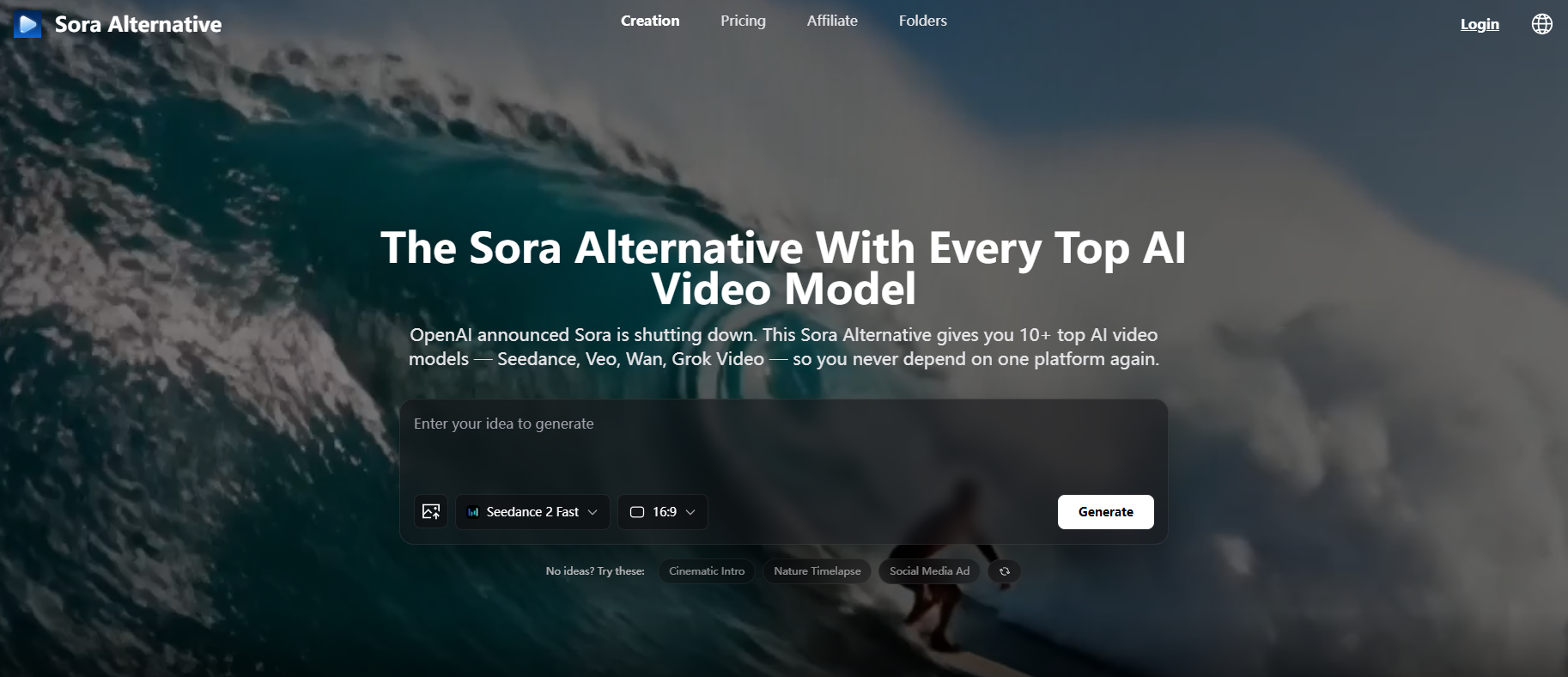
 “OpenAI announced Sora is shutting down.”
This kind of news quickly spreads in the AI community. Whether it is fully confirmed or not, it still raises a real concern for creators: what happens when a major AI video tool is no longer available?
Sora helped many people understand the potential of AI video generation. It showed how text prompts could turn into realistic video content. Because of this, many creators, developers, and marketers started to explore AI video as part of their workflow. However, this also led to a common issue—reliance on a single platform.
When a tool becomes popular, users build habits around it. They depend on it for content creation, testing ideas, or even business use. If that tool shuts down or becomes unavailable, it creates uncertainty. Users need alternatives, and they need them quickly.
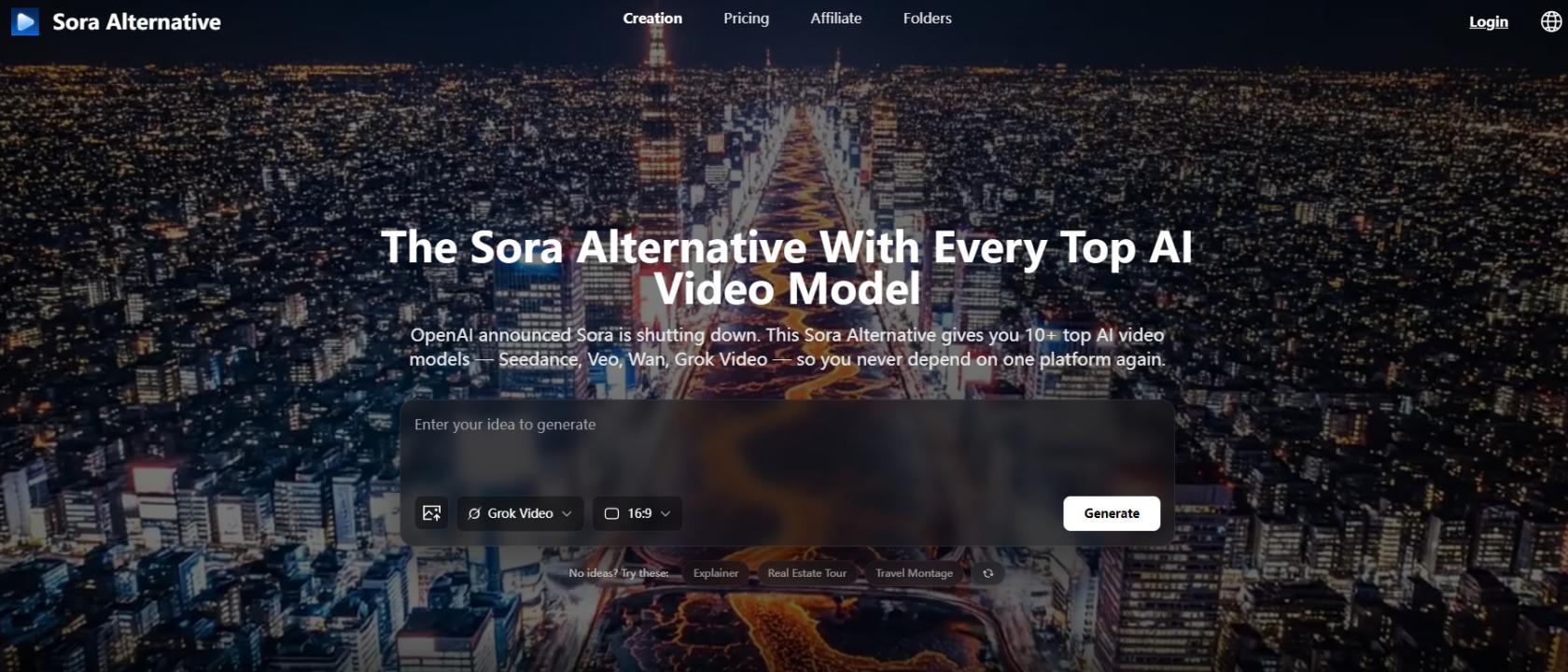
This is where Sora Alternative becomes more relevant. Instead of focusing on one model, Sora Alternative is built around a multi-model approach. It supports models like Seedance 2.0, Veo 3.1, Wan 2.5, and Grok Video, all in one place. This allows users to try different outputs and not rely on a single system.
Another key point is simplicity. Many traditional video tools require editing skills, timelines, and complex workflows. Sora Alternative focuses on a simple process. Users can generate videos from text or images directly, without extra steps. This makes it easier for beginners to start and for experienced users to move faster.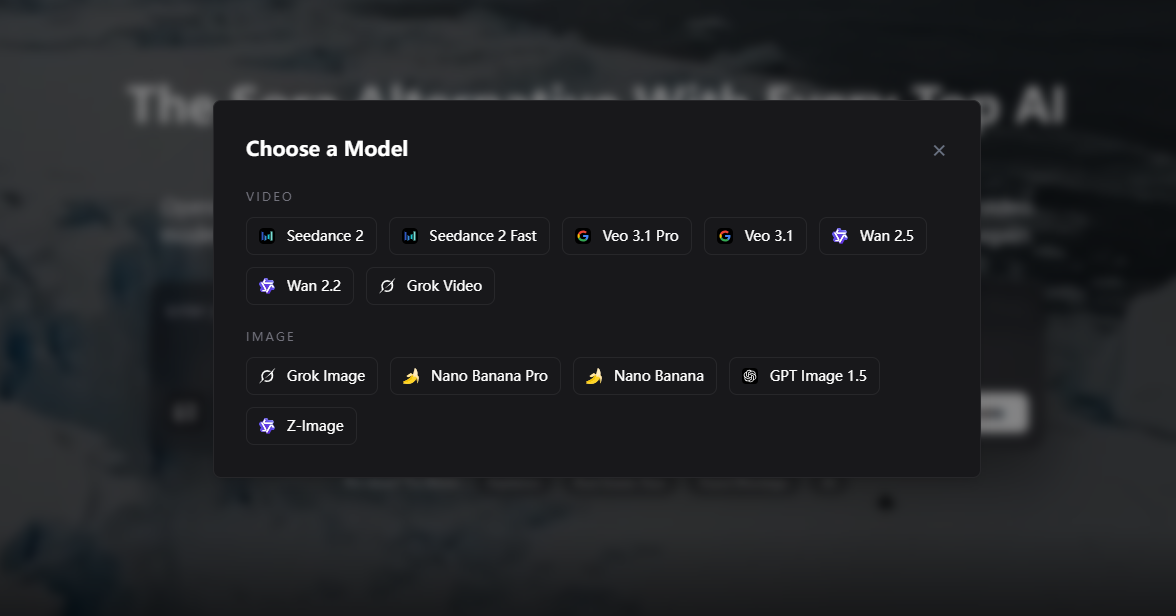
For AI video creators, flexibility is becoming more important than ever. Instead of asking which model is the best, more people are asking how to access multiple options in one workflow. Different models produce different >
Sora Alternative fits into this shift. It is not just trying to replace one tool with another. Instead, it offers a more flexible way to work with AI video. Users can experiment, compare results, and adapt based on their needs.
Looking at the bigger picture, the AI video space is still evolving quickly. New models continue to appear, and no single platform is likely to stay dominant forever. This means creators need tools that can adapt over time, not tools that lock them into one system.
In the end, the discussion around Sora shutting down highlights a larger trend. Creators are moving toward flexibility, simplicity, and control. Sora Alternative represents this direction by combining multiple models with an easy workflow, making it a practical option for exploring AI video creation.