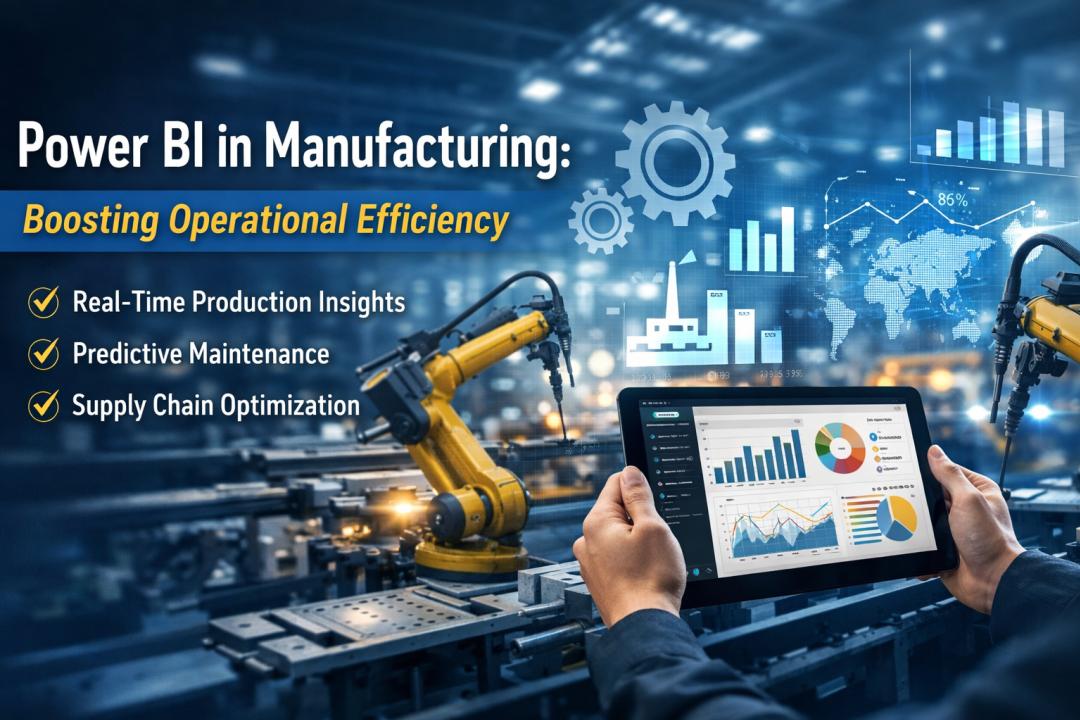
In today’s highly competitive industrial landscape, manufacturers are under constant pressure to optimize operations, reduce costs, and improve productivity. Traditional reporting methods and siloed data systems often fail to provide real-time visibility, leading to inefficiencies and missed opportunities. This is where Power BI in manufacturing is transforming operations by enabling data-driven decision-making at every level.
Microsoft Power BI, a leading business intelligence tool, empowers manufacturers to analyze data, monitor performance, and uncover actionable insights through intuitive dashboards and real-time reporting.
What is Power BI in Manufacturing?
Power BI is a cloud-based analytics platform that helps manufacturing companies collect, visualize, and interpret data from multiple sources such as ERP systems, IoT devices, production lines, and supply chain platforms.
By integrating all critical data into a single dashboard, Power BI enables:
- Real-time production monitoring
- Predictive maintenance insights
- Inventory optimization
- Quality control analytics
Why Manufacturing Needs Power BI
Manufacturing operations generate vast amounts of data daily. However, without proper analysis, this data remains underutilized. Power BI bridges this gap by turning raw data into meaningful insights.
Key Challenges Solved by Power BI
- Lack of real-time visibility into operations
- Inefficient resource allocation
- Production downtime and delays
- Poor demand forecasting
- Data silos across departments
Key Benefits of Power BI in Manufacturing
1. Real-Time Operational Visibility
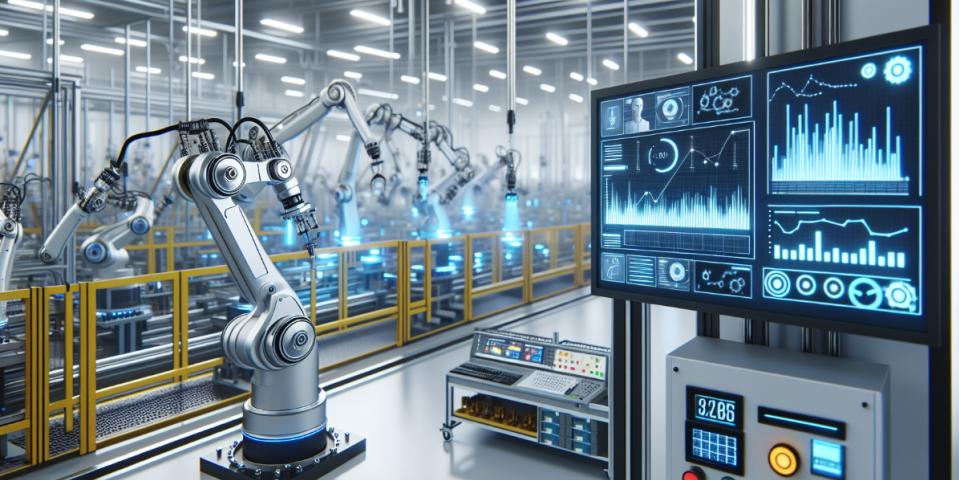
Power BI dashboards provide live updates on production metrics, machine performance, and workforce productivity. This helps managers make quick, informed decisions.
2. Improved Production Efficiency
By identifying bottlenecks and inefficiencies, manufacturers can streamline workflows and increase output without additional costs.
3. Predictive Maintenance
Power BI integrates with IoT sensors to analyze machine data and predict failures before they occur, reducing downtime and maintenance costs.
4. Enhanced Quality Control
Analyze defect rates, identify root causes, and maintain consistent product quality using data-driven insights.
5. Supply Chain Optimization
Track inventory levels, supplier performance, and logistics to ensure smooth supply chain operations.
6. Cost Reduction
Power BI helps identify unnecessary expenses and optimize resource usage, improving overall profitability.
Use Cases of Power BI in Manufacturing
1. Production Monitoring Dashboards
Track KPIs such as output, cycle time, and machine utilization in real time.
2. Inventory Management
Monitor stock levels, reorder points, and warehouse efficiency to avoid overstocking or shortages.
3. Quality Assurance Analytics
Analyze defect patterns and improve product quality with actionable insights.
4. Workforce Performance Tracking
Evaluate employee productivity and optimize workforce allocation.
5. Energy Consumption Analysis
Monitor energy usage and reduce operational costs by identifying inefficiencies.
How Power BI Integrates with Manufacturing Systems
Power BI seamlessly connects with:
- ERP systems like SAP and Microsoft Dynamics
- MES (Manufacturing Execution Systems)
- IoT devices and sensors
- Cloud databases and APIs
This integration ensures a unified view of operations, enabling better collaboration and decision-making.
Steps to Implement Power BI in Manufacturing
1. Define Business Objectives
Identify key goals such as improving production efficiency or reducing downtime.
2. Data Collection & Integration
Gather data from various sources and ensure proper integration.
3. Data Modeling & Transformation
Clean and structure data for accurate analysis.
4. Dashboard Development
Create customized dashboards tailored to business needs.
5. Continuous Monitoring & Optimization
Regularly update dashboards and refine insights for better performance.
Challenges in Power BI Implementation
While Power BI offers numerous benefits, manufacturers may face challenges such as:
- Data quality and consistency issues
- Integration complexity with legacy systems
- Need for skilled BI professionals
- Initial setup costs
However, these challenges can be mitigated by partnering with experienced providers offering Power BI Development Services to ensure seamless implementation and maximum ROI.
Future of Power BI in Manufacturing
The future of manufacturing lies in smart factories and Industry 4.0, where data plays a central role. Power BI is evolving with advanced capabilities such as:
- AI-powered analytics and forecasting
- Real-time IoT data processing
- Automated reporting and alerts
- Advanced data visualization techniques
As technology advances, Power BI will continue to drive innovation and efficiency in manufacturing operations.
Conclusion
Power BI is revolutionizing the manufacturing industry by enabling real-time insights, predictive analytics, and data-driven decision-making. From optimizing production processes to enhancing supply chain efficiency, Power BI empowers manufacturers to stay competitive in a rapidly evolving market.
By leveraging the right strategies and tools, businesses can unlock the full potential of their data and achieve operational excellence.
FAQs
1. How is Power BI used in manufacturing?
Power BI is used to monitor production, analyze performance, manage inventory, and improve decision-making through real-time dashboards.
2. What are the benefits of Power BI in manufacturing?
It improves efficiency, reduces downtime, enhances quality control, and optimizes supply chain operations.
3. Can Power BI integrate with manufacturing systems?
Yes, Power BI integrates with ERP, MES, IoT devices, and other data sources for comprehensive analytics.
4. Is Power BI suitable for small manufacturing businesses?
Yes, Power BI is scalable and can be customized for businesses of all sizes.