When it comes to gaming, every detail matters — from your GPU to your display, and yes, even the cables connecting them. Many gamers overlook the humble cable sitting behind their setup, yet it plays a crucial role in delivering the crisp visuals and smooth performance you demand. This guide will walk you through everything you need to know about selecting the right cable for your specific device and gaming needs.
Why Your Cable Choice Matters More Than You Think
Let's start with the basics. HDMI cables (High-Definition Multimedia Interface) are the standard connection between your gaming console, PC, or streaming device and your TV or monitor. Not all cables are equal, and picking the wrong one can result in blurry images, input lag, or missing out on features like HDR, 4K resolution, and high refresh rates.
Before you dive into specs, it helps to understand what version of HDMI you are working with. HDMI 1.4 supports 4K at 30Hz, while HDMI 2.0 bumps that to 4K at 60Hz. HDMI 2.1 is the current gold standard, supporting 4K at 120Hz, 8K at 60Hz, and Variable Refresh Rate (VRR), which is a game-changer for competitive gaming.
Connecting Your Gaming Console or Streaming Device to the TV
If you are hooking up a PlayStation 5, Xbox Series X, or a Fire Stick to your television, you need to think carefully about which hdmi cable for tv you choose. These devices support HDMI 2.1 and can push 4K at 120fps, so you will want a cable that can handle that bandwidth without bottlenecking your setup.
Many gamers make the mistake of using an old cable from a previous-generation device. If your cable is more than a few years old, it likely cannot handle HDMI 2.1 speeds, meaning you are missing out on features even though your console and TV both support them. Always match your cable to the highest specs your devices can output.
The Case for Ultra High Speed Cables
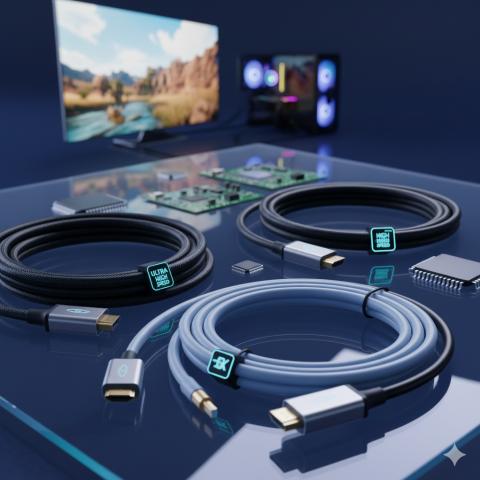
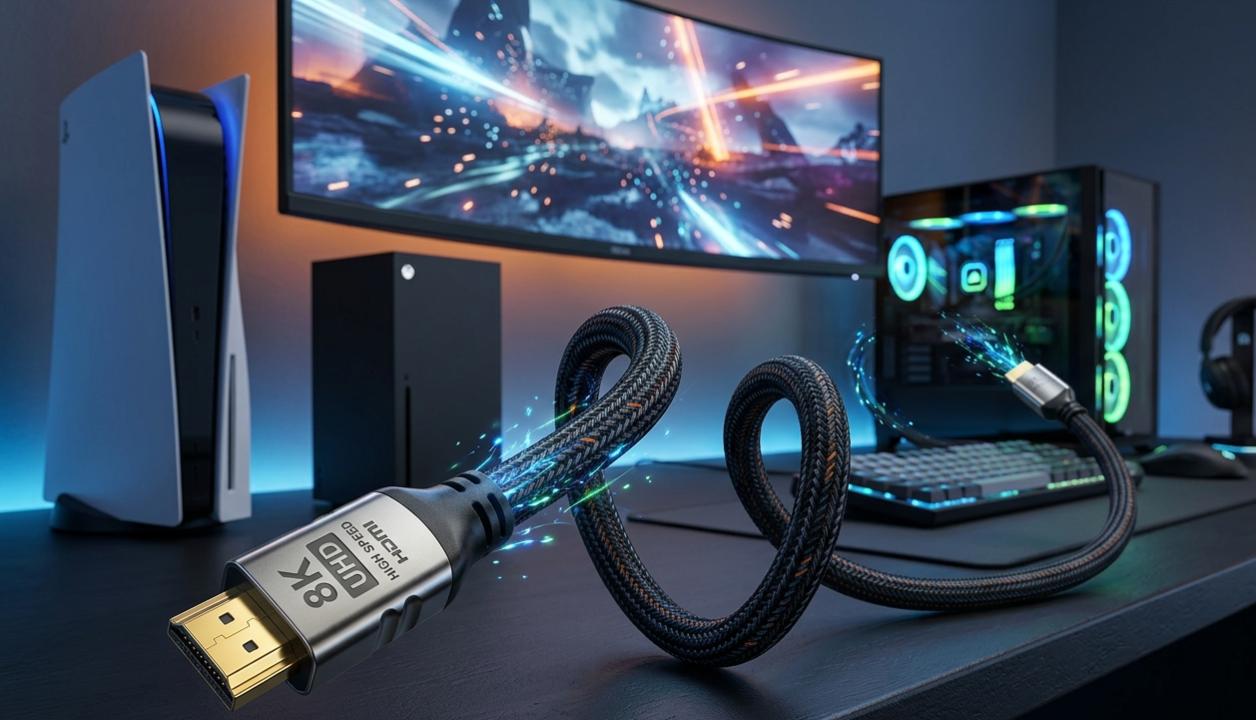
If you want the absolute best connection available, look no further than the best ultra high speed hdmi cable. These cables are certified to support HDMI 2.1's full 48Gbps bandwidth, which is necessary for gaming at 4K/120Hz or 8K/60Hz. Certified Ultra High Speed cables undergo rigorous testing and display the official logo on their packaging, so always look for that certification when shopping.
Brands like Belkin, Zeskit, and Cable Matters are known for reliable ultra high speed options. Avoid cheaply made cables from unknown manufacturers, especially when dealing with high bandwidth demands. A failed or low-quality cable can cause flickering, signal drops, or complete connection failure during your most intense gaming sessions.
Choosing the Right Output Cord for Multi-Device Setups
Gamers with multiple devices — a console, a PC, a streaming box — often need to manage cables at the back of their TV or monitor. An hdmi output cord is simply the cable that runs from the output port of your device to the input port on your display. When managing multiple cords, consider color-coding or labeling each one so you are never fumbling around trying to figure out which cable belongs to which device.
For console gamers, the output cord that ships with your PS5 or Xbox Series X is usually sufficient for standard use, but it may not be certified for Ultra High Speed. For the best experience, replace the included cable with a certified version if you plan on gaming at maximum specs.
HDMI Cord Length: Does It Affect Performance?
Cable length is another consideration. A standard hdmi cord under 6 feet (about 1.8 meters) will have no signal degradation. However, once you go beyond 15–20 feet, you may start to experience signal loss, especially at high resolutions and refresh rates. For longer runs, consider an active HDMI cable, which contains a built-in amplifier to maintain signal integrity over greater distances.
For most gaming setups where the PC or console sits near the TV or monitor, a standard 3-to-6-foot cable is more than sufficient. Avoid coiling cables tightly or bending them at sharp angles, as this can degrade the internal wiring over time.
PC Gamers: Why Your Cable Choice Is Different
PC gaming has unique demands. When connecting a high-powered GPU to a gaming monitor, you need an hdmi cable for pc that can handle high refresh rates and resolutions simultaneously. Many PC monitors support 144Hz or even 240Hz at 1080p or 1440p. For this, HDMI 2.0 is often sufficient, but if you are using a 4K 120Hz monitor, you will need HDMI 2.1.
Note that some graphics cards from NVIDIA and AMD also support DisplayPort, which in many cases offers more bandwidth than HDMI. However, if your monitor only has HDMI inputs, or if you prefer consolidating all connections to one standard, a quality HDMI cable will serve you well.
4K Gaming: The Cable Requirement You Cannot Ignore
If you have invested in a 4K gaming setup, make sure your cabling keeps up. A high-quality 4k hdmi cable is non-negotiable for true 4K performance. Standard cables may technically display a 4K signal, but they can struggle with full-resolution color depth (chroma subsampling), HDR metadata, and high frame rates all at once. When you see that your HDR is not working or your colors look washed out, a cable upgrade is often the fix.
Look for cables labeled 'HDMI 2.1' or 'Ultra High Speed' when shopping for a 4K solution. Avoid marketing terms like 'supports 4K' without specification backing — nearly any cable can technically transmit a 4K signal, but few budget cables can do so with full color depth, HDR, and 120Hz simultaneously.
Final Tips for Every Gamer
Here is a quick summary of what to keep in mind when choosing your next cable:
• Match your cable version to the highest spec your devices support.
• Buy certified Ultra High Speed cables for HDMI 2.1 devices.
• Keep cable runs under 15 feet to avoid signal degradation.
• Replace manufacturer-included cables with certified alternatives for best performance.
• For 4K and HDR gaming, never compromise on cable quality.
The right cable is not a luxury — it is the final link in a chain of premium hardware you have invested in. Make sure that link is strong.
Original Article :- Click Here