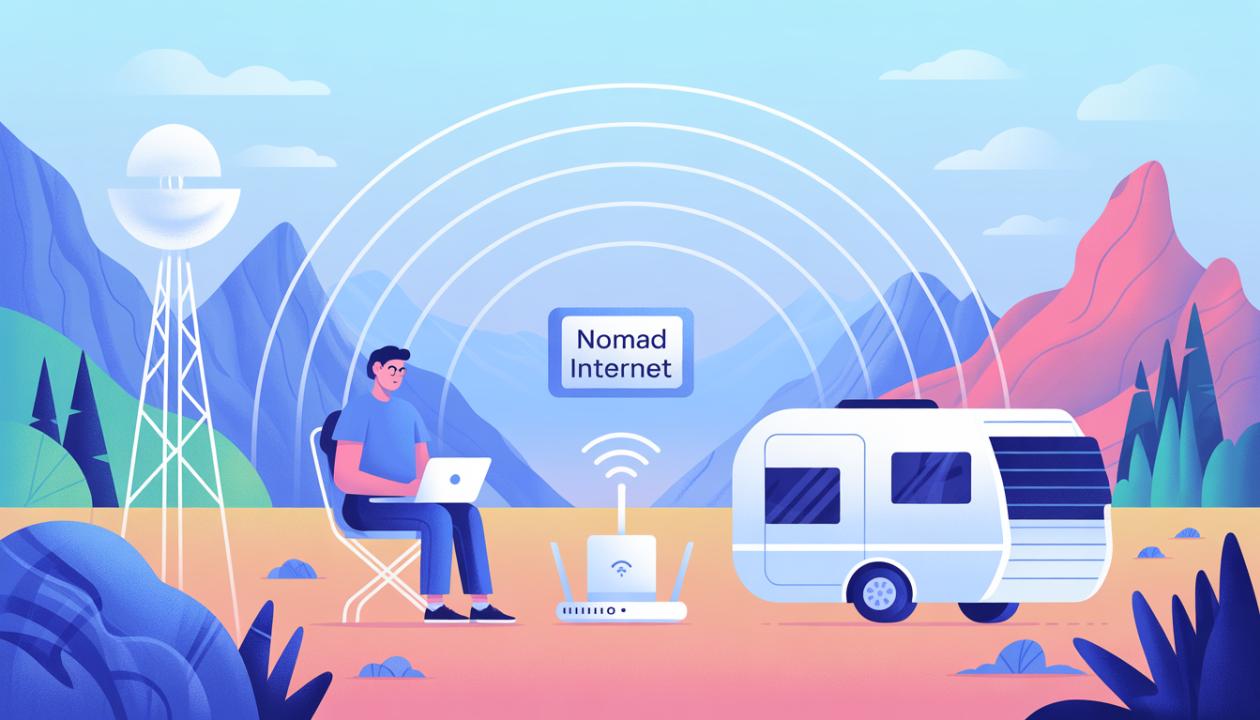
Tired of Slow or Unreliable Internet When You’re On the Move?
Ever tried to work from an RV, a remote cabin, or a rural home only to find slow speeds or no connection?
That’s where Nomad Internet comes in.
Whether you’re a digital nomad, remote worker, traveler, or someone living in a rural area, knowing how nomad internet works can give you more freedom and productivity. Let’s break it down simply.
What Is Nomad Internet?
Nomad Internet is a wireless internet service created for those who need reliable connectivity beyond standard cable or fiber networks.
Unlike traditional ISPs, nomad internet doesn’t depend on fixed infrastructure like underground cables or phone lines. Instead, it uses cellular networks (4G LTE and 5G) to provide high-speed internet almost anywhere with coverage.
In Simple Terms: It’s like turning mobile data into your home or travel Wi-Fi, but it is more powerful, stable, and designed for heavy use.
How Does Nomad Internet Work?
Understanding nomad internet is easier than you think. It has three main parts:
1. Cellular Network Connectivity
Nomad internet providers connect to major carrier networks. These networks enable the internet connection using nearby cell towers.
If your phone gets a signal, nomad internet likely will too.
2. Specialized Wireless Routers
Instead of a traditional modem, you receive a pre-configured wireless router with a SIM card installed.
This router:
Connects to cellular towers
Converts the signal into Wi-Fi
Supports multiple devices (laptops, phones, smart TVs)
3. Data Plans (Often Unlimited)
Most nomad internet services offer high-data or unlimited plans, which are perfect for:
Streaming
Video calls
Remote work
Online gaming
Unlike regular mobile plans, these are meant for consistent, heavy use.
4. Plug-and-Play Setup
No technician. No cables. No waiting.
Just:
Plug in the router
Turn it on
Connect your devices
You’re online in minutes.
Key Benefits of Nomad Internet
Now that you understand how it works, let’s explore why so many people are switching to nomad internet.
1. Internet Anywhere (Freedom to Roam)
The biggest advantage is mobility.
Whether you’re:
Traveling in an RV
Living in a rural village
Working from a mountain cabin
Nomad internet gives you location independence.
2. No Cable or Phone Line Needed
Traditional ISPs require infrastructure. Nomad internet doesn’t.
This makes it perfect for:
Remote areas with no fiber
Temporary setups
Off-grid living
3. Fast Speeds with 4G/5G
Depending on coverage, users can experience:
25 Mbps to 100+ Mbps speeds
Low latency for video calls
Smooth streaming and browsing
4. Flexible Plans
Nomad internet services often offer:
No long-term contracts
Easy upgrades/downgrades
Pause or cancel options
This flexibility is ideal for travelers and seasonal users.
5. Perfect for Digital Nomads
If you work remotely, this is a game changer.
You can:
Join Zoom calls from anywhere
Upload/download large files
Stay productive on the road
6. Reliable Backup Internet
Even if you already have broadband, nomad internet is a good backup connection during outages.
Who Should Use Nomad Internet?
Nomad internet isn’t just for travelers; it’s for anyone who needs reliable connectivity beyond traditional networks. Here’s who can benefit the most:
Digital Nomads
Work from beaches, mountains, or wherever your journey takes you. Nomad internet keeps you connected, no matter how remote your workspace is.
RV Owners & Van Lifers
Explore new places without losing internet access. Whether you’re planning routes or streaming content, staying online becomes easy on the road.
Rural Residents
Live in areas without cable or fiber? Nomad internet offers a reliable alternative where traditional broadband options don’t work.
Remote Workers
Keep a stable and secure connection for video calls, file sharing, and daily tasks. It’s perfect for working from home or hybrid setups.
Event & Temporary Setup Users
This is great for construction sites, pop-up shops, trade shows, or outdoor events where fast and flexible internet access is crucial.
Things to Consider Before Choosing Nomad Internet
While nomad internet provides impressive flexibility and mobility, it’s important to set realistic expectations before making the switch. Knowing a few key factors can help you make a smarter decision.
Coverage Matters
Your internet performance mainly depends on how close you are to cell towers. Strong coverage usually leads to better speeds and reliability. Before picking a plan, always check the provider’s coverage in your area to prevent connectivity problems.
Signal Strength Can Vary
Several environmental factors can affect your connection quality, including:
Terrain (mountains, forests, rural areas)
Weather conditions
Distance from cellular towers
Because of this, speeds can change. Using external antennas or signal boosters can greatly improve performance in areas with weak signals.
Cost May Be Higher Than Traditional ISPs
Nomad internet focuses on flexibility and mobility, which can make it pricier than traditional broadband services. However, for travelers, remote workers, and those living off the grid, the convenience and freedom often make the extra cost worth it.
Nomad Internet vs Traditional Internet
| Feature | Nomad Internet | Traditional ISP |
| Setup | Plug-and-play | Technician required |
| Mobility | High | None |
| Availability | Wide (cellular coverage) | Limited to infrastructure |
| Speed | Good (varies) | Stable and consistent |
| Flexibility | High | Low |
Real-World Use Cases
To make it more relatable, here’s how people actually use nomad internet:
A freelancer working from a hill station café
A family streaming Netflix from their RV
A farmer managing online business operations in a rural area
A startup running operations from a remote co-working retreat
Conclusion
If you’re tired of being stuck in one place or dealing with poor connectivity in rural areas, nomad internet offers a strong solution.
It’s not just about the internet, it’s about freedom, flexibility, and staying connected wherever you go.
While it may not fully replace fiber for heavy urban users, it performs well in places where traditional internet can't reach.
FAQs About Nomad Internet
1. What is nomad internet and how is it different from regular Wi-Fi?
Nomad internet uses cellular networks instead of cables, letting you access Wi-Fi anywhere with coverage.
2. Is nomad internet good for remote work?
Yes, it’s great for remote work, supporting video calls, file transfers, and daily tasks.
3. Does nomad internet work in rural areas?
Absolutely. It’s specifically designed for rural and underserved locations.
4. Can I use nomad internet while traveling?
Yes, it’s portable and works well for RV travel, van life, and moving between places.
5. Is nomad internet really unlimited?
Many providers offer high-data or unlimited plans, but speeds may change based on network usage and policies.