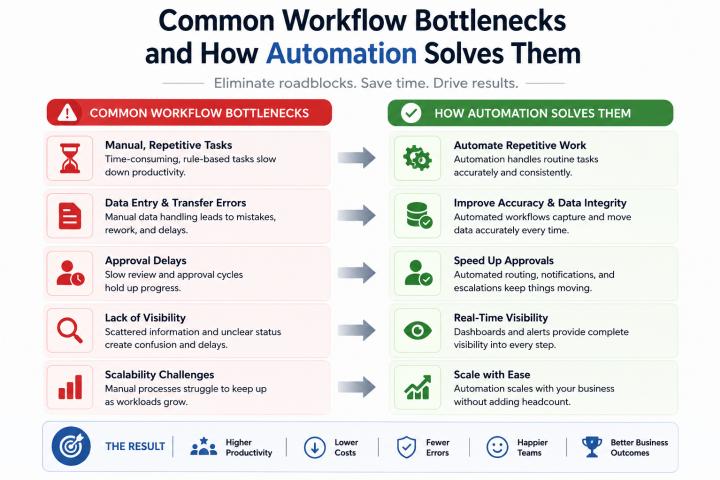

Automation has become a cornerstone of modern business efficiency, yet many organizations unknowingly lose significant revenue due to poor implementation. While tools and technologies are more accessible than ever, success depends on strategy, execution, and continuous optimization. A skilled business automation consultant plays a crucial role in ensuring businesses avoid costly pitfalls and build scalable systems.
Below is a fully expanded breakdown of the most common automation mistakes—each explained in depth to help you understand not just the “what,” but the “why” and “how to fix it.”
1. Automating Broken Processes
One of the most fundamental—and expensive—mistakes businesses make is automating processes that are already inefficient. Automation is often seen as a quick fix for operational chaos, but in reality, it magnifies existing problems. If your workflow includes redundant steps, unclear responsibilities, or bottlenecks, automation will simply accelerate those inefficiencies at scale.
For instance, consider a business with a poorly structured lead management system. If leads are not properly categorized or followed up manually, automating that same flawed system will result in misrouted leads, delayed responses, and ultimately lost revenue. Instead of solving the issue, automation compounds it.
This mistake often stems from a lack of process mapping. Businesses jump straight into tools without first analyzing how work actually flows within their organization. Without clarity, automation becomes guesswork rather than a strategic initiative.
A professional business automation consultant addresses this by conducting a thorough workflow audit. They identify inefficiencies, remove unnecessary steps, and redesign processes before introducing automation. This ensures that automation enhances productivity rather than creating new problems.
Ultimately, automation should be applied to optimized processes—not broken ones. Businesses that take the time to refine their workflows first are far more likely to see measurable ROI and long-term success.
2. Choosing the Wrong Tools
With hundreds of automation tools available in the market, selecting the right one can be overwhelming. Many businesses fall into the trap of choosing tools based on popularity, recommendations, or marketing hype rather than their actual business needs. This often leads to investing in platforms that are either too complex, too limited, or incompatible with existing systems.
For example, a small business may adopt an enterprise-level CRM with advanced features they never use, resulting in high subscription costs and unnecessary complexity. On the other hand, choosing a basic tool that lacks scalability can create limitations as the business grows.
The real issue lies in the absence of a tailored technology strategy. Each business has unique workflows, goals, and challenges, and a one-size-fits-all approach rarely works. Without proper evaluation, businesses end up with fragmented systems that fail to deliver expected results.
A knowledgeable automation consulting expert evaluates your operations, identifies requirements, and recommends a tech stack that aligns with your objectives. This includes considering factors such as scalability, integration capabilities, user-friendliness, and cost-effectiveness.
Working with experienced partners like Starters’ CFO ensures that businesses make informed decisions when selecting tools. Instead of wasting resources on unsuitable platforms, they invest in solutions that drive efficiency and growth.
Choosing the right tools is not just about features—it’s about fit. The right technology should seamlessly integrate into your workflow and support your long-term vision.
3. Lack of Integration Between Systems
Automation thrives on connectivity. However, many businesses operate with disconnected systems that do not communicate effectively with each other. This lack of integration creates data silos, forcing teams to manually transfer information between platforms—defeating the purpose of automation.
For instance, if your CRM, email marketing tool, and accounting software are not integrated, customer data may be duplicated or inconsistent across systems. This leads to errors, missed opportunities, and inefficient workflows. Employees spend valuable time reconciling data instead of focusing on high-impact tasks.
The financial impact of this mistake is significant. Not only does it reduce productivity, but it also affects decision-making. Inaccurate or incomplete data can lead to poor business strategies and lost revenue opportunities.
A strategic approach to automation involves building a unified ecosystem where all systems are interconnected. This allows data to flow seamlessly, enabling real-time updates and better coordination across departments.
A business automation consultant plays a key role in designing and implementing such integrations. They ensure that all tools work together harmoniously, creating a cohesive workflow that enhances efficiency.
Organizations that collaborate with experts like Starters’ CFO benefit from integrated automation frameworks that eliminate silos and streamline operations. By connecting systems effectively, businesses can unlock the full potential of automation and achieve greater operational clarity.
4. Ignoring Data Quality
Data is the foundation of automation. Every automated workflow relies on accurate and structured data to function effectively. However, many businesses overlook the importance of data quality, leading to flawed automation outcomes.
Poor data quality can manifest in various ways—duplicate entries, outdated information, missing fields, or incorrect details. When such data is used in automated processes, it results in errors such as sending emails to the wrong recipients, misclassifying leads, or generating inaccurate reports.
The consequences go beyond operational inefficiencies. Poor data quality can damage customer relationships, reduce campaign effectiveness, and lead to misguided business decisions. Inaccurate data undermines the reliability of automation systems, making them more of a liability than an asset.
To avoid this, businesses must prioritize data hygiene. This includes regular data audits, validation processes, and standardization practices. Ensuring that data is clean, consistent, and up-to-date is essential for successful automation.
A business automation consultant helps establish data management protocols that support automation efforts. They implement systems for data validation, deduplication, and ongoing maintenance.
Businesses working with Starters’ CFO often benefit from structured data strategies that enhance the effectiveness of automation systems. By focusing on data quality, organizations can ensure that their automated workflows deliver accurate and reliable results.
5. Over-Automation
While automation offers numerous benefits, excessive automation can be detrimental. Over-automating processes—especially customer interactions—can make a business appear impersonal and disconnected.
For example, relying entirely on automated responses for customer support may frustrate users who need personalized assistance. Similarly, overly automated marketing campaigns can feel generic and fail to engage the audience effectively.
This mistake often occurs when businesses prioritize efficiency over experience. While automation can handle repetitive tasks, it cannot fully replace human judgment, empathy, and creativity.
The key is to strike a balance between automation and human involvement. Tasks that are repetitive and rule-based should be automated, while those requiring personalization and critical thinking should remain human-driven.
A skilled business automation consultant helps define these boundaries, ensuring that automation enhances rather than diminishes customer experience. They design workflows that combine efficiency with personalization.
Organizations partnering with Starters’ CFO often achieve this balance by implementing hybrid systems that integrate automation with human oversight. This approach ensures efficiency without compromising customer satisfaction.
6. Lack of Clear Goals and KPIs
Automation without clear objectives is a recipe for wasted investment. Many businesses implement automation tools without defining what success looks like. Without measurable goals, it becomes impossible to evaluate performance or determine ROI.
For instance, automating a sales process without tracking conversion rates or response times provides no insight into whether the system is effective. Businesses end up spending money on automation without understanding its impact.
Defining Key Performance Indicators (KPIs) is essential for successful automation. These may include metrics such as time saved, cost reduction, lead conversion rates, and customer satisfaction scores.
A business automation consultant helps establish clear goals and aligns automation strategies with business objectives. They ensure that every automated process contributes to measurable outcomes.
With guidance from Starters’ CFO, businesses can implement data-driven automation strategies that deliver tangible results. By tracking performance and continuously optimizing workflows, organizations can maximize the value of their automation investments.
Conclusion
Automation has the power to transform businesses—but only when implemented with precision and strategy. The mistakes outlined above are common, yet they carry significant financial implications.
By avoiding these pitfalls and working with an experienced business automation consultant, businesses can build efficient, scalable systems that drive growth. With expert support from firms like Starters’ CFO, organizations can move beyond trial and error and adopt a structured approach to automation.
In the end, successful automation is not about adopting the latest tools—it’s about creating systems that align with your business goals, enhance productivity, and deliver measurable value.