What's the Difference Between Rideshare and Corporate Car Service?
Rideshare vs corporate car service is a question many business travelers, office managers, executive assistants, and event planners ask when they need dependable transportation for meetings, airport trips, conventions, and client pickups. On the surface, both options can get someone from one place to another. But once timing, professionalism, scheduling, client experience, and business presentation matter, the differences become much more important. That is why companies should not look at this as a simple transportation choice based only on price. A rideshare app may be convenient for casual travel or a quick personal trip. A corporate car service is designed for structured business transportation where reliability, consistency, and professional presentation matter just as much as getting to the destination. In real business use, transportation is often part of a much bigger goal. An executive may need to make a flight without stress. A client may need to be picked up in a way that reflects well on your company. A team may need to move between a hotel, office, convention center, and dinner reservation without confusion. In those situations, the transportation option you choose affects more than the ride itself. For companies in Southern California, this matters even more. Business schedules often involve airports, convention centers, hotels, offices, and high-traffic areas where timing and coordination are not optional. The more important the trip, the more obvious the gap becomes between a general rideshare and a professional service built around executive transportation. This guide breaks down the real difference between rideshare and corporate car service, when each one makes sense, what businesses should consider before booking, and why many companies choose a dedicated transportation partner for executive and client-facing travel.
Table of Contents
Rideshare vs Corporate Car Service
If you want the short answer first, rideshare is built for on-demand convenience, while corporate car service is built for planned, professional, business-focused transportation. That difference affects nearly everything that matters to a company, including reliability, communication, pickup experience, vehicle consistency, chauffeur professionalism, and how polished the trip feels from beginning to end. A rideshare app is usually best for informal point-to-point travel when convenience is the main goal and the trip does not carry much business pressure. A corporate car service is better when the rider is an executive, a client, a team member on a time-sensitive itinerary, or anyone whose transportation reflects on the company arranging it. The gap becomes clearer when you compare the two side by side.
| Category | Rideshare | Corporate Car Service |
|---|
| Booking > | On-demand, app-based | Scheduled and coordinated in advance |
| Driver experience | Varies widely | Professional chauffeur-focused service |
| Vehicle consistency | Can vary trip to trip | More controlled and business-appropriate |
| Client-facing image | Not always ideal | Designed for executive and professional use |
| Airport coordination | Basic or inconsistent depending on situation | More structured and timing-aware |
| Business support | Limited service model | Built for corporate travel needs |
| Multi-stop planning | Less ideal for complex schedules | Better suited for meetings, events, and planned itineraries |
That does not mean rideshare is always the wrong choice. It means the better option depends on the importance of the trip and the standards your company needs to maintain.
The main difference in simple terms
The easiest way to understand the difference is this: rideshare is designed to be quick and accessible, while corporate car service is designed to be dependable and professional. Those priorities create very different experiences. With rideshare, the system is built around speed and convenience. You open an app, request a vehicle, and accept the one that shows up. That can work well for casual use, especially when the rider is traveling alone and the trip is low pressure. But the experience can vary based on availability, driver >Reliability and scheduling expectationsOne of the biggest differences between the two options is predictability. Business travel often depends on clear timing. An executive cannot miss an airport departure because app availability was inconsistent. A client should not be left guessing where the pickup is happening. A team attending a conference should not have to scramble just because the transportation plan was too loose. Rideshare can be available quickly in many areas, but that does not always mean it is reliable in a business sense. Availability changes based on demand. The assigned vehicle can change. Wait times can shift. Pickup points may be confusing in crowded zones. The app may be fast, but the experience is not always structured the way business schedules require. Corporate car service is built differently. The reservation is made with intention, often ahead of time, and the service is expected to follow a known schedule. That makes it better suited for airport transfers, office-to-meeting transportation, business dinners, and other trips where lateness or confusion can create bigger downstream problems. For example, companies that regularly need
corporate airport transfer service usually choose a more scheduled transportation model because airport travel leaves less room for casual uncertainty. When flights, luggage, arrival timing, and pickup instructions matter, structure becomes a real advantage. In other words, rideshare may be available, but corporate transportation is planned.
Professionalism and business presentation
Professional image matters more than many people admit. If the transportation is only for a personal errand, that may not be a concern. But if your company is sending a vehicle for a client, executive, speaker, partner, or leadership team, the experience becomes an extension of your brand. Rideshare drivers can certainly be courteous, but the presentation is inconsistent by design. The company booking the trip usually does not control who arrives, what the vehicle feels like, how polished the interaction is, or whether the experience will match a business setting. Sometimes it works out fine. Sometimes it feels too casual for the occasion. A corporate car service is usually better positioned for professional presentation because that is part of the service expectation. The vehicle is selected with business use in mind. The chauffeur is expected to interact appropriately. The ride is meant to feel calm, polished, and aligned with executive or client-facing standards. This is especially important for businesses that want to reinforce a high-quality image. If a company values consistency, discretion, and executive-level hospitality, a dedicated provider makes that easier to maintain. That is also one reason many organizations prefer a service model built around
corporate chauffeured transportation service instead of depending on whichever driver and vehicle happen to be available in an app at that moment. Professional presentation also affects the passenger experience. Many business travelers prefer a service that feels calm and organized rather than improvised. That difference may not matter on a casual personal trip, but it matters a great deal when someone is heading into an important meeting or representing a company.
Airport pickups and travel coordination
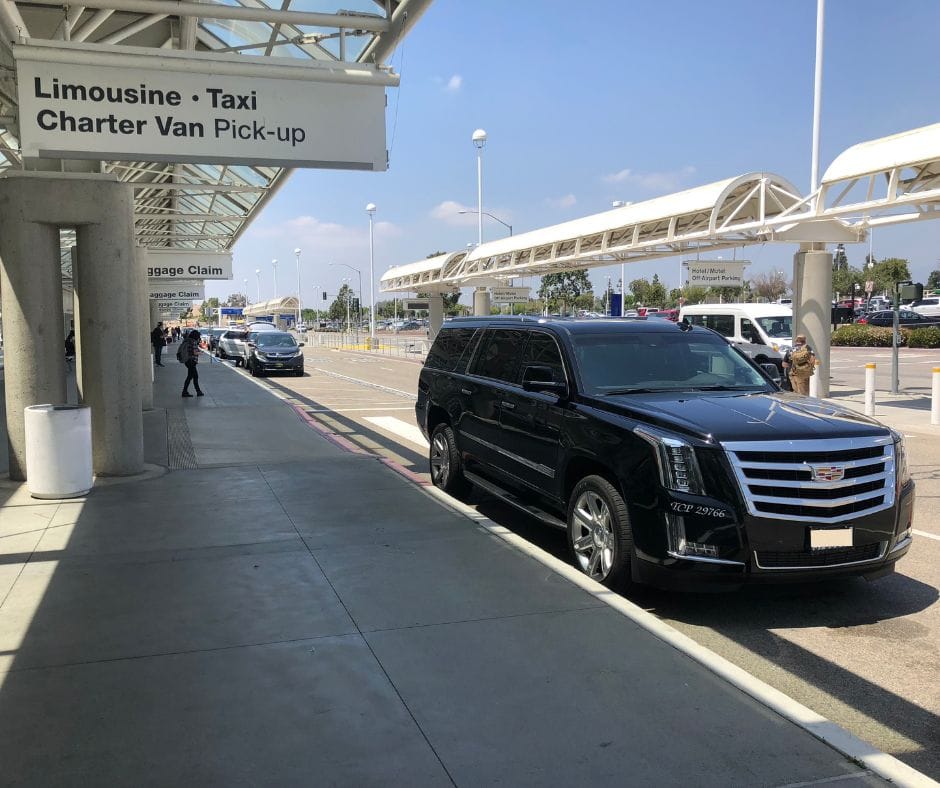
Airport transportation is where the difference often becomes most obvious. Airports are structured, time-sensitive, and often stressful. Pickups can involve arrivals, delays, baggage timing, terminal access, and traffic conditions that change quickly. The better the coordination, the smoother the trip feels. Rideshare works well for many personal airport trips, especially when the traveler is flexible and comfortable navigating pickup instructions independently. But for business travel, that model has limits. A crowded terminal, vague pickup area, or variable wait time may be manageable for a casual traveler, but it is not always ideal for an executive, a client, or a visitor your company is hosting. Corporate transportation tends to be more effective for airport use because the trip is treated as a planned service, not an improvised request. That is valuable when the rider is arriving after a long flight, working on a tight schedule, or expecting a more polished experience. Businesses that need structured airport movement often combine transportation planning with office schedules, hotel check-ins, event timing, or client hospitality. In that context, the transportation company is not just providing a car. It is helping protect the broader business itinerary. That is why the difference between rideshare and corporate car service is often easiest to explain through airport travel: one is typically good for convenience, the other is better for controlled execution.
| Airport Travel Factor | Rideshare | Corporate Car Service |
|---|
| Arrival coordination | Usually traveler-managed | More actively planned and communicated |
| Pickup consistency | Can vary by demand and location | Generally more structured |
| Business hospitality | Functional but informal | Better suited for executive and guest experience |
| Luggage and trip context | Less customized to trip type | More likely to match business needs |
Pricing structure and what businesses should understand
At first glance, rideshare often appears cheaper. In some cases, it may be. But businesses should evaluate cost in context, not just by comparing one visible number on a screen. Rideshare pricing is built for fast consumer convenience. Depending on demand, pricing can rise or shift. The booking may be simple, but the service model is still consumer-oriented. It is not always designed around company image, repeat account needs, or executive scheduling priorities. Corporate car service is usually priced around planned transportation, service level, vehicle type, itinerary needs, and operational coordination. That can make the base price higher in some situations, but the comparison should include what the company is actually paying for. In business transportation, the value is often tied to reduced stress, better scheduling confidence, consistent presentation, and smoother handling of important trips. There is also an internal cost to consider. If an office manager or executive assistant has to spend extra time correcting confusion, managing last-minute changes, or worrying about whether a client pickup will go smoothly, that time has value too. A more structured service can be more efficient for the company overall even if the trip itself costs more on paper. That is why the question is rarely just which is cheaper. The smarter question is which option delivers the right level of dependability for the purpose of the trip.
Vehicle standards, safety, and service consistency
Another important difference is consistency. Rideshare is inherently variable because the driver and vehicle are not always predictable from one ride to the next. Many trips may go perfectly fine, but the company booking the ride has limited control over the overall feel of the experience. With a corporate car service, the expectation is usually more standardized. The vehicles are better aligned with executive or business use. The service tone is more consistent. The passenger knows the trip is meant to feel professional, not casual. That consistency matters when the transportation is part of a repeat company process or a client-facing standard. Vehicle quality also affects comfort and perception. A clean, polished sedan or SUV used for business transportation feels different from a random app-assigned car, even if both are technically functional. For personal use, that may not matter much. For executive use, it often does. Businesses that rely on transportation frequently often prefer a provider that already understands
chauffeur-driven car service for corporate office use because the service is built around that professional standard. The company does not need to hope the experience feels right. The expectation is already set.
When rideshare may be enough and when it is not
To be fair, rideshare does have valid use cases. If an employee needs a quick personal->
Executive airport pickups and drop-offsClient or partner transportationBusiness dinners and hospitalityConvention and conference schedulesOffice-to-office executive movementTrips where timing and image both matterRepeat company bookings that need consistencyThose are the situations where the transportation needs to do more than simply exist. It needs to support the business objective attached to the trip. This is also why many executives favor more polished travel options in general. The issue is not only comfort. It is control, consistency, and the ability to travel without unnecessary friction. Businesses that want that level of service often understand
why executives prefer black car service for important travel situations rather than relying on whatever on-demand option is available at the moment.
Which option is better for your company?
The answer depends on what your company values most in the specific situation. If the trip is casual, flexible, and low pressure, rideshare may be enough. If the trip is tied to executive time, client perception, scheduling precision, airport coordination, or company image, a corporate car service is usually the stronger choice. The key is to match the transportation model to the stakes of the ride. Businesses often get into trouble when they treat all transportation the same. A personal errand and a client pickup are not the same. A quick local ride and an executive airport transfer are not the same. A conference itinerary and a casual one-way trip are not the same. When transportation needs to feel dependable, professional, and brand-appropriate, a dedicated provider usually makes more sense than an on-demand app. That is especially true for companies that book transportation repeatedly and want a consistent standard instead of a variable experience every time. Perfect Transportation Limousine and Sedans is built around those higher-stakes business needs, including executive transportation, airport service, convention movement, office travel, and client-facing scheduling. Businesses that want a more polished transportation partner can also review the company on
Google Business Profile, follow updates on
Instagram, or connect through
Facebook. In practical terms, rideshare is often about convenience. Corporate transportation is about confidence. That is the clearest difference.
FAQ
Is corporate car service better than rideshare for business travel?
For many business situations, yes. Corporate car service is usually better when reliability, client experience, executive presentation, and schedule control matter. Rideshare may be enough for lower-pressure trips.
What is the biggest difference between rideshare and corporate car service?
The biggest difference is service structure. Rideshare is on-demand and convenience-based, while corporate car service is planned, more professional, and better aligned with business travel needs.
Is rideshare cheaper than corporate transportation?
Sometimes it can be cheaper at face value, but companies should compare total value, not just the visible rate. Business image, timing reliability, and service consistency all affect the real cost of the trip.
Should I use rideshare for client pickups?
It depends on the importance of the client and the tone your company wants to set. For higher-value relationships or more formal business situations, a corporate car service usually creates a better impression.
Which option is better for airport transportation?
For casual personal trips, rideshare may work fine. For executive travel, guest pickups, or tightly scheduled business itineraries, corporate transportation is usually the better option because it offers more structure and professionalism.
Why do companies compare rideshare vs corporate car service so often?
Because both options can technically provide transportation, but they serve different business needs. Comparing
rideshare vs corporate car service helps companies decide whether convenience alone is enough or whether the trip requires a more polished and reliable service model.
Conclusion
If your company is choosing between the two, the best answer comes down to the purpose of the trip. Rideshare works best for informal, low-pressure travel where convenience is the main goal. Corporate transportation works better when the ride is tied to executive schedules, airport timing, business presentation, client hospitality, or repeat company standards. In the end, understanding
rideshare vs corporate car service is really about understanding what the trip needs to accomplish. When transportation has to feel professional, dependable, and aligned with your company image, a dedicated corporate car service is usually the stronger and smarter choice.