The Rising Importance of Visual Intelligence in Business
In today’s digital-first economy, businesses are surrounded by an overwhelming amount of visual data—from customer interactions and surveillance footage to product images and operational videos. However, most organizations still struggle to convert this data into actionable insights. This gap is precisely where computer vision services are making a meaningful impact. By enabling machines to interpret and analyze visual inputs, these services are helping businesses unlock value that was previously hidden in plain sight. As competition intensifies across industries, the ability to process and act on visual data in real time is becoming a critical differentiator.
Understanding the Scope of Computer Vision Services
Computer vision services refer to AI-driven solutions that allow systems to identify, analyze, and derive insights from images and videos. These services combine deep learning, neural networks, and image processing techniques to replicate human visual understanding at scale. Platforms like Google Cloud Vision AI and Amazon Rekognition have simplified adoption by offering pre-trained models and APIs that businesses can integrate into their workflows. Whether it’s recognizing objects, extracting text, or analyzing video streams, computer vision services are designed to transform raw visual data into structured, usable information that drives decision-making.
Why Enterprises Are Rapidly Adopting Computer Vision Services
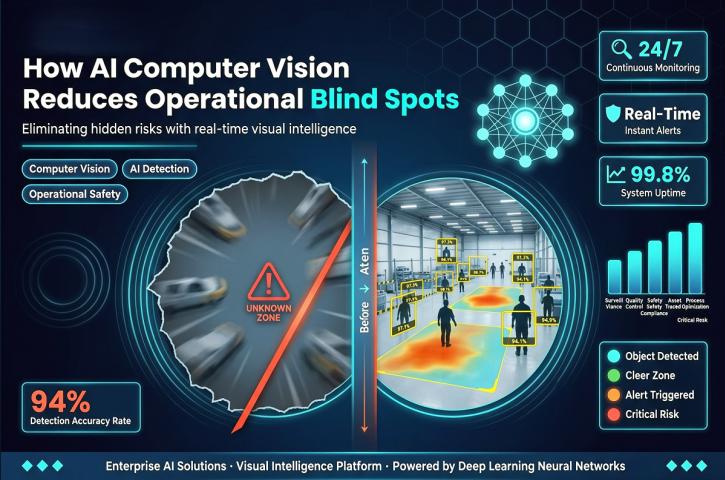
The growing adoption of computer vision services is largely driven by the need for speed, accuracy, and scalability. Traditional manual processes, such as visual inspections or monitoring video feeds, are not only time-consuming but also prone to human error. By automating these tasks, businesses can significantly improve operational efficiency while reducing costs. Additionally, computer vision enables real-time analysis, allowing organizations to respond instantly to critical events. This capability is particularly valuable in environments where delays can lead to financial losses or safety risks. As a result, enterprises are increasingly investing in these services to gain a competitive edge and future-proof their operations.
Transforming Retail Experiences Through Computer Vision
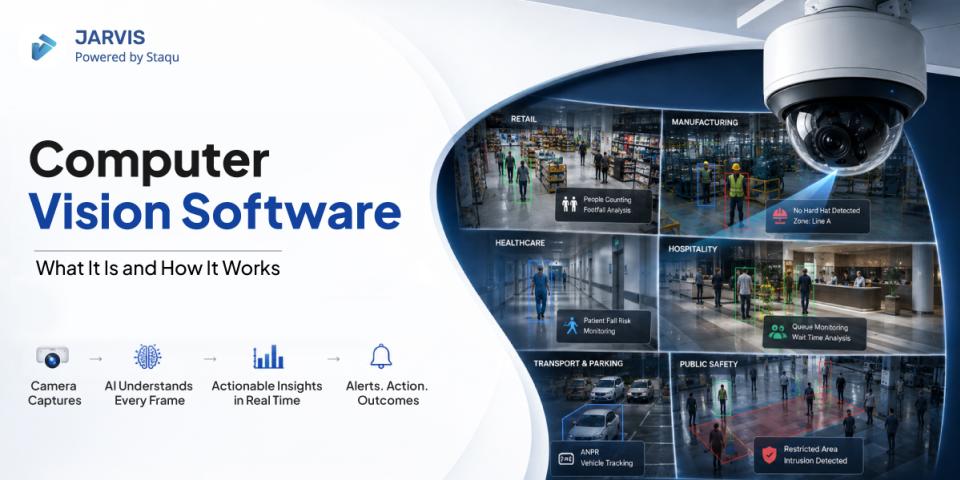
In the retail sector, computer vision services are redefining how businesses interact with customers and manage inventory. Retailers are leveraging these technologies to create seamless, personalized shopping experiences while optimizing backend operations. For instance, Amazon Go has demonstrated how computer vision can eliminate checkout lines by automatically tracking purchases. Beyond this, retailers use vision-based systems to monitor shelf inventory, analyze customer behavior, and prevent losses. These capabilities not only enhance customer satisfaction but also provide valuable insights that help retailers make smarter business decisions.
Enhancing Healthcare Outcomes with Visual AI
Healthcare is another industry where computer vision services are driving significant transformation. Medical professionals are increasingly relying on AI-powered imaging tools to improve diagnostic accuracy and efficiency. Institutions like Mayo Clinic are exploring how computer vision can assist in analyzing medical scans, detecting anomalies, and supporting clinical decision-making. By reducing the burden on healthcare providers and minimizing diagnostic errors, these services are contributing to better patient outcomes. Moreover, the ability to process large volumes of medical data quickly is enabling faster and more informed treatment decisions.
Revolutionizing Manufacturing with Automated Vision Systems
Manufacturing operations are benefiting immensely from the integration of computer vision services. In production environments, even minor defects can lead to significant losses if not detected early. Computer vision systems equipped with high-resolution cameras and AI models can identify defects in real time, ensuring consistent product quality. Companies such as Siemens are incorporating these technologies into smart factories to streamline operations and reduce downtime. Beyond quality control, computer vision is also being used to monitor worker safety and optimize production workflows, making manufacturing processes more efficient and reliable.
Driving Innovation in the Automotive Industry
The automotive industry is leveraging computer vision services to power advanced driver-assistance systems and autonomous vehicles. These systems rely on cameras and sensors to interpret the surrounding environment, detect obstacles, and make real-time driving decisions. Companies like Tesla are at the forefront of this innovation, using computer vision as a core component of their self-driving technology. As these systems continue to evolve, they are expected to enhance road safety, reduce accidents, and pave the way for fully autonomous transportation.
Strengthening Security and Surveillance Capabilities
Security and surveillance systems have traditionally depended on human monitoring, which can be both inefficient and unreliable. Computer vision services are transforming this landscape by enabling automated, real-time analysis of video feeds. These systems can detect unusual activities, recognize faces, and track movements with high accuracy. By reducing reliance on manual monitoring, organizations can improve security while optimizing resource utilization. This is particularly important in high-risk environments where timely detection of threats is crucial.
Technological Foundations Powering Computer Vision Services
The effectiveness of computer vision services is rooted in a combination of advanced technologies. Deep learning models, particularly convolutional neural networks, play a central role in analyzing visual data and identifying patterns. Edge computing is another key component, allowing data to be processed closer to its source, which reduces latency and enables faster decision-making. Cloud platforms such as Microsoft Azure provide the infrastructure needed to train and deploy these models at scale. Together, these technologies create a robust ecosystem that supports the development and deployment of powerful computer vision solutions.
Overcoming Challenges in Computer Vision Implementation
Despite its potential, implementing computer vision services comes with its own set of challenges. One of the primary concerns is the need for large volumes of high-quality data to train AI models effectively. Without proper data, even the most advanced algorithms may fail to deliver accurate results. Integration with existing systems can also be complex, requiring careful planning and execution. Additionally, privacy and ethical considerations must be addressed, especially when dealing with sensitive data such as facial recognition. Organizations must ensure compliance with regulations and adopt responsible AI practices to build trust and avoid potential risks.
Selecting the Right Computer Vision Strategy
Choosing the right computer vision services requires a strategic approach that aligns with business objectives. Organizations must first identify the specific problems they want to solve and evaluate whether computer vision is the right solution. Factors such as scalability, customization, and ease of integration should be carefully considered. Partnering with experienced providers can also make a significant difference, as they bring the expertise needed to navigate technical complexities and ensure successful implementation. A well-defined strategy not only maximizes ROI but also minimizes risks associated with adoption.
The Future of Computer Vision Services in a Data-Driven World
As AI technologies continue to evolve, the capabilities of computer vision services are expected to expand significantly. Innovations in real-time video analytics, edge AI, and augmented reality will open up new possibilities for businesses across industries. Companies like NVIDIA are driving these advancements by developing cutting-edge hardware and frameworks that accelerate AI performance. In the coming years, computer vision will become more accessible, enabling even small and medium-sized businesses to leverage its benefits. This widespread adoption will further accelerate digital transformation across the global economy.
Conclusion: Turning Visual Data into Strategic Advantage
Computer vision services are fundamentally changing how businesses operate by transforming visual data into actionable insights. From improving efficiency and accuracy to enabling real-time decision-making, these services offer a wide range of benefits that can drive growth and innovation. However, achieving success requires more than just adopting the technology—it demands a clear strategy, the right tools, and a commitment to responsible implementation. As organizations continue to embrace digital transformation, computer vision will play an increasingly important role in shaping the future of business.