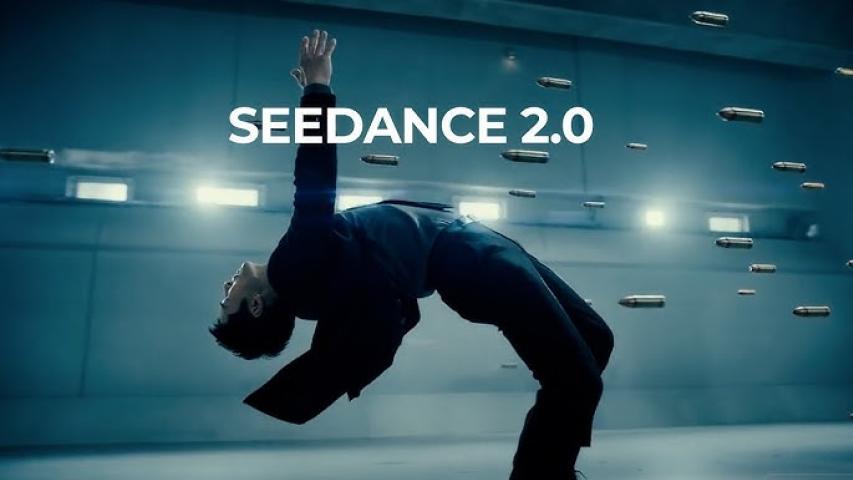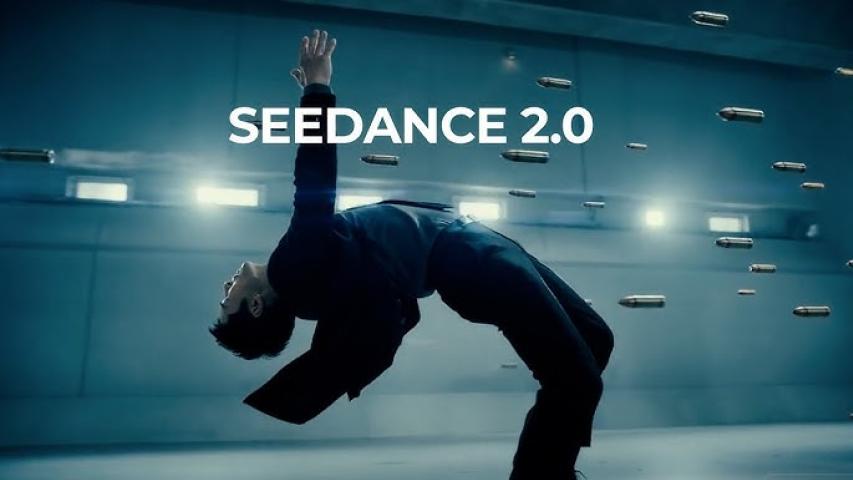
Experts call the problem that plagued the early days of generative video "temporal noise." This is when an AI model doesn't keep a logical connection between frames that come one after the other. Seedence 2.0's proprietary Latent-Sync technology makes a big difference in solving this problem. Seedence 2.0 has set a new gold standard for professional consistency by treating a video as a continuous fluid volume instead of a series of separate images.
Getting to know the Latent-Sync Architecture
A multi-dimensional latent space is at the heart of Seedance 2.0. This space holds key visual features in place over time. Most generative models use a "frame-by-frame" prediction method, which makes textures drift and facial features change. Seeddance 2.0, on the other hand, uses a temporal attention mechanism that "remembers" the exact coordinates of each pixel from the last frame. This makes sure that the pattern on a character's shirt stays the same whether they are standing still or running through a changing environment.
How to Fix the "Melting Background" Problem
Another big step forward in Seeddance 2.0 is that it can tell the difference between motion in the foreground and stability in the background. In lower-quality models, the background often "melts" or warps around the subject when they move. Seedence 2.0 uses a depth-aware mask to protect the scene's static parts. This is especially important for architectural visualisations or movie scenes where the environment must stay solid to keep the viewer's attention.
Questions and Answers (FAQ)
Does Seedence 2.0 need high-end hardware to render?
The engine is made to work on a cloud architecture that is spread out. The calculations are very complicated, but the user only needs a regular web interface to start the render. Our server clusters do the hard work, so even people with basic laptops can make 4K movies.
How does the engine deal with quick camera movements?
The "Virtual Cinematographer" layer in Seeddance 2.0 can guess how motion blur and changes in perspective will look. The AI won't lose track of the scene's geometry, so this lets for realistic drone shots, fast pans, and "shaky cam" effects.
Can Seedance 2.0 be used to integrate live action?
Yes. A lot of professional VFX artists use Seeddance 2.0 to make "plates" or background elements that they then combine with live-action footage. Because it is so stable over time, the integration process is much easier than with other AI tools.
What is the highest resolution for output?
The AI creates at a base high-fidelity resolution, but the built-in upscaling engine lets you export in Ultra-HD 4K, which is best for professional digital displays and movie projections.
Is there a point at which the motion can't get any more complicated?
Seedance 2.0 can handle everything from small facial movements to fast-paced action scenes. The most important thing is to give a clear motion guide or a detailed prompt that explains how the movement works.