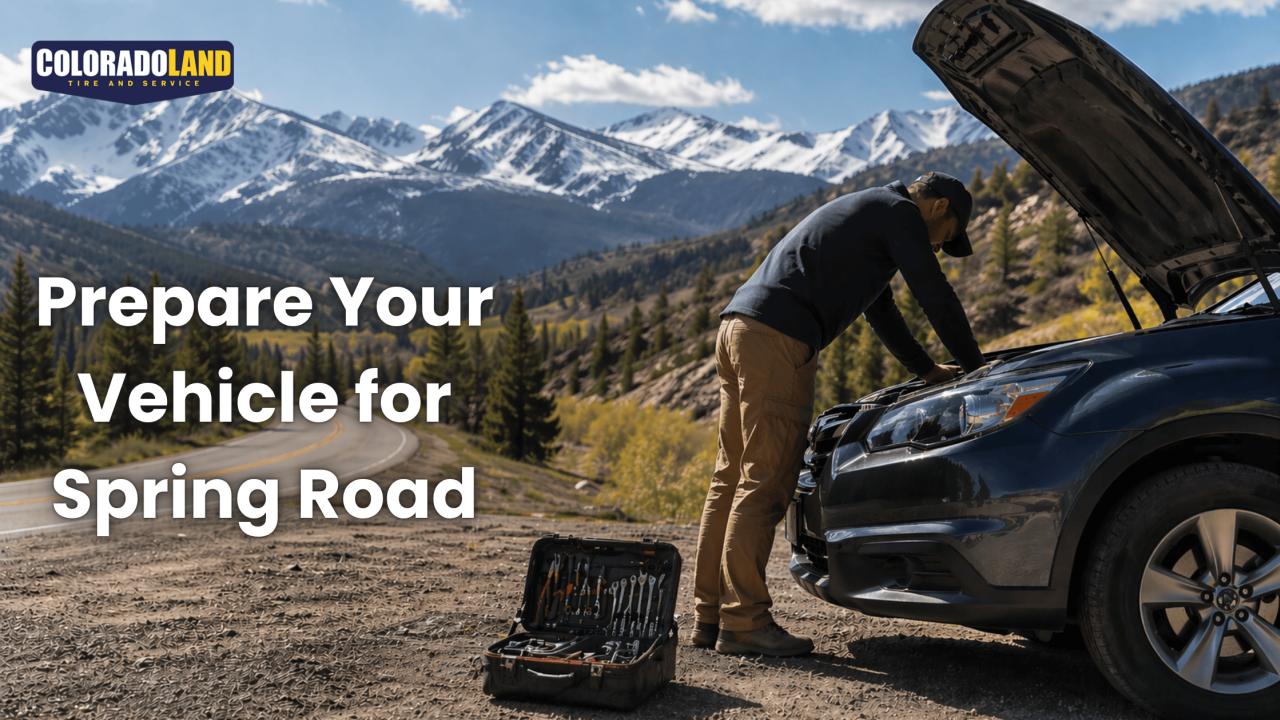
Most road trips don’t fail at the destination; they fail before the engine even starts, and Colorado’s mountains don’t forgive unprepared vehicles.
Spring in Colorado is nothing short of magical. Wildflowers pushing through thawing soil, snow-capped peaks glowing pink at sunrise, and open roads stretching endlessly through valleys and mountain passes are the kind of scenery that makes people want to drop everything and drive.
But before anyone chases that horizon, there is one thing that deserves serious attention: the vehicle underneath them.
Proper auto repair and pre-trip maintenance are not just a box to check before heading out; they are the difference between a road trip that becomes a treasured memory and one that ends on the shoulder of a mountain pass, waiting for a tow.
Colorado's terrain is breathtaking, but it is also brutally demanding on vehicles. Here is everything drivers need to know before hitting the road this spring.
Why Colorado Springs Demands More From Your Vehicle
Most people underestimate how physically taxing mountain driving actually is. For every 1,000 feet of elevation change, tire pressure shifts by roughly 0.5 PSI, a small number that quietly compounds across a long drive.
Colorado has 830 mountains between 11,000 and 14,000 feet in elevation, with 52 peaks exceeding 14,000 feet, and roads weave through them all.
Spring adds another layer of unpredictability. Mountain passes can carry snow or icy conditions well into spring, even when lower valley elevations are clear.
When climbing in elevation, temperatures typically drop about five degrees for every 1,000 feet of altitude gained, meaning a pleasant 65-degree spring day in Denver could be a cold 45-degree experience in Breckenridge.
The roads' elevation variations are not just scenic; they stress brakes, strain engines, fluctuate tire pressure, and drain batteries faster than ordinary driving ever would. Understanding this is the first step in preparing a vehicle the right way.
Start With the Tires: Your Only Connection to the Road
No component matters more on Colorado's mountain roads than tires, which makes tire maintenance the logical starting point for any pre-trip checklist.
What to check:
- Tread depth — A quick and reliable method is the penny test. Place a penny upside down into the tread groove. If Lincoln's head is fully visible, the tires need replacing before the trip.
- Sidewall condition — Look for cracks, bulges, or cuts that indicate aging rubber or prior impact damage.
- Tire pressure — Because elevation changes constantly affect PSI levels, always check pressure when tires are cold and adjust to the manufacturer's recommended specifications.
- Uneven wear patterns — This often signals alignment or suspension problems that will only get worse over hundreds of mountain miles.
Do not overlook tire balancing near me searches either. Unbalanced tires cause vibration that worsens at highway speeds, accelerates tread wear unevenly, and makes handling on switchbacks far less predictable.
Getting tires balanced before a long mountain trip is a small investment that pays off significantly.
A functional spare tire and the tools to change it are non-negotiable. Remote mountain areas can be hours away from roadside assistance.
Brakes: The Most Critical System on Mountain Roads
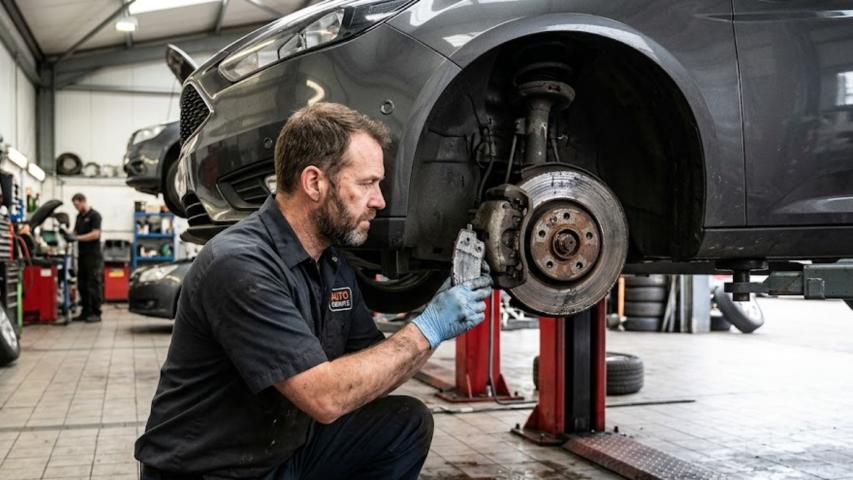
Few things are more sobering than descending a steep Colorado mountain grade and realizing the brakes feel soft. Auto brake repair is one of the most important pre-trip investments any driver can make, especially for Colorado road trips.
Applying continuous pressure to the brakes on descents causes excessive heat to build in the braking system. Overheated brakes will fade or fail. This is not a theoretical risk; it is a well-documented reality on Colorado's steep passes.
Before the trip:
- Have brake pads and rotors professionally inspected; what functions adequately during everyday commuting can fail under sustained mountain descent stress
- Check brake fluid levels and condition; fluid that looks dark or murky has likely absorbed moisture and lost effectiveness.
- Test brake performance for pulling to one side, unusual sounds, or a soft pedal feel.
- Learn to use engine braking on descents for automatic transmissions. Manually selecting "2" or "L" settings reduces reliance on brake pads.
Look for designated pullouts along steep descents; these are not just scenic stops but crucial brake-cooling areas. Use them.
Steering, Suspension, and Why Rough Roads Amplify Every Problem
Colorado's scenic routes are beautiful, but many are far from smooth. Gravel patches, frost heaves from winter freeze-thaw cycles, and uneven pavement are common, and every imperfection magnifies stress on a vehicle's undercarriage.
A proper steering and suspension service inspection before a spring trip should include:
- Shock absorbers and struts — Worn shocks reduce handling precision dramatically on winding roads
- Ball joints and tie rods — These connect the steering system to the wheels; worn components cause unpredictable steering response
- Alignment check — Misalignment causes uneven tire wear and makes the vehicle pull in one direction, a serious problem on narrow mountain roads
- Undercarriage inspection — Look for any damage from winter driving, including salt corrosion or impact from road debris
A vehicle with compromised suspension does not just ride poorly; it becomes genuinely harder to control through the sharp turns and sudden grade changes that define Colorado mountain driving.
Fluid Levels: The Unsung Heroes of Long Trips
Every fluid under the hood plays a critical role, and neglecting any of them can derail a trip before it reaches the first scenic overlook.
The essential fluid checklist:
- Engine oil — Dark, gritty oil should be changed before the trip. High-altitude driving places extra strain on engines, and clean oil is essential for keeping temperatures in check.
- Coolant/antifreeze — Colorado's dramatic temperature swings demand a proper coolant mixture to prevent both overheating on climbs and freezing on cold nights.
- Brake fluid — Should appear clear to light amber; dark fluid needs attention
- Windshield washer fluid — Spring road conditions mean mud, pollen, and sudden rain; visibility depends on this often-forgotten fluid.
- Transmission fluid — Constant elevation changes require the transmission to work significantly harder than in flatter regions, making fresh fluid essential.
When driving uphill, avoid running the air conditioner, as it may cause engine overheating. Rolling down the windows on climbs keeps the engine cooler and is a simple habit that protects a lot of expensive machinery.
Battery and Electrical: Cold Winters Leave Their Mark
Colorado winters are hard on vehicle batteries. Cold temperatures reduce a battery's ability to hold and deliver charge, and a battery that just barely started a car through February may give up entirely at 10,000 feet in April.
- Have the battery tested if it is three or more years old
- Clean any corrosion from terminals, even small amounts create resistance that strains the electrical system
- Check that the alternator is functioning properly to keep the battery charged throughout the journey
- Test both front and rear defrosters before departure
A dead battery in a mountain parking lot with no cell reception is a genuinely miserable situation. A quick test beforehand eliminates the risk.
Building the Right Emergency Kit
Even a perfectly maintained vehicle cannot guarantee immunity from unexpected situations. Colorado's remote stretches mean that help can be far away, and being prepared makes all the difference.
Essential emergency kit items:
- First-aid kit and any personal medications
- Jumper cables or a portable jump starter
- Flashlight with extra batteries
- Blanket and a change of warm clothes
- Non-perishable snacks and bottled water
- Ice scraper (yes, even in spring)
- Tire pressure gauge and emergency tire repair kit
- Physical maps, cell reception disappears fast in the mountains
Always bring physical maps in addition to a phone, as cell reception is very limited in the mountains. GPS apps are helpful when they work, but a paper backup has never needed a signal.
Final Pre-Trip Checklist Before Leaving
Once the mechanical work is done, run through these final preparations:
- Fill the fuel tank — Driving up steep inclines uses significantly more fuel than flat driving, and towns and gas stations can be sparse at higher elevations
- Check COtrip.org for live road conditions, closures, and construction updates
- Monitor the weather forecast — especially for mountain passes, which can close with little warning even in spring
- Share the itinerary with someone not on the trip
- Verify insurance and roadside assistance coverage are current
Your Colorado Adventure Starts with Reliable Auto Repair
Colorado's spring landscapes reward the well-prepared traveler with experiences that stay with people for years.
Rocky Mountain National Park in bloom, the winding switchbacks of the Million Dollar Highway, the silence of an alpine meadow at elevation, these moments are worth every hour of preparation.
For drivers based in or passing through the Denver metro area, professional pre-trip inspections are widely available.
Those specifically looking for auto repair Littleton Colorado services will find experienced mechanics familiar with the exact demands Colorado's mountain terrain places on vehicles because local mechanics have seen firsthand what under-prepared vehicles look like when they come back from the high country.
The mountains are calling. Make sure the vehicle is ready to answer.