When it comes to financial planning, life insurance plays a crucial role in
securing your family’s future. However, many policyholders are not fully aware
of how taxation works on insurance premiums, especially under GST.
Understanding these charges is important because they directly impact the
overall cost of your policy. Life insurance gst rate in india is not just a common query but also
an essential part of making informed financial decisions. Before you buy or
renew a policy, it’s important to know how GST is applied and how it affects
different types of life insurance plans.
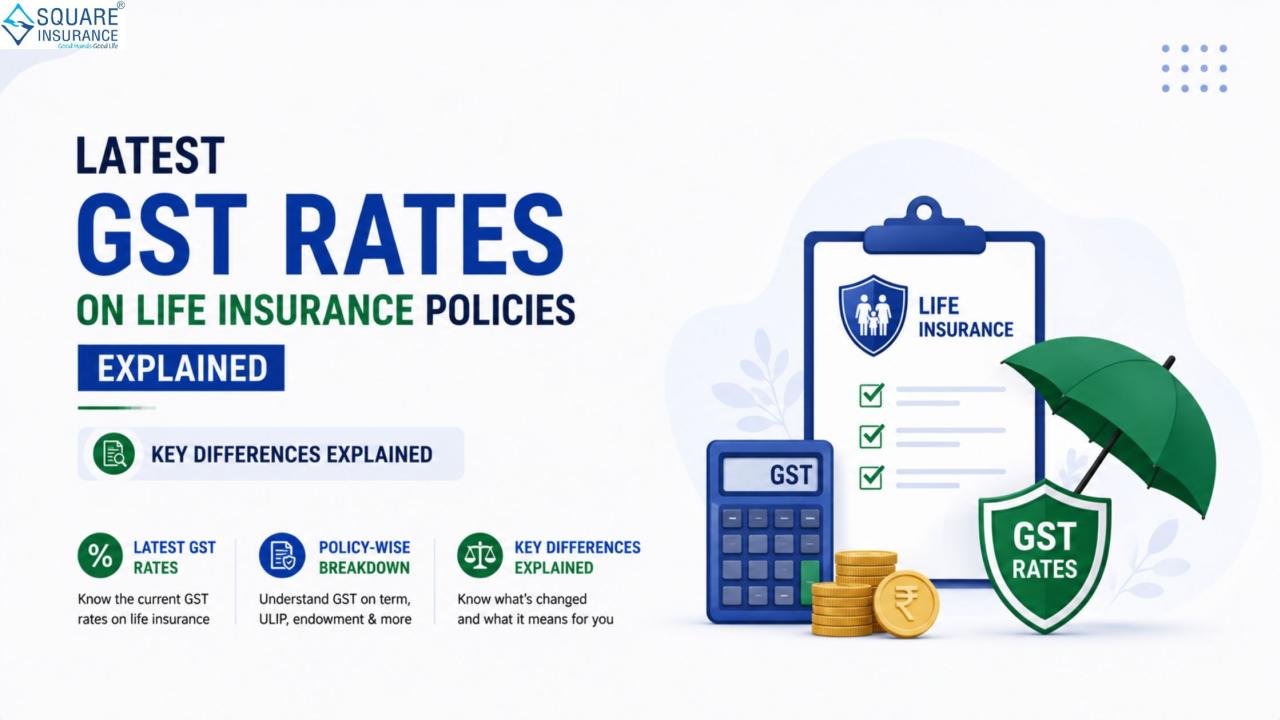
Life insurance policies in India attract Goods and Services Tax (GST), which
replaced earlier taxes like service tax. The GST rate varies depending on the
type of policy you choose, and it is charged on the premium amount you pay to
the insurer.
What is GST on Life Insurance?
GST on life insurance is the tax levied on the
premium paid by policyholders. It is not applied to the entire premium in every
case; instead, it depends on the structure and benefits of the policy.
Different types of life insurance plans-such
as term insurance, endowment plans, and ULIPs—have different GST structures.
This is why understanding policy-wise taxation becomes important before making
a purchase.
GST Rates on Different Life Insurance Policies
Here’s a breakdown of GST rates based on
policy types:
1. Term Insurance Plans
Term insurance is the simplest form of life
insurance that provides pure risk coverage.
- GST Rate: 18% on the premium
- Since there is no investment component, the
tax is applied to the full premium amount
2. Endowment Plans
These plans combine insurance with savings.
- GST Rate:
- First-year premium:
4.5%
- Renewal premium:
2.25%
- GST is applied only to the risk portion, not
the total premium
3. ULIPs (Unit Linked Insurance Plans)
ULIPs offer both investment and insurance
benefits.
- GST Rate: 18% on fund management and policy
charges
- Not applied directly to the investment
portion
4. Single Premium Policies
Policies where the premium is paid in one lump
sum.
- GST Rate: Around 10% (on the risk component)
Why GST Matters in Life Insurance
GST affects the total cost of your life
insurance policy. Even though it may seem like a small percentage, over the
years it can add up to a significant amount.
Understanding GST helps you:
- Calculate the actual premium you will pay
- Compare different policies more effectively
- Plan your finances better
How GST is Calculated on Life Insurance
The calculation depends on the type of policy.
For example:
- In term insurance, GST is straightforward-18%
of the premium
- In endowment plans, only a portion of the
premium is taxed
- In ULIPs, GST is charged on specific
charges, not the full premium
This difference is why two policies with
similar premiums may have different tax impacts.
Input Tax Credit (ITC) on Life Insurance
Policyholders cannot claim Input Tax Credit
(ITC) on life insurance premiums. GST paid on insurance is considered a
personal expense and is not eligible for tax credit.
Tax Benefits Along with GST
Even though GST increases the cost slightly,
life insurance policies still offer strong tax benefits under the Income Tax
Act:
- Section 80C: Deduction on premiums paid
- Section 10(10D): Tax-free maturity benefits
(subject to conditions)
This means the overall tax advantage often
outweighs the GST cost.
Things to Keep in Mind
- Always check GST rates before buying a
policy
- Understand whether GST is applied on full or
partial premium
- Compare policies based on net cost, not just
base premium
- Read policy documents carefully to avoid
surprises
FAQs
What
is the GST rate on life insurance in India?
The GST rate varies by policy type, but term insurance typically attracts 18%
GST.
Is
GST applicable on the full premium?
Not always. It depends on the type of policy and its structure.
Can
I claim GST paid on insurance?
No, GST on life insurance is not eligible for Input Tax Credit.
Does
GST increase insurance cost?
Yes, it slightly increases the total premium payable.
Are
maturity benefits taxable due to GST?
No, GST does not affect the tax-free status of maturity benefits under
applicable conditions.
Conclusion
Understanding GST rates on life insurance
policies is essential for making smart financial decisions. While GST adds to
the premium cost, the benefits of life insurance-financial security, tax
savings, and long-term planning-far outweigh the additional expense.
By
choosing the right policy and understanding its tax implications, you can plan
better and avoid unexpected costs. Opting for a trusted provider like Square
Insurance can further help you get expert guidance, transparent pricing, and a
hassle-free experience while selecting the best life insurance policy for your
needs.