The digital asset ecosystem has entered a phase where utility matters more than speculation. In 2026, stablecoins are no longer viewed as experimental instruments tied only to cryptocurrency trading. They are now becoming integral components of modern financial architecture, supporting cross-border settlements, decentralized liquidity, programmable payments, treasury operations, and tokenized asset ecosystems.
As global financial institutions continue exploring blockchain-based infrastructure, stablecoins are emerging as one of the few digital asset categories with measurable real-world applicability. Their ability to maintain price stability while enabling near-instant value transfer has positioned them as a bridge between traditional finance and decentralized financial systems.
The conversation around stablecoins in 2026 is therefore no longer centered on whether they will survive. Instead, the focus has shifted toward scalability, interoperability, compliance frameworks, reserve transparency, and enterprise-grade implementation.
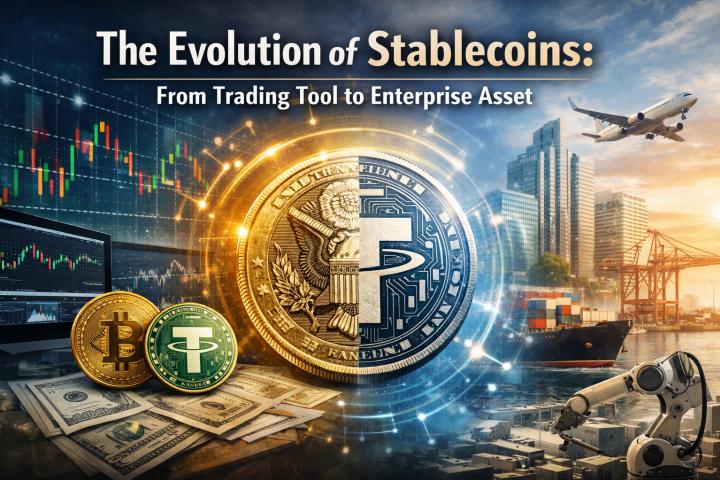
The Evolution of Stablecoins Beyond Crypto Trading
Earlier generations of stablecoins were primarily designed to reduce volatility exposure within cryptocurrency markets. Traders used them as temporary hedging instruments during periods of market instability. However, the current ecosystem has evolved significantly beyond that narrow function.
Today’s stablecoins are integrated into payment gateways, institutional settlement layers, decentralized lending protocols, and tokenized investment products. Governments and private financial entities are also increasingly studying stablecoin frameworks to modernize payment infrastructure without abandoning fiat-backed monetary systems.
Several developments have accelerated this transition:
- Institutional participation in blockchain-based finance has increased demand for reliable digital settlement assets.
- Cross-border payment inefficiencies continue pushing enterprises toward faster alternatives.
- Smart contract automation has enabled programmable financial workflows.
- Tokenized real-world assets require stable settlement mechanisms.
- Decentralized finance platforms depend on liquidity instruments with reduced volatility.
This transformation has turned stablecoins into operational financial tools rather than speculative crypto products. Their role now extends across capital markets, remittance networks, supply-chain finance, digital commerce, and treasury management.
Regulatory Alignment Is Reshaping the Stablecoin Market
One of the most defining characteristics of the 2026 stablecoin environment is regulatory maturity. Unlike earlier years marked by uncertainty and fragmented oversight, multiple jurisdictions are now introducing clearer digital asset compliance standards.
Financial regulators are increasingly focused on reserve backing, liquidity management, consumer protection, anti-money laundering controls, and transaction monitoring. This regulatory evolution is forcing stablecoin issuers to operate with stronger financial accountability and infrastructure transparency.
For enterprises entering this sector, compliance architecture has become just as important as blockchain performance. Stablecoin projects are now expected to demonstrate:
- Real-time reserve verification mechanisms
- Auditable treasury management systems
- KYC and AML integration
- Jurisdiction-specific licensing structures
- Smart contract security validation
- Risk management protocols for liquidity stress events
As a result, businesses are investing more heavily in enterprise blockchain engineering, governance frameworks, and secure issuance models. Demand for services related to custom stablecoin development is also increasing as companies seek specialized infrastructure aligned with their regulatory and operational requirements.
This shift indicates a broader market transition from generalized token deployment toward institutionally compliant digital finance ecosystems.
Stablecoins and the Rise of Tokenized Financial Infrastructure
The growth of tokenized assets is creating a new layer of demand for stablecoins. In 2026, tokenization is no longer limited to digital collectibles or isolated blockchain experiments. Financial institutions are actively exploring tokenized bonds, real estate assets, private equity instruments, commodities, and treasury products.
Within these ecosystems, stablecoins function as the transactional settlement layer. Without a stable unit of exchange, tokenized asset markets would struggle to achieve operational efficiency.
For example, when tokenized securities are traded on blockchain-based platforms, stablecoins enable:
- Instant settlement finality
- Reduced counterparty risk
- Programmable dividend distribution
- Fractional ownership transactions
- Automated escrow functionality
- Continuous market liquidity
This integration is significantly reducing settlement delays associated with traditional financial infrastructure. Conventional systems often require intermediaries, reconciliation processes, and multi-day settlement windows. Stablecoin-enabled infrastructure compresses these timelines dramatically.
At the same time, interoperability protocols are improving communication between public blockchains, permissioned enterprise networks, and banking systems. This interoperability is becoming essential for large-scale adoption because financial ecosystems cannot operate in isolated blockchain silos.
As tokenization expands globally, stablecoins are expected to become embedded within digital capital market operations rather than functioning as separate crypto-native instruments.
Enterprise Adoption Is Driving Infrastructure Innovation
Enterprise adoption has become one of the strongest catalysts for stablecoin innovation in 2026. Large organizations are increasingly evaluating blockchain-based payment systems to reduce operational friction and improve settlement efficiency.
Unlike early retail-driven crypto adoption cycles, enterprise use cases prioritize scalability, governance, predictability, and integration compatibility. Businesses require stablecoin systems that can seamlessly connect with ERP platforms, treasury systems, compliance software, and banking infrastructure.
This requirement is driving innovation across several technical layers:
Smart Contract Optimization
Stablecoin protocols are evolving to support advanced automation, conditional transfers, programmable compliance, and transaction policy enforcement.
Multi-Chain Liquidity Architecture
Enterprises increasingly prefer stablecoins that operate across multiple blockchain ecosystems to avoid liquidity fragmentation and network dependency.
Institutional Custody Solutions
Secure asset custody frameworks are becoming essential as corporations manage larger volumes of digital financial assets.
Reserve Transparency Technologies
Proof-of-reserve systems and on-chain audit verification mechanisms are improving confidence among institutional stakeholders.
These developments are helping stablecoins move closer to mainstream financial infrastructure standards. The emphasis is no longer solely on decentralization but also on operational resilience, governance efficiency, and transaction integrity.
The Future of Stablecoins in the Global Financial Ecosystem
Looking ahead, stablecoins are positioned to become foundational components of digital financial infrastructure rather than supplementary blockchain assets. Their role is expected to expand across banking, international trade, fintech ecosystems, decentralized applications, and government-backed digital initiatives.
However, the long-term success of stablecoins will depend on several critical factors.
First, scalability remains essential. As transaction volumes increase, blockchain infrastructure must support low-latency processing without compromising security or decentralization.
Second, trust will continue defining adoption. Stablecoin issuers that demonstrate transparent reserve management, strong governance structures, and regulatory alignment are likely to gain broader institutional acceptance.
Third, interoperability will shape market leadership. Financial ecosystems require seamless movement of value across networks, platforms, and jurisdictions. Stablecoins that operate within isolated ecosystems may struggle to maintain long-term relevance.
Finally, cybersecurity will remain a major priority. As stablecoins become increasingly integrated into enterprise finance and payment systems, smart contract vulnerabilities and infrastructure risks could create systemic exposure if not properly addressed.
In 2026, stablecoins are no longer simply digital representations of fiat currency. They are evolving into programmable financial primitives capable of supporting next-generation economic systems. Their growing influence across payments, settlement infrastructure, tokenization, and decentralized finance indicates that they are becoming deeply embedded within the future architecture of global finance.
The broader digital finance landscape is still evolving, but stablecoins have already established themselves as one of the most practical and scalable blockchain applications currently in operation. As technological innovation and regulatory clarity continue advancing together, stablecoins are expected to play a defining role in shaping how value moves across the digital economy in the years ahead.