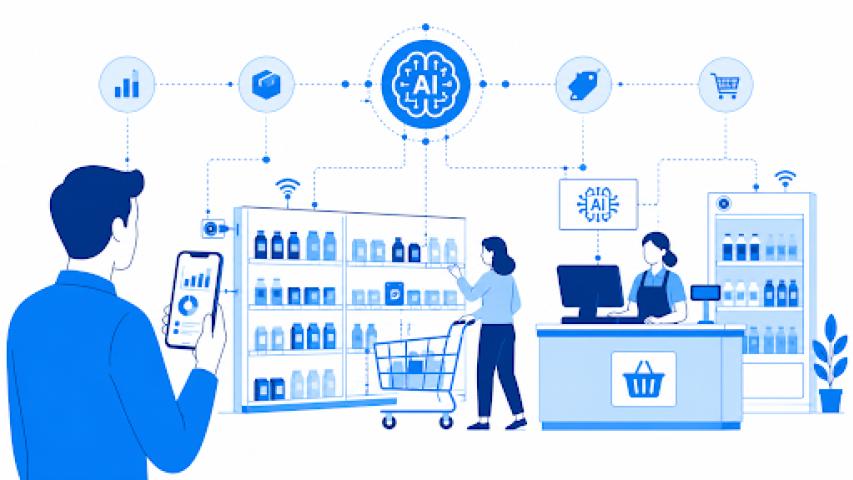
Artificial intelligence is no longer a future ambition for the retail industry; it is the engine running operations right now. In 2026, the retail industry enters a new phase, focused not on experimentation but on integration and execution. From the warehouse to the shop floor, AI is reshaping every stage of the retail journey. This article covers the most significant trends defining the industry today: supply chain optimization, store operations automation, and the growing role of retail image recognition software.
1. Supply Chain Optimization
The supply chain has historically been one of retail's most costly pain points, plagued by overstocking, stockouts, delivery delays, and poor visibility. AI is changing that at every level.
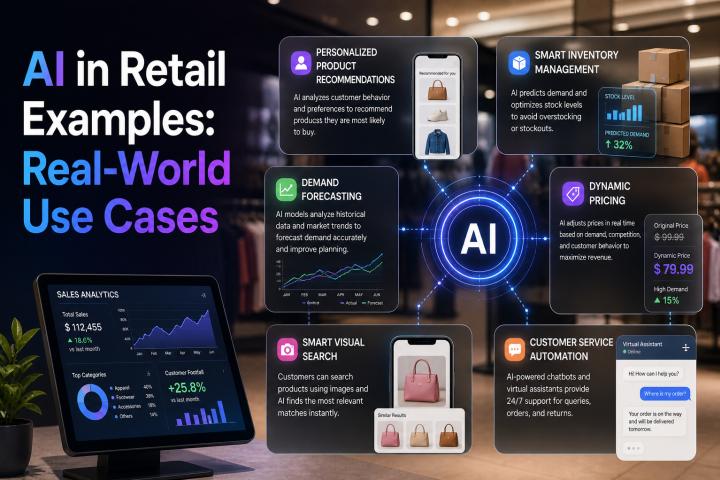
Retailers lose billions each year due to overstocking, stockouts, and missed promotional opportunities. AI addresses this by providing real-time demand forecasting, automated replenishment, and hyper-local stock optimization. By analyzing historical data, weather patterns, holidays, and local events, AI models can predict what products to stock, when, and where.
Modern AI-powered supply chains also offer significantly better visibility end-to-end. This includes machine learning algorithms to optimize routing, tracking devices to determine the real-time location of shipments, digital proof of delivery, and more flexible delivery windows, all of which make supply chains more resilient and competitive.
Perhaps most significant is the shift toward self-managing suppl y chains. Rather than relying on retrospective reports, AI-driven agents now monitor millions of data points and can automatically address disruptions. Retailers that can consistently promise and meet delivery timelines are winning customers from those that cannot.
2. Store Operations Automation
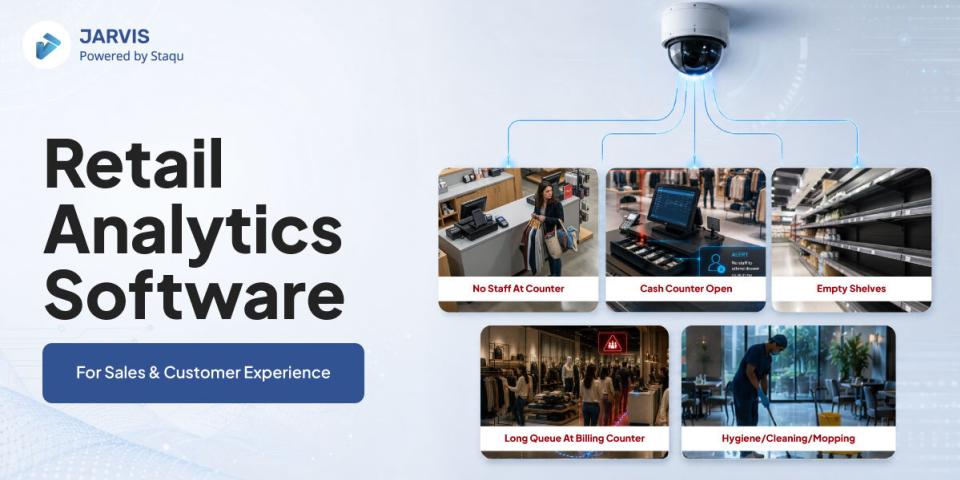
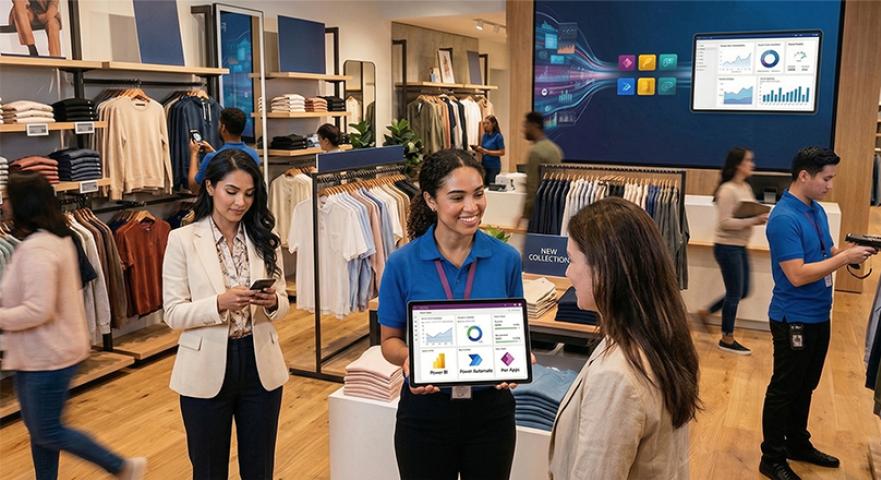
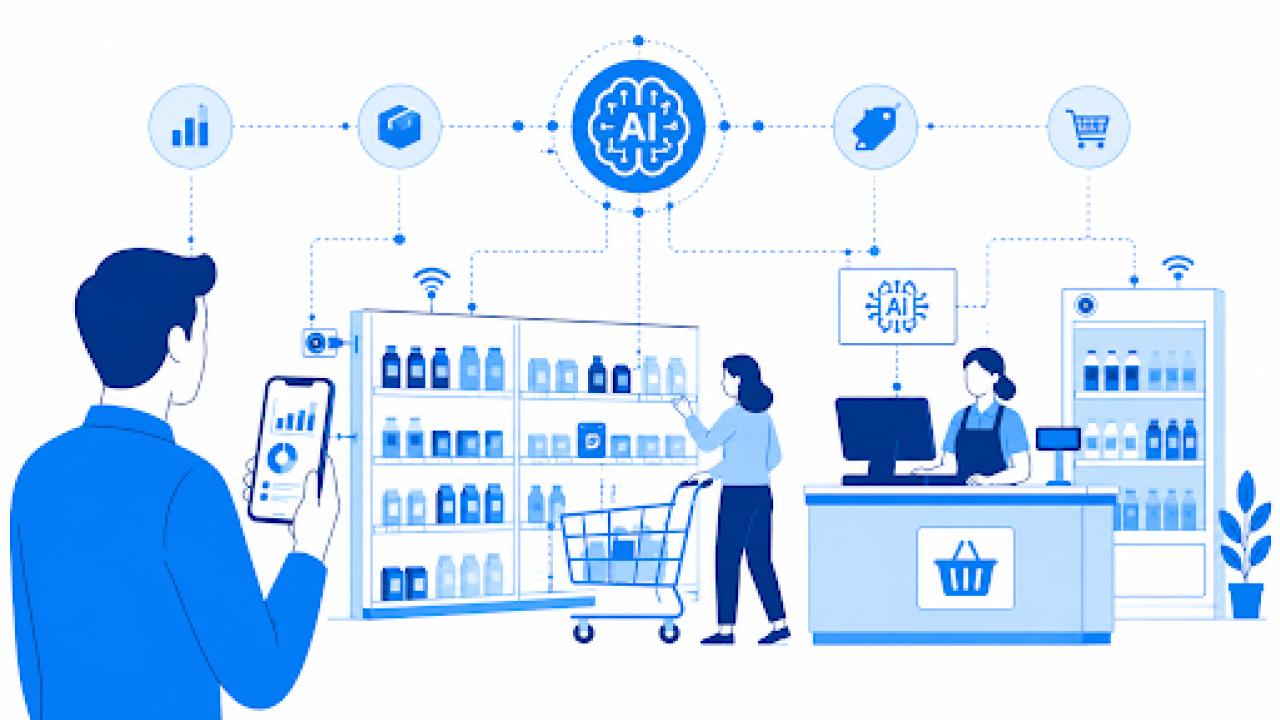
Inside the store, AI is quietly taking over a wide range of tasks that once required constant human attention. Automation now reaches far beyond the checkout counter. Retailers are using AI to handle routine in-store activities such as price verification and inventory monitoring. Technologies like smart shelves, shelf-scanning tools, and software provide real-time inventory insights, generate data on shopping behavior, and support proactive restocking.
Checkout Processes
The checkout experience is one of the most visible areas of transformation. Frictionless payment systems can charge customers automatically as they leave a store, eliminating the checkout queue entirely. Self-checkout kiosks allow customers to scan and pay without cashier assistance, while biometric authentication using fingerprint and facial recognition is gradually replacing PINs and card signatures.
Computer vision has made self-checkout considerably smarter. Rather than scanning each item individually, customers can place their basket on a sensor pad that instantly identifies every item in it. This has reduced both the errors and the theft incidents that affected earlier self-checkout systems. AI also introduces voice interaction features, making the checkout process more accessible and more secure.
Shelf Monitoring
Keeping shelves stocked, correctly priced, and properly arranged has always been labor-intensive. AI and computer vision now handle this continuously and automatically. Real-time inventory tracking gathers information on product usage, customer flow, and seasonal trends, giving store managers accurate, up-to-date insights into what is selling, what is running low, and what needs immediate attention.
The sustainability benefits are also becoming clear. A European grocery chain recently reported a 15% reduction in food waste after deploying machine learning models for predictive resource analysis. AI-powered shelf monitoring is not just an efficiency play; it is increasingly a tool for reducing waste and improving margins simultaneously.
Customer Assistance
AI is transforming how shoppers find help, discover products, and complete their purchases. The evolution of chatbots from simple Q&A tools to full-fledged shopping concierges means that 2026 is the year conversational commerce truly matures. AI assistants can now shorten the time between product discovery and purchase, and major retailers are investing heavily in these capabilities.
Smart store infrastructure in 2026 also customizes offers on displays in real time and can recognize returning customers upon entrance using QR code scanning or app-based identification. The result is a shopping experience that feels personal, fast, and friction-free.
3. Retail Image Recognition Software
One of the most transformative technologies in modern retail is the rise of image recognition software powered by computer vision. Where store audits once required hours of manual walkthrough and data entry, AI can now process a single shelf photograph and return structured, actionable intelligence within seconds.
At its core, retail image recognition software works by analysing photos of store shelves and translating visual data into measurable insights. It identifies which products are present, which are missing, whether shelf layouts match approved planograms, and whether promotional displays are correctly executed. This shift from manual observation to automated visual analysis is fundamentally changing how brands and retailers manage in-store execution.
What the software detects
Modern retail image recognition systems are capable of identifying a wide range of shelf conditions in real time. This includes out-of-stock gaps, misplaced or incorrectly faced SKUs, planogram deviations, pricing compliance issues, and competitor shelf activity. Rather than waiting for a weekly audit report, store managers and field teams receive alerts the moment a compliance issue is detected, enabling faster corrective action before a sale is lost.
The technology is also precise enough to calculate the share of shelf, measuring how much physical shelf space a brand occupies relative to its competitors. This kind of competitive visibility, which previously required significant manual effort to gather, is now available automatically from a single store visit photo.
How it works in the field
The typical workflow is straightforward. A field representative visits a store and photographs the relevant shelf section using a mobile device. The image recognition software processes the photo, runs it through a computer vision model, and returns a detailed breakdown, SKU count, assortment share, planogram compliance status, promotional execution, and competitor presence, all within the same screen. The system then generates specific recommendations: which products need restocking, which placements need correcting, and which outlets require priority attention.
This removes the dependency on manual note-taking and subjective observation. Every store visit produces consistent, comparable, and measurable data, regardless of which field representative conducted the visit.
Trade promotion and competitor intelligence
Image recognition software is also becoming one of the most significant technology tools for trade promotion management. Brands invest significantly in promotional displays, price promotions, and featured product placements, but have historically had limited visibility into whether these were actually executed correctly at the store level. Image recognition closes that gap by automatically verifying promotion compliance across every outlet, flagging exceptions in real time, and linking execution data directly to sales performance dashboards.
The same technology simultaneously tracks competitor activity. By analyzing shelf photos for competitor SKUs, share of shelf, and display positioning, brands gain a clearer picture of the competitive landscape at the point of purchase, intelligence that was previously difficult and expensive to gather at scale.
Consumer-facing visual search
Beyond back-end execution, image recognition is also reshaping the front-end shopping experience. Retailers are increasingly deploying visual search tools that allow shoppers to photograph a product, whether seen in a store, in a social media post, or in everyday life, and instantly find it available to purchase online or locate it in-store. This capability shortens the path to purchase, reduces cart abandonment, and creates a more intuitive discovery experience, particularly for younger shoppers who are accustomed to visual, image-first interfaces.
As the technology matures, retail image recognition software is moving from a specialist tool used by large CPG brands to a standard capability expected across the industry. The ability to see what is happening at every shelf, in every store, in real time, and act on it immediately, is becoming one of the defining competitive advantages in modern retail.
Conclusion
In 2026 and beyond, the true competitive advantage will belong to retailers who treat AI not as a tool, but as a strategic partner. Those who align every decision with customer expectations will protect their profit margins and build stronger brand loyalty for years to come.
Supply chain optimization, store operations automation, spanning checkout, shelf monitoring, customer assistance, and retail image recognition software are not isolated trends. They are interconnected layers of a single, AI-powered retail transformation. The brands and retailers investing in these technologies today are not just solving today's execution problems; they are building the infrastructure for the next decade of commerce.