Enterprise AI is evolving faster than ever before. A few years ago, businesses were excited about chatbots that could answer customer questions or automate basic workflows. Today, enterprises want something much bigger — AI systems that can think, retrieve information, reason through problems, and execute tasks autonomously. This growing demand is exactly why Agentic RAG Implementation in Enterprise environments is becoming one of the hottest trends in modern AI adoption.
Traditional AI systems often fail when businesses expect real-world intelligence from them. They may generate inaccurate responses, struggle with enterprise-specific information, or completely miss business context. Even advanced large language models have limitations because they rely heavily on pre-trained data rather than real-time enterprise knowledge.
Agentic RAG changes this completely.
Instead of functioning like a basic AI chatbot, an Agentic RAG system behaves more like an intelligent enterprise assistant capable of retrieving live organizational data, analyzing situations, making decisions, and even taking actions across connected business systems. This shift is transforming how enterprises approach automation, productivity, and operational intelligence.
From healthcare and finance to cybersecurity and retail, organizations are increasingly investing in AI systems powered by retrieval-augmented generation and autonomous agents. Businesses that adopt these systems early are already seeing improvements in efficiency, customer experience, and decision-making speed.
In this blog, we’ll explore how Agentic RAG works, why enterprises are investing heavily in it, and how businesses can use advanced RAG Development Services to build scalable enterprise AI solutions.
Understanding Agentic RAG in Enterprise AI
To understand why Agentic RAG is gaining attention, it’s important to first understand the problem enterprises are trying to solve.
Most traditional AI systems generate responses based on static training data. This creates several enterprise-level challenges. For example, an AI assistant may not know about a company’s latest policy changes, customer data, operational workflows, or internal knowledge repositories. As a result, businesses often receive generic or inaccurate outputs.
Retrieval-Augmented Generation (RAG) was introduced to solve this issue by enabling AI systems to retrieve information from external enterprise data sources before generating responses. This dramatically improves contextual accuracy.
However, Agentic RAG takes the concept much further.
In an Agentic RAG architecture, AI agents are capable of reasoning through tasks, breaking down objectives into multiple steps, retrieving relevant information, validating outputs, and executing actions using connected enterprise tools. Instead of simply responding to prompts, these AI systems can behave more like autonomous digital workers.
For instance, imagine an enterprise employee asking an AI system to prepare a quarterly compliance report. A traditional chatbot may generate a generic answer. An Agentic RAG system, however, can retrieve compliance documents, analyze regulations, gather live business data, identify operational risks, create summaries, and even distribute reports to stakeholders automatically.
This ability to combine retrieval, reasoning, memory, and execution is what makes Agentic RAG a revolutionary technology for enterprises.
Why Enterprises Are Rapidly Adopting Agentic RAG
One of the biggest reasons behind the rise of Agentic RAG is the growing complexity of enterprise operations. Modern businesses generate massive amounts of data every day, but much of this information remains scattered across systems like CRMs, cloud storage, internal databases, SaaS applications, support platforms, and communication tools.
Employees spend countless hours searching for information, verifying reports, or manually executing repetitive workflows. Traditional AI tools cannot efficiently handle these challenges because they lack real-time enterprise awareness.
Agentic RAG addresses these limitations by enabling AI systems to work directly with enterprise knowledge ecosystems.
For enterprises, this creates several major advantages.
First, it significantly improves decision-making. AI systems can retrieve the latest information from trusted business sources before generating outputs. This reduces the risk of hallucinations and inaccurate responses.
Second, it enables workflow automation at an entirely new level. Instead of merely suggesting actions, AI agents can execute tasks autonomously. For example, an AI system can analyze customer complaints, create support tickets, assign priorities, and notify teams without human intervention.
Third, Agentic RAG improves operational scalability. Businesses can deploy AI agents across departments such as HR, finance, customer support, IT operations, cybersecurity, and supply chain management.
As enterprises continue to pursue digital transformation, Agentic RAG is becoming a foundational technology for building intelligent business ecosystems.
How Agentic RAG Works in Enterprise Environments
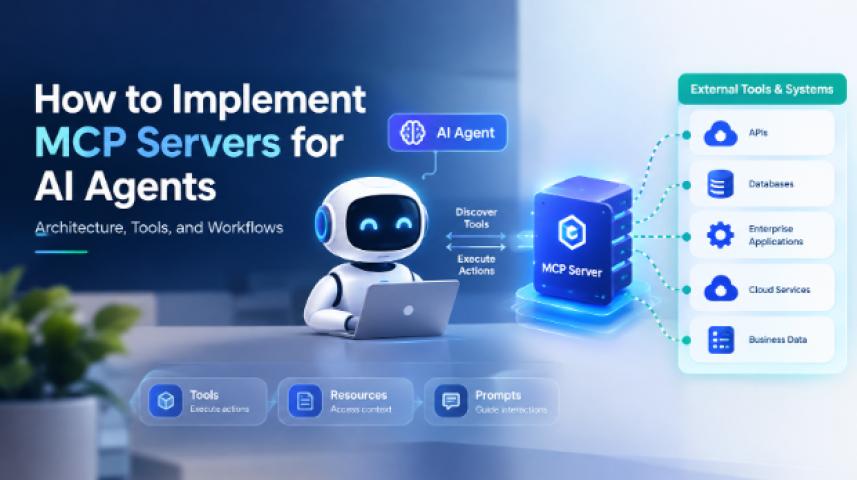
At the core of Agentic RAG is a combination of retrieval systems, large language models, memory frameworks, and autonomous AI agents.
The process usually begins when a user submits a request or when an AI agent receives a predefined objective. Instead of generating an instant response, the agent first analyzes the task and determines what information is required.
The retrieval system then searches enterprise data repositories for relevant information. This may include PDFs, databases, policy documents, emails, CRM records, or cloud storage files. The retrieved content is passed to a large language model, which analyzes the information and generates contextual outputs.
What makes Agentic RAG different is the presence of autonomous reasoning capabilities.
The AI agent can break down complex objectives into smaller tasks, validate retrieved information, use external tools, and make iterative decisions throughout the workflow. Some advanced systems even maintain memory of previous interactions, allowing them to improve over time.
For example, in a cybersecurity environment, an Agentic RAG system may detect suspicious activity, retrieve historical threat intelligence, analyze vulnerabilities, recommend mitigation strategies, and automatically initiate response workflows.
This level of intelligence is far beyond traditional automation systems.
Real-World Enterprise Use Cases of Agentic RAG
The practical applications of Agentic RAG are expanding rapidly across industries.
In customer support, enterprises are deploying AI agents that can access customer histories, retrieve product documentation, analyze sentiment, and generate personalized responses in real time. This not only improves customer satisfaction but also reduces support costs significantly.
In the healthcare sector, hospitals are using Agentic RAG systems to assist with clinical documentation, patient record retrieval, medical research analysis, and operational coordination. Doctors and healthcare professionals can access relevant medical information much faster, improving patient outcomes and administrative efficiency.
Cybersecurity is another area where Agentic RAG is proving highly effective. Security teams deal with enormous volumes of logs, alerts, and threat intelligence daily. Agentic AI systems can retrieve relevant security data, analyze attack patterns, prioritize threats, and automate incident response workflows. This helps organizations improve threat detection while reducing response times.
Financial institutions are also investing heavily in Agentic RAG implementation. AI agents can retrieve financial records, monitor compliance regulations, detect fraud patterns, generate reports, and support risk analysis. Since financial services require highly accurate and context-aware decision-making, retrieval-based AI systems offer a major advantage.
Even internal enterprise operations are being transformed. HR teams use Agentic RAG systems for employee onboarding, policy assistance, recruitment support, and knowledge management. Employees can interact with AI assistants that instantly retrieve accurate company information and guide them through internal processes.
The Growing Importance of RAG Development Services
As the demand for enterprise AI grows, businesses are increasingly turning toward specialized RAG Development Services to implement scalable and secure AI architectures.
Building an enterprise-grade Agentic RAG system is far more complex than deploying a standard chatbot. It requires expertise in data engineering, vector databases, LLM orchestration, security frameworks, API integrations, workflow automation, and AI governance.
Professional RAG development teams help enterprises design custom architectures tailored to their operational requirements. This includes integrating enterprise data sources, optimizing retrieval pipelines, selecting appropriate large language models, implementing memory systems, and ensuring regulatory compliance.
Another major benefit of working with experienced RAG developers is scalability. Enterprise AI systems must handle massive workloads while maintaining performance and accuracy. Development experts help businesses optimize infrastructure costs, improve latency, and ensure system reliability.
Security is also a major consideration. Since Agentic RAG systems often access sensitive enterprise information, organizations must implement strict governance frameworks, access controls, and encryption mechanisms. Specialized RAG development providers help businesses deploy AI systems securely while meeting industry regulations.
As enterprise AI adoption accelerates, businesses that invest in advanced RAG development capabilities will gain a significant competitive advantage.
Challenges Enterprises Face During Agentic RAG Implementation
Despite its immense potential, implementing Agentic RAG in enterprise environments is not without challenges.
One of the biggest obstacles is data fragmentation. Enterprise information is often distributed across multiple disconnected systems, making retrieval optimization difficult. Poor data quality can also reduce AI accuracy.
Another challenge is infrastructure complexity. Agentic RAG systems require orchestration frameworks, vector databases, cloud computing resources, monitoring systems, and scalable APIs. Without proper planning, implementation costs can rise quickly.
Governance and compliance also remain critical concerns. Enterprises handling sensitive financial, healthcare, or legal information must ensure that AI systems operate within strict security and regulatory standards.
There is also the challenge of maintaining output reliability. Even with retrieval systems, AI models may occasionally generate inaccurate interpretations if retrieval quality is weak or prompts are poorly designed.
This is why enterprises must approach Agentic RAG implementation strategically rather than treating it as a plug-and-play solution.
The Future of Agentic RAG in Enterprise AI
The future of enterprise AI will likely revolve around intelligent autonomous systems capable of handling increasingly complex workflows.
In the coming years, businesses will move beyond single AI assistants toward collaborative multi-agent ecosystems. Different AI agents will specialize in areas such as analytics, compliance, operations, cybersecurity, and customer engagement while working together across enterprise workflows.
We are also likely to see the rise of self-improving enterprise AI systems. These systems will continuously learn from organizational interactions, improve retrieval accuracy, and optimize workflows autonomously.
Another major trend will be hyper-personalized enterprise intelligence. AI systems will adapt based on employee roles, business objectives, operational contexts, and historical interactions.
As organizations continue investing in automation and intelligent decision-making, Agentic RAG will become a critical layer of enterprise digital infrastructure.
Conclusion
The rise of Agentic RAG Implementation in Enterprise environments represents a major shift in how businesses use artificial intelligence. Enterprises no longer want AI systems that simply generate responses — they want intelligent systems capable of retrieving enterprise knowledge, reasoning through problems, automating workflows, and executing tasks autonomously.
By combining retrieval-augmented generation with autonomous AI agents, businesses can build highly accurate, context-aware, and scalable AI ecosystems that drive real operational value.
From cybersecurity and finance to healthcare and customer support, the applications of Agentic RAG are already transforming industries worldwide. However, successful implementation requires the right strategy, architecture, and technical expertise.
This is where advanced RAG Development Services play a crucial role. With the right development approach, enterprises can create secure, scalable, and intelligent AI systems that improve productivity, reduce operational costs, and accelerate innovation.
As enterprise AI continues evolving, Agentic RAG is set to become one of the most important technologies shaping the future of intelligent business operations.