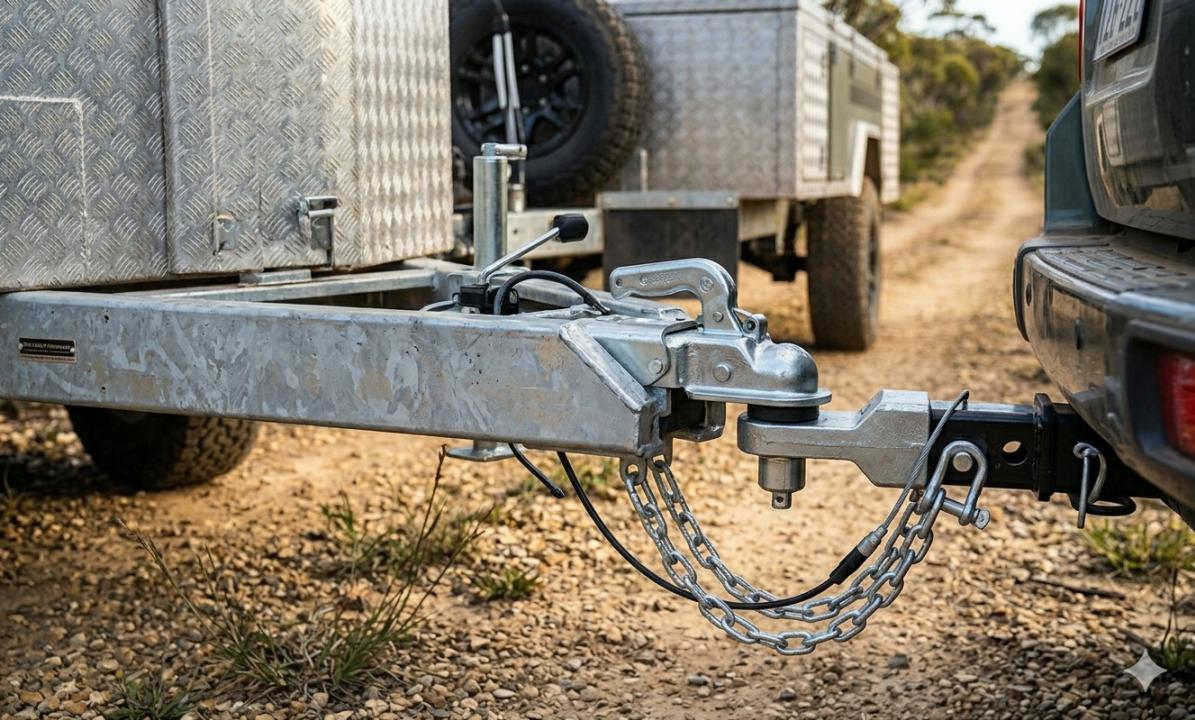
If you've ever stood in a shop staring at a wall of tow hitches and felt completely lost, you're not alone. Choosing the right trailer hitch for your camper or caravan is one of those decisions that feels simple on the surface but gets complicated fast. The wrong hitch can cause real problems on the road; we're talking swaying trailers, damaged tow bars, and in the worst cases, serious safety issues. So let's break it all down in plain language so you can make the right call before you hook up and head off.
What Is a Trailer Hitch and Why Does It Matter?
A trailer hitch, sometimes called a tow hitch or tow bar, is the connection point between your vehicle and your camper or caravan. It's the hardware that transfers all the load, movement, and force from your trailer to your car. Think of it as the handshake between two machines that need to work perfectly in sync.
The tow hitch tongue is the specific part that slides into or connects with the receiver on your vehicle. It takes a lot of stress during towing, especially when braking, turning, or navigating rough terrain. Getting the right one isn't just about fitment; it's about safety, legal compliance, and protecting your investment.
A poorly matched trailer tow hitch can put your vehicle's transmission, chassis, and tow bar assembly under unnecessary strain. It can also void your insurance if something goes wrong on the road. So yes, it matters a great deal.
Understanding Hitch Classes and Weight Ratings
One of the first things you need to know is that not all hitches are built the same. They're rated by how much weight they can handle, and this is usually split into two categories: Gross Trailer Weight (GTW) and Tongue Weight (TW).
Gross Trailer Weight is the total weight of your fully loaded camper or caravan, which includes your gear, water, food, tools, and everything else you've packed into it. Tongue Weight is the downward force that the front of your trailer places on the hitch ball. As a rough rule, tongue weight should be around 10 to 15 per cent of your GTW.
If you're running a small camper trailer that weighs under a tonne fully loaded, you'll be looking at a lighter-duty setup. But if you're towing a full-sized caravan that weighs two or more tonnes, you need a hitch rated to handle that load comfortably, not just at its maximum limit.
Always check your vehicle's tow rating in the owner's manual before buying any hitch gear. Fitting a heavy-duty trailer hitch to a vehicle that's not rated for it won't give you extra capacity — it just means the hitch survives while the rest of your vehicle suffers.
Different Types of Trailer Hitches Explained
There are several types of trailer hitches on the market, and each one suits a different towing setup. Understanding the differences will save you from making a costly mistake.
Ball mount hitches are the most common type used for caravans and camper trailers in Australia. They use a steel ball welded or bolted onto a mount, which inserts into a square receiver on your vehicle. The coupler on the front of your caravan then sits over the ball and locks down. These are reliable, widely available, and come in different drop heights to keep your caravan level.
Weight distribution hitches are designed for heavier towing, where the tongue weight would otherwise push the rear of your tow vehicle down and lift the front. They use spring bars to redistribute the load more evenly across all axles. If your caravan is on the heavier end, this type of setup makes a noticeable difference to handling and braking.
Pintle hitches are more common in commercial or off-road applications. They use a hook-and-ring mechanism that allows more articulation, which makes them great on rough terrain. You'll sometimes see these on farm trailers and heavy off-road equipment.
Fifth-wheel and gooseneck hitches sit in the tray of a ute and are used for very heavy loads. These are less common for recreational caravanning but are used by those towing large toy hauliers or fifth-wheel caravans.
For most Australians towing a standard caravan or pop-top camper, a quality ball mount with the right drop or rise height is going to be the most practical and common choice.
What Is a Tow Hitch Tongue and Why Does It Matter?
The tow hitch tongue is the shank portion of your ball mount — it's the part that slides into your vehicle's receiver hitch. The tongue needs to be the correct size for your receiver, and the most common sizes in Australia are 50mm and 70mm square receivers, though 2-inch (50.8mm) receivers are also common on newer vehicles.
Beyond the size, the tongue length and drop or rise angle matter a great deal. You want your caravan to sit as level as possible when hitched up. If your tow vehicle is higher than the trailer coupler, you need a drop->
When you're shopping for a camper tow hitch or trailer tow hitch, always confirm the receiver size on your vehicle, the height difference between your tow ball and the trailer coupler, and the maximum tongue weight rating of the mount. These three things will narrow down your options significantly.
Matching Your Hitch to Your Vehicle
Not every hitch fits every vehicle, and this is where a lot of people get tripped up. Some vehicles come with a factory-fitted tow bar and receiver. Others need aftermarket gear fitted before you can tow anything at all.
Check whether your vehicle already has a rated tow bar installed. If it does, you may just need the right ball mount or tow hitch tongue to suit your trailer coupler height and ball size. Most caravans and camper trailers in Australia use a 50mm tow ball, though some imported or heavier rigs use a 70mm ball — always double-check your caravan's coupler before buying a ball mount.
If your vehicle doesn't have a tow bar yet, you'll need to look at a complete tow bar and hitch kit that's engineered for your specific make, model, and year. A poorly fitting or incorrectly rated tow bar is one of the most dangerous things you can have on a towing setup. Getting a quality, vehicle-specific mount is non-negotiable.
Electric Brakes and Wiring Connections
Once you've sorted out the mechanical side of your hitch setup, don't forget the electrical connections. In Australia, if your caravan or camper trailer has electric brakes — which is mandatory in most states for trailers over a certain weight — your tow vehicle needs a brake controller installed and the correct wiring harness to communicate with the trailer.
Most trailer setups use either a 7-pin or 12-pin flat connector for running lights, indicators, brake lights, and electric brakes. Make sure your hitch and tow bar setup includes or accommodates the right wiring setup for your trailer. Skipping this step isn't just inconvenient — it's illegal and dangerous.
Where to Find Quality Tow Hitches and Mounts in Australia
Once you know what you need, finding the right gear from a trusted supplier makes all the difference. You want hitches and mounts that are rated and tested for Australian road conditions, not generic imported hardware that may not meet local standards.
Trailer Camper Australia stocks a solid range of mounts and hitches suited for caravans, camper trailers, and off-road setups. Whether you're after a basic ball mount, a heavy-duty drop tongue, or a complete tow hitch setup for your rig, their mounts and hitches collection is worth checking out. The range is practical, clearly laid out, and covers most common towing needs across different vehicle types.
Shopping from a specialist supplier means you're more likely to get the right product the first time, and you can usually get decent advice if you're unsure about sizing or compatibility.
A Few Things to Check Before You Buy
Before you hit the checkout button or head to the shop, run through this quick checklist to make sure you've covered the basics.
First, confirm your vehicle's maximum towing capacity and tow ball download limit from the owner's manual or manufacturer's website. Second, weigh your fully loaded caravan or camper — if you don't know the actual weight, estimate conservatively and choose a hitch rated well above that. Third, measure the height of your tow vehicle's receiver and compare it to the coupler height on your trailer when both are on flat ground. This tells you how much drop or rise you need on your ball mount. Fourth, confirm the coupler ball size on your trailer — 50mm is most common in Australia. Fifth, check that any hitch you buy is compatible with your vehicle's receiver size.
If you're ever in doubt, talk to a professional. Getting your tow setup checked by a qualified mechanic or towing specialist before your first big trip is absolutely worth the time and money.
Final Thoughts
Choosing the right trailer hitch for your camper or caravan doesn't have to be overwhelming. Once you understand the basics — weight ratings, tongue sizing, drop height, and receiver compatibility — it becomes a much more straightforward process. Take the time to do it properly, buy quality gear from a reputable supplier, and your towing setup will serve you well for years on the road.
Whether you're heading up the coast, into the outback, or just doing weekend trips to the bush, the right trailer tow hitch gives you peace of mind and keeps everything behind you tracking safely where it should be.