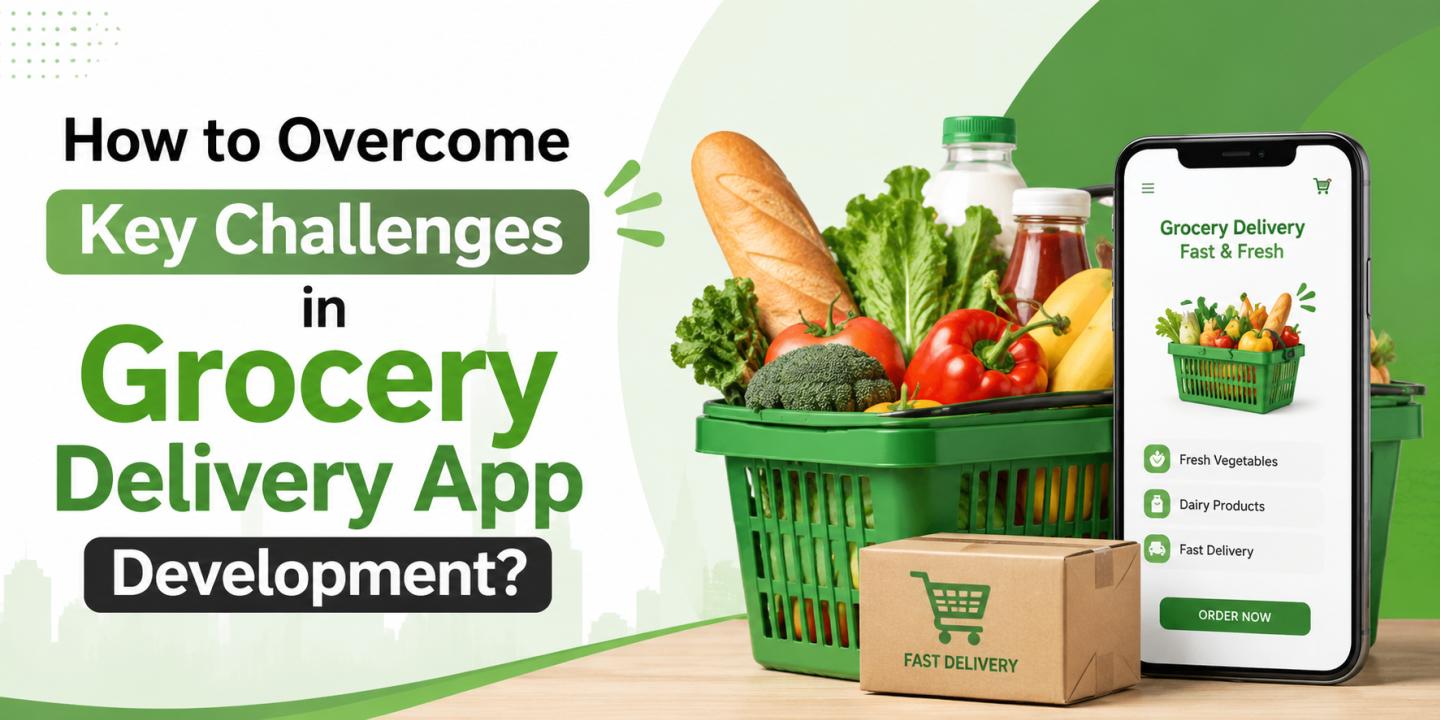
Digitalization of the grocery industry has opened up many doors for opportunities. The need for grocery apps has grown into one, with their ability to provide consumers with convenient access to everyday products.
On the other hand, building and maintaining such a grocery app with successful grocery delivery app development company brings its own share of unique problems. In this article, we will discuss three main challenges of grocery app development along with solutions, using data from some of the best examples in the industry.
Modern grocery delivery app development services focus on improving user experience, delivery efficiency, inventory accuracy, and app performance for long-term business growth.
Top Challenges in Grocery Delivery App
Grocery delivery applications face multiple operational and technical challenges, including inventory management, delivery optimization, user retention, and data security. Businesses must implement smart solutions to ensure smooth performance and customer satisfaction.
1. Real-Time Inventory Management
Real-time inventory management is challenging due to frequent fluctuations in grocery products. Firms need to incorporate automated inventory management systems to prevent issues like shortage, overselling, and misreporting of product availability.
2. Fast and Efficient Delivery Management
Promptness in deliveries is crucial for satisfying customer demands, which implies the need for optimized routes. Businesses need to employ technology like GPS monitoring and AI logistics systems to ensure speedy deliveries.
3. Handling Perishable Products
Grocery items such as fruits, vegetables, and dairy products require proper storage and fast transportation. Businesses need efficient warehouse management and temperature-controlled delivery systems to maintain product freshness and quality standards.
4. Managing High User Traffic
There is usually high traffic in grocery apps during holiday periods and busy shopping times. The need for businesses to create scalable applications in cloud computing and with load balancers to ensure that their apps perform well and do not crash.
5. Secure Payment Integration
Online customers usually require secure payment options when placing orders through an app. It is, therefore, necessary for business enterprises to provide customers with different kinds of encrypted payment gateways.
6. Accurate Order Tracking
Customers want real-time updates regarding their grocery orders and delivery status. Businesses must implement live tracking systems, automated notifications, and GPS monitoring to improve transparency and reduce customer uncertainty during deliveries.
7. User-Friendly App Design
Complex interface designs may have adverse impacts on the interaction and loyalty of users. Simple navigation, intelligent search features, adaptability, and usability are essential aspects that businesses must emphasize to ensure smooth transactions.
8. Multi-Store and Vendor Management
Handling numerous grocery stores and vendors from the same platform can be challenging. Centralized dashboard designs and automated vendor management systems can facilitate efficient processes, listings, and inventory synchronization.
9. Customer Retention and Engagement
It’s more straightforward to acquire customers than retain them. Companies can provide loyalty programs, personalized offers, discounts, and push notifications to enhance user engagement and promote repeated shopping for groceries.
10. Data Security and Privacy
Mobile applications for grocery stores gather personal information from their customers, such as addresses and payment information. Firms must have robust cybersecurity systems, authentication procedures, and encryption tools in place to ensure user privacy.
Conclusion
Modern grocery app development services help businesses address these technical and operational challenges efficiently by integrating advanced technologies such as AI, cloud computing, GPS tracking, and automation systems.
Building a successful grocery app requires more than advanced technology. Businesses must understand customer preferences, market trends, and operational challenges to deliver smooth and reliable services.
As the online grocery market continues expanding, businesses must adopt innovative strategies and modern technologies to remain competitive. Implementing smart solutions today helps grocery apps overcome current challenges while preparing for the changing expectations and future demands of digital consumers.