The Future of Work May Be AI + Human Collaboration
For years, conversations around artificial intelligence have followed a familiar pattern.
Every major advancement in AI seems to trigger the same question:
"Will AI replace human jobs?"
The discussion usually swings between two extremes.
One side predicts mass automation and large-scale workforce displacement. The other believes AI will simply become another productivity tool with limited long-term impact.
But both perspectives may be missing a more important shift already happening inside businesses today.
Because the future of work increasingly does not look like humans versus AI.
It looks like humans working alongside AI.
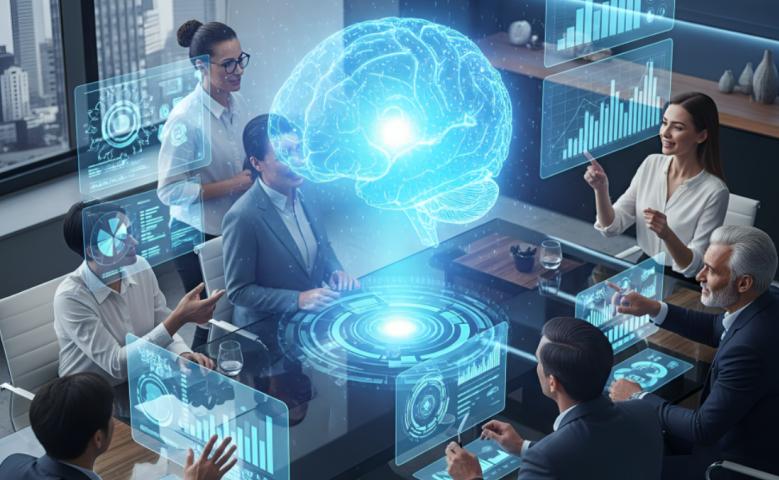
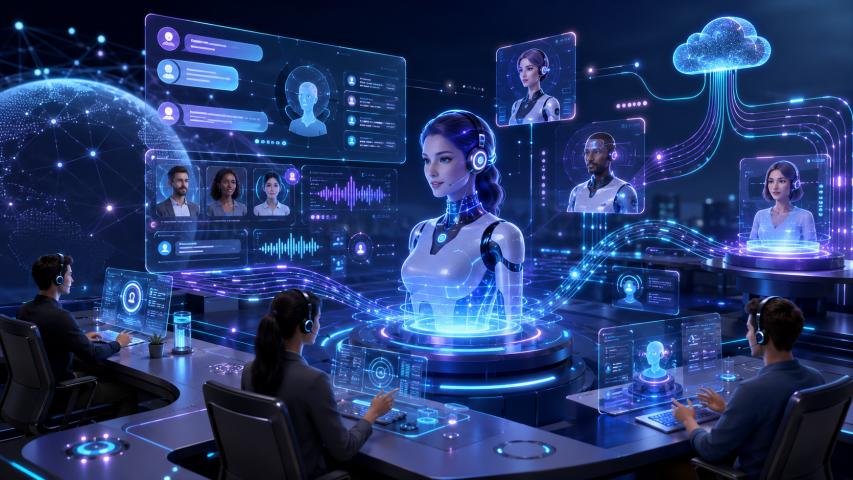
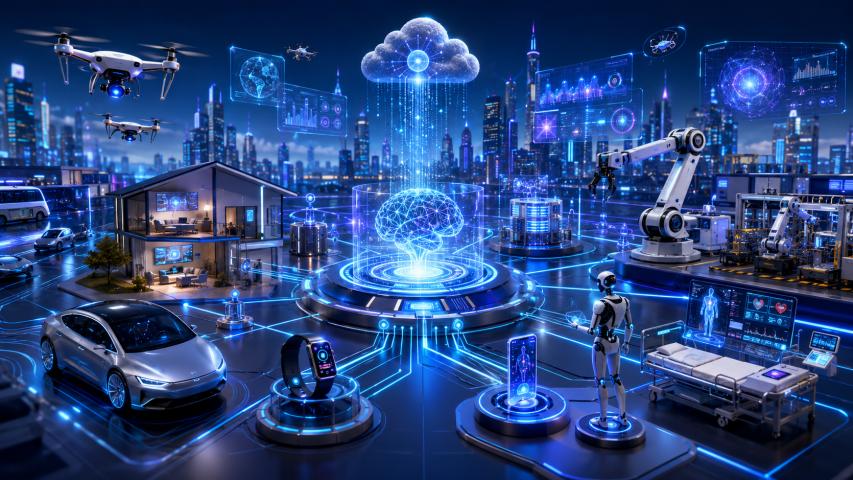
Across startups, enterprises, financial institutions, healthcare systems, software companies, and global organizations, AI is quietly becoming part of everyday workflows. Not as a replacement for people, but as an operational layer that removes friction, handles repetitive work, and enhances decision-making.
The next generation of successful organizations may not be defined by companies with the largest workforce.
They may be defined by companies that design the most effective collaboration between human intelligence and artificial intelligence.
And that distinction changes how CEOs, founders, and business leaders should think about work itself.
We Have Seen This Pattern Before
Throughout history, transformative technologies have often triggered fears of replacement.
The industrial revolution created concerns that machines would eliminate labor.
Computers created concerns that software would replace office workers.
The internet raised concerns about traditional industries disappearing entirely.
Some jobs changed.
Some roles evolved.
Some industries transformed.
But technology rarely removed work altogether.
Instead, technology changed the nature of work.
It shifted where humans created value.
Artificial intelligence appears to be following a similar pattern.
AI is not simply introducing automation.
It is changing how organizations distribute work between people and systems.
The important question may no longer be:
"What jobs can AI replace?"
The more useful question may become:
"What responsibilities should humans and AI each handle?"
Because increasingly, the answer is not one or the other.
It is both.
AI Excels at Scale. Humans Excel at Judgment.
One of the biggest mistakes businesses make is assuming AI and humans perform the same types of work.
They do not.
Artificial intelligence and human intelligence have fundamentally different strengths.
AI performs exceptionally well at:
- processing large datasets
- identifying patterns
- analyzing repetitive information
- generating predictions
- handling routine workflows
- automating structured tasks
- operating continuously
Humans continue to perform exceptionally well at:
- creativity
- emotional intelligence
- strategic thinking
- relationship building
- leadership
- ethics
- judgment under uncertainty
This distinction matters.
Because the strongest organizations increasingly are not replacing one with the other.
They are combining both.
AI handles scale.
Humans handle context.
AI processes information.
Humans create meaning.
AI executes.
Humans decide.
The Workplace Is Already Beginning to Change
The transformation toward AI + human collaboration is not a future theory.
It is already visible across industries.
Consider customer support.
Traditional support teams often spend significant time handling repetitive requests:
- password resets
- order status updates
- account verification
- common troubleshooting questions
AI increasingly handles these routine interactions automatically.
But complex situations still require empathy, judgment, and nuanced problem-solving.
Humans step in where human strengths matter most.
The result is not the elimination of support teams.
The result is a redesigned support workflow.
Sales organizations are experiencing similar changes.
AI systems increasingly:
- summarize meetings
- analyze customer behavior
- identify buying signals
- generate follow-up suggestions
- prioritize opportunities
Sales professionals spend less time on administration and more time building relationships.
The workflow changes.
The role evolves.
This pattern is appearing almost everywhere.
AI Is Becoming a Productivity Multiplier
Historically, increasing business output often required increasing headcount.
More work meant hiring more people.
But AI introduces a different model.
Individuals increasingly gain leverage through intelligent systems.
A marketer supported by AI tools may perform work that previously required larger teams.
A developer working with AI-assisted systems may produce more output in less time.
Operations teams can automate recurring workflows.
Analysts can process information faster.
Customer teams can handle larger volumes.
This creates a shift from workforce expansion toward workforce amplification.
Organizations increasingly may grow through productivity multiplication rather than proportional hiring.
This changes the economics of scale.
The Highest-Value Employees May Change
As AI becomes integrated into workflows, the characteristics organizations prioritize may evolve.
Historically businesses often valued:
- execution speed
- process management
- administrative efficiency
- routine expertise
Increasingly businesses may prioritize:
- adaptability
- critical thinking
- creativity
- decision-making
- systems thinking
- communication
- leadership
Because routine work becomes increasingly automated.
Human value shifts upward.
Employees may spend less time managing process execution and more time guiding systems, interpreting outcomes, and making strategic decisions.
This does not reduce the importance of people.
It increases the importance of uniquely human strengths.
CEOs Should Think About Workflow Design, Not Workforce Replacement
One reason AI discussions often become controversial is that businesses frame implementation around replacement.
Replace teams.
Replace functions.
Reduce headcount.
But organizations creating meaningful long-term outcomes increasingly approach AI differently.
They focus on workflow design.
Instead of asking:
"Which roles can AI eliminate?"
They ask:
"Which operational layers create friction?"
This changes implementation dramatically.
Because many business challenges are not workforce problems.
They are workflow problems.
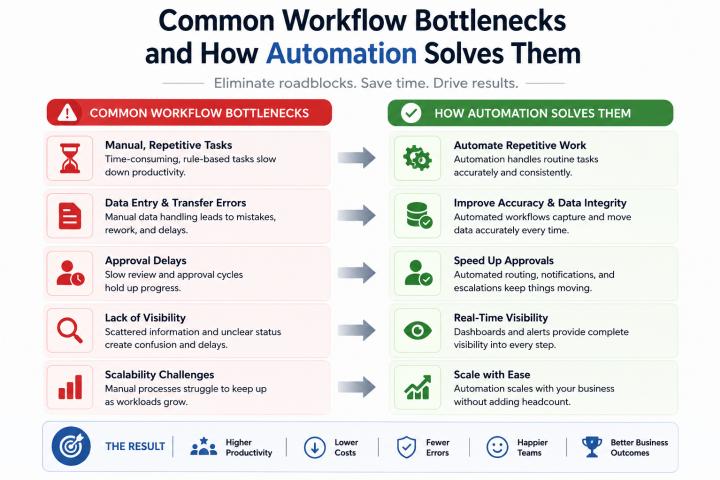
AI often creates the strongest impact when it removes repetitive work and allows employees to focus on higher-value activities.
The goal becomes augmentation rather than substitution.
Human + AI Teams May Become Standard Organizational Models
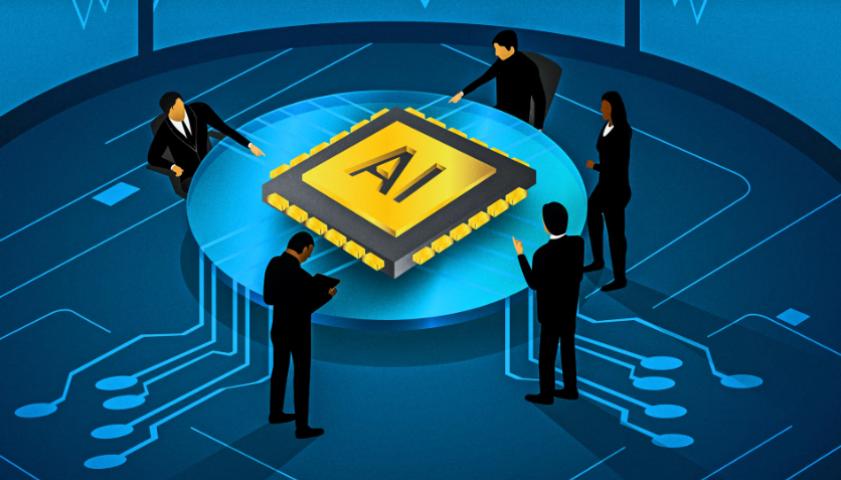
Future organizations may increasingly consist of blended systems:
Human teams supported by AI systems.
AI agents supported by human oversight.
Automated workflows supported by strategic leadership.
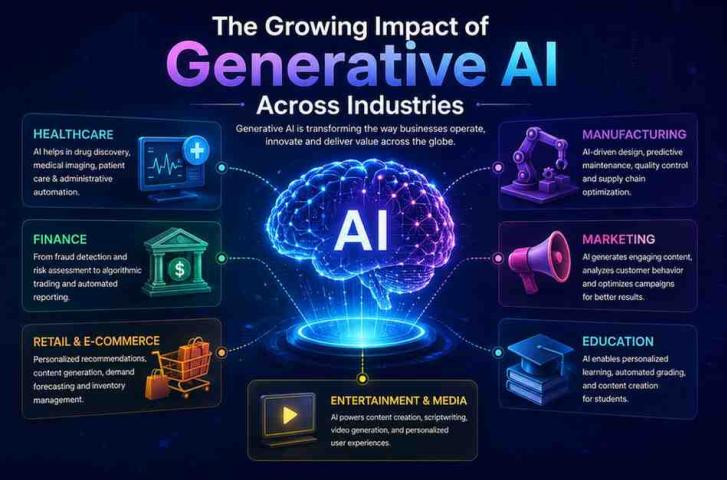
This hybrid model may influence almost every department:
Sales
AI handles lead intelligence.
Humans build trust.
Customer Success
AI manages repetitive support.
Humans handle relationships.
Finance
AI processes transactions.
Humans evaluate strategic implications.
Operations
AI coordinates workflows.
Humans optimize systems.
Human Resources
AI streamlines administration.
Humans focus on culture and people.
The future workplace increasingly appears collaborative rather than competitive.
Why Custom AI Systems Are Becoming Increasingly Important
As businesses move beyond generic AI tools, many are discovering that meaningful outcomes require workflow-specific solutions.
Every organization operates differently.
Different systems.
Different processes.
Different data structures.
Different customer journeys.
This is increasing demand for custom AI ecosystems designed around business operations.
Organizations working with AI development company like Softean are increasingly building AI-powered systems that integrate directly into workflows, enhance human productivity, automate repetitive layers, and support scalable collaboration between people and intelligent systems.
Final Thoughts
For years, businesses have debated whether AI will replace human work.
But that question increasingly feels incomplete.
Because work itself is changing.
Artificial intelligence is not simply automating tasks.
It is reshaping how organizations distribute responsibility, design workflows, and create leverage.
And while AI capabilities will continue advancing, human strengths remain deeply valuable.
Creativity.
Empathy.
Judgment.
Leadership.
Trust.
The organizations that thrive in the coming years may not be those choosing between humans and AI.
They may be the organizations learning how to combine both more effectively than everyone else.
Because the future of work may not belong to AI alone.
And it may not belong to humans alone.
It may belong to collaboration.