As indicated in the latest market research report published by IMARC Group, titled “India Premium Chocolate Market Size, Share, Trends and Forecast by Product Type, Packaging Type, Distribution Channel, and Region, 2026-2034,” the report presents a thorough review featuring the market share, trends, growth, and research of the industry.
India's premium chocolate sector demonstrates robust expansion momentum, driven by urban consumption patterns and shifting consumer preferences toward indulgent experiences. For institutional investors and C-suite executives evaluating opportunities in India's food and beverages ecosystem, the market presents quantifiable entry points:
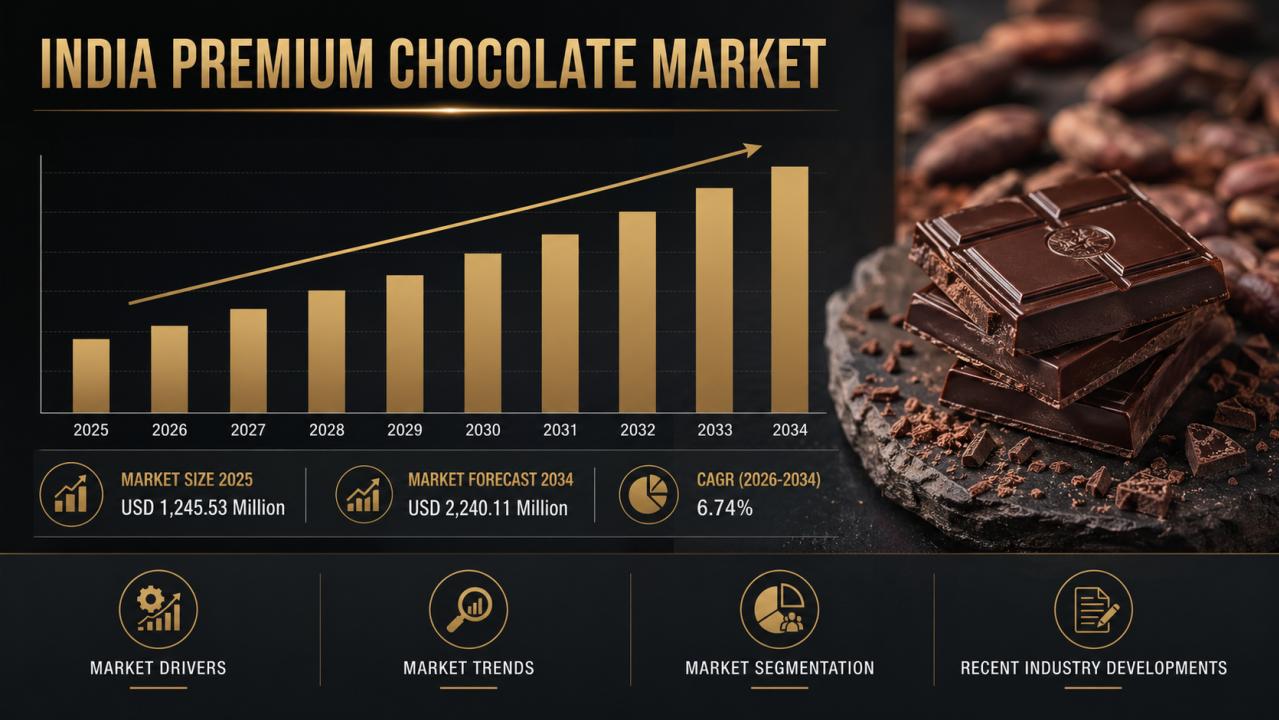
- Market valuation reached USD 1,245.53 million in 2025, with projections indicating growth to USD 2,240.11 million by 2034 at a CAGR of 6.74%
- Rising health consciousness among urban consumers drives demand for premium dark chocolate with higher cocoa content and reduced sugar formulations
- Deeply rooted festive gifting culture positions chocolates as preferred presents during Diwali, Raksha Bandhan, and other celebrations
- Rapid expansion of e-commerce platforms and quick-commerce services enhances product accessibility across urban and semi-urban markets
- Leading brands expand through kiosks and dedicated outlets across high-end supermarkets, gourmet stores, and specialty retailers in Mumbai, Delhi, Bengaluru, and Chennai
The Strategic Market Challenge: Navigating the Premium Chocolate Market in India:
The sector confronts a distribution complexity that market entrants frequently underestimate: balancing premium positioning with accessibility requires simultaneous investment in experiential retail outlets and digital commerce infrastructure. This dual-channel mandate creates capital allocation tension for brands lacking operational scale. The challenge extends beyond logistics execution—it fundamentally tests brands' ability to maintain aspirational perception while expanding geographic footprint beyond metro markets. Organizations unable to synchronize high-touch retail experiences with seamless digital fulfillment risk brand dilution in tier-2 cities where premium chocolate consumption patterns are still forming, potentially sacrificing long-term market share for short-term volume gains.
India's Strategic Vision for the Premium Chocolate Market:
- Rising health consciousness among urban consumers seeking premium dark chocolate with higher cocoa content and reduced sugar formulations aligns with national wellness initiatives.
- Deeply rooted festive gifting culture positions chocolates as preferred presents during Diwali, Raksha Bandhan, and other celebrations, sustaining seasonal demand cycles.
- Rapid expansion of e-commerce platforms and quick-commerce services enhances product accessibility across urban and semi-urban markets, democratizing premium consumption.
- Growing preference for ethically sourced ingredients, sustainable packaging, and eco-friendly practices influences brand positioning and consumer purchase decisions.
Why Invest in the India Premium Chocolate Market: Key Growth Drivers & ROI
- Retail Distribution Expansion: Leading premium chocolate brands significantly expand presence through kiosks and dedicated outlets across high-end supermarkets, gourmet stores, specialty retailers, and modern trade channels in major cities including Mumbai, Delhi, Bengaluru, and Chennai. These dedicated outlets enable consumers to taste premium products, explore special collections, and experience brands firsthand, enhancing engagement and loyalty. First-mover advantages accrue to brands establishing flagship locations in high-footfall premium retail corridors where target demographics concentrate.
- Digital Commerce Infrastructure: Growth of e-commerce channels including subscription boxes, gifting platforms, and home delivery services expands accessibility, catering to both urban and digitally connected consumers. Brands leverage digital advertising and social media campaigns targeting millennials and Generation Y, while seasonal collaborations with online food ordering and gifting platforms increase product visibility and consumer reach. The omnichannel approach enables brands to capture impulse purchases through physical retail while servicing planned gifting occasions through digital platforms.
- Product Innovation Premium: Manufacturers experiment with dark chocolate, exotic cocoa blends, single-origin chocolates, and functional ingredients such as nuts, dried fruits, spices, and superfoods to cater to evolving consumer tastes. Seasonal and limited-edition offerings, along with artisanal and hand-crafted chocolates, capture attention among urban and luxury-seeking consumers. Health-oriented variants including low-sugar, vegan, and organic chocolates gain traction due to growing wellness awareness, commanding 15-25% price premiums over standard offerings.
- Experiential Marketing Differentiation: Experiential marketing has become a key strategy, with chocolate tasting events, in-store promotions, and educational workshops on cocoa origin, processing, and production processes creating premium consumer experiences. Collaborations with international chocolatiers and celebrity endorsements enhance brand credibility and aspirational value. Customization options such as personalized chocolate bars and gift boxes engage consumers and increase willingness to pay premiums, driving higher transaction values per customer.
India Premium Chocolate Market Trends & Future Outlook:
- Projected growth to USD 2,240.11 million by 2034 at 6.74% CAGR reflects structural demand from urbanization and rising disposable incomes.
- Urban consumers, particularly millennials and working professionals, seek indulgent experiences and demonstrate willingness to pay premiums for rich flavors, unique textures, and ethically sourced ingredients.
- Easy availability of premium chocolates across online and offline platforms drives adoption, while urban centers and emerging cities with improved distribution networks witness faster market growth.
- Sustainable packaging and eco-friendly practices influence brand positioning, aligning with consumer preference for responsible consumption.
- Strategic marketing campaigns emphasizing storytelling, quality sourcing, and heritage of cocoa elevate consumer perception of premium chocolates.
Regulatory Landscape & Policy Catalysts in India
- Food Safety and Standards Authority of India (FSSAI) Compliance: According to the FSSAI, chocolate products must comply with Food Safety and Standards (Food Products Standards and Food Additives) Regulations, which establish standards for cocoa content, permissible ingredients, and labeling requirements. Premium chocolate manufacturers must ensure cocoa solid content meets minimum thresholds—30% for dark chocolate and 20% for milk chocolate—while adhering to limits on vegetable fats and artificial additives that differentiate premium from standard offerings.
- Goods and Services Tax (GST) Framework: Under India's GST structure, chocolates attract 28% tax rate as luxury confectionery items. However, chocolates containing nuts, dry fruits, or health supplements may qualify for different tax classifications, creating strategic product formulation opportunities for manufacturers seeking to optimize tax positioning while maintaining premium characteristics.
- Legal Metrology Act Compliance: According to the Legal Metrology (Packaged Commodities) Rules, premium chocolate manufacturers must ensure accurate quantity declarations, maximum retail price disclosures, and country-of-origin labeling. Gift packaging and limited-edition offerings require additional declaration of net quantity and commodity name in prescribed font sizes, ensuring transparency in premium-priced transactions.
- Import Regulations for Premium Ingredients: India's Directorate General of Foreign Trade regulates imports of cocoa beans, cocoa butter, and specialized ingredients under specific Import Export Codes. Premium chocolate manufacturers sourcing single-origin cocoa or exotic ingredients must navigate phytosanitary certificates, quality certifications, and tariff structures that influence landed costs and pricing strategies for imported component utilization.
- Intellectual Property Protection: The Controller General of Patents, Designs and Trademarks provides trademark protection for premium chocolate brands, enabling enforcement against counterfeiting and brand dilution. Collaborations with international chocolatiers benefit from India's adherence to international intellectual property frameworks, protecting proprietary recipes, brand elements, and distinctive packaging designs that command premium positioning.
- E-Commerce and Digital Marketing Regulations: Brands leveraging digital advertising and social media campaigns targeting millennials and Generation Y must comply with Consumer Protection (E-Commerce) Rules and Advertising Standards Council of India guidelines. Seasonal collaborations with online food ordering and gifting platforms require transparent pricing disclosures, return policies, and authentic product representation to maintain consumer trust in premium digital commerce channels.
Market Segmentation Breakdown:
Analysis by Product Type:
- Dark Chocolate (Fastest growing segment due to health trends)
- Milk Chocolate (Dominant volume share)
- White Chocolate
- Others
Analysis by Packaging Type:
- Standard Packaging
- Gift Packaging (High demand during festive seasons)
Analysis by Distribution Channel:
- Supermarkets and Hypermarkets
- Convenience Stores
- Specialty Stores
- Online Stores (Rapidly expanding)
- Others
Regional Insights:
- North India
- West and Central India
- South India
- East India
By the IMARC Group, the Top Competitive Landscape & their Positioning:
Covering an in-depth analysis of the competitive landscape, market structure, key player positioning, competitive dashboards, top winning strategies, and detailed profiles of all major industry participants you will gain access to all these exclusive insights within the full research report.
Note: If you need specific information that is not currently within the scope of the report, we can provide it to you as a part of the customization.
Frequently Asked Questions (FAQs):
Q1: What is the current value and projected growth of the India Premium Chocolate Market?
According to IMARC Group, the India premium chocolate market size reached USD 1,245.53 million in 2025 and is projected to reach USD 2,240.11 million by 2034, exhibiting a growth rate of 6.74% during 2026-2034. This expansion reflects structural demand from urbanization, rising disposable incomes, and evolving consumption preferences toward indulgent experiences.
Q2: What product segments comprise the India premium chocolate market?
The market segments into dark chocolate, milk chocolate, white chocolate, and others based on product type. Manufacturers experiment with exotic cocoa blends, single-origin chocolates, and functional ingredients such as nuts, dried fruits, spices, and superfoods within these categories. Health-oriented variants including low-sugar, vegan, and organic chocolates gain traction, while seasonal and limited-edition offerings capture attention among luxury-seeking consumers.
Q3: What distribution channels drive market accessibility?
The market distributes through supermarkets and hypermarkets, convenience stores, specialty stores, online stores, and others. Leading brands expand through kiosks and dedicated outlets across high-end supermarkets, gourmet stores, and specialty retailers in major cities including Mumbai, Delhi, Bengaluru, and Chennai. Growth of e-commerce channels including subscription boxes, gifting platforms, and home delivery services expands accessibility to urban and digitally connected consumers.
Q4: How does festive culture influence market dynamics?
Deeply rooted festive gifting culture positions chocolates as preferred presents during Diwali, Raksha Bandhan, and other celebrations. Seasonal gifting occasions create concentrated demand periods where consumers prefer premium options over standard chocolates. Seasonal collaborations with online food ordering and gifting platforms increase product visibility and consumer reach, while attractive packaging and limited-edition launches enhance brand perception during peak gifting seasons.
Q5: What geographic markets demonstrate strongest growth potential?
The market segments regionally into North India, West and Central India, South India, and East India. Urban centers and emerging cities with improved distribution networks are expected to witness faster market growth. Major metropolitan markets including Mumbai, Delhi, Bengaluru, and Chennai demonstrate concentrated premium consumption, while tier-2 cities represent expansion opportunities as distribution infrastructure and consumer awareness improve through omnichannel retail penetration.
Strategic Insight & Verdict
Analyzing the India premium chocolate market's trajectory from USD 1,245.53 million in 2025 toward USD 2,240.11 million by 2034, we at IMARC Group have observed that successful capital deployment requires strategic positioning across experiential retail development, digital commerce infrastructure, and product innovation pipelines. The path forward demands selective investment in markets where urban consumption patterns, distribution density, and festive gifting traditions converge to support premium price realization. For institutional investors and corporate strategists, India's premium chocolate market offers compelling growth characteristics underpinned by demographic tailwinds, cultural consumption occasions, and expanding accessibility infrastructure, positioning it as a strategic allocation within India's food and beverages sector for brands capable of balancing aspirational positioning with scaled distribution execution.
Tarang, Digital Insights Specialist at IMARC Group: https://www.linkedin.com/in/tarang-chauhan-31a82b265/
Verified Data Source: IMARC Group
Contact Us:
IMARC Group
134 N 4th St. Brooklyn, NY 11249, USA
Email: sales@imarcgroup.com
Tel No:(D) +91 120 433 0800
United States: +1-202071-6302