Modern businesses rely heavily on digital systems, cloud platforms, applications, and network infrastructure to manage daily operations. As organizations continue to adopt cloud computing, DevOps practices, and distributed environments, maintaining visibility across systems has become more important than ever. Businesses today cannot afford unexpected downtime, performance issues, or security vulnerabilities that may impact customer experience and operational efficiency.
This is where real-time observability becomes essential. Organizations need a proactive approach to track system health, detect anomalies, identify failures, and troubleshoot issues before they become critical. Effective monitoring strategies help businesses maintain uptime, improve application performance, and ensure smooth IT operations.
Companies handling complex infrastructures often implement centralized dashboards, automated alerts, analytics platforms, and event tracking systems to simplify operations management. These technologies enable IT teams to quickly identify problems and reduce resolution time, leading to higher productivity and improved service reliability.
As digital transformation accelerates, organizations are increasingly investing in scalable infrastructure solutions that support better visibility, security, and operational control across their environments.
Importance of Infrastructure Visibility
Modern IT environments consist of servers, applications, databases, APIs, containers, and cloud resources working together simultaneously. Without proper visibility, identifying issues can become difficult and time-consuming. A small performance bottleneck in one component can affect the entire infrastructure and lead to downtime or service disruptions.
Infrastructure visibility allows organizations to:
- Track application performance
- Identify network failures
- Monitor server health
- Detect unusual activity
- Improve resource utilization
- Reduce downtime risks
- Strengthen cybersecurity monitoring
Businesses that maintain continuous infrastructure oversight are better prepared to handle unexpected technical issues and maintain service continuity.
Key Components of Modern IT Monitoring
1. Application Performance Tracking
Applications are the backbone of digital businesses. Monitoring application performance helps teams analyze response times, latency, API requests, and user interactions. Slow applications negatively affect user experience and can reduce customer trust.
Performance tracking tools help organizations identify:
- Slow-loading pages
- Database bottlenecks
- High server response times
- Application crashes
- Failed API requests
By analyzing application metrics, businesses can optimize their systems and deliver a smoother experience to users.
2. Server and Network Analysis
Servers and networks form the foundation of IT infrastructure. Continuous analysis of CPU usage, memory consumption, bandwidth, and storage capacity helps organizations prevent overload conditions.
Network analysis also enables teams to detect:
- Connectivity failures
- Packet loss
- Unauthorized access attempts
- High traffic spikes
- Resource exhaustion
Proper server visibility improves operational efficiency and reduces unexpected downtime.
3. Cloud Infrastructure Management
Cloud computing environments require advanced visibility due to their dynamic and scalable nature. Organizations using platforms like AWS, Azure, or Google Cloud need centralized management systems to monitor workloads, virtual machines, storage resources, and cloud applications.
Cloud infrastructure management helps businesses:
- Optimize cloud spending
- Improve workload performance
- Maintain scalability
- Detect security threats
- Automate operational tasks
As cloud adoption continues to grow, effective infrastructure oversight becomes increasingly important for maintaining stability and performance.
Role of Automation in IT Operations
Automation has transformed the way IT teams manage infrastructure. Manual monitoring methods are no longer sufficient for handling large-scale systems and complex cloud environments.
Automated systems can:
- Generate instant alerts
- Detect unusual behavior
- Trigger remediation workflows
- Create incident reports
- Analyze performance trends
- Reduce human errors
Organizations adopting automation achieve faster issue resolution and improved operational reliability.
Enhancing Security Through Continuous Visibility
Cybersecurity threats are becoming more advanced every year. Businesses must maintain continuous awareness of infrastructure activity to detect suspicious behavior early.
Security-focused infrastructure management helps organizations identify:
- Unauthorized login attempts
- Malware activity
- Data breaches
- Abnormal network traffic
- Insider threats
- Failed authentication events
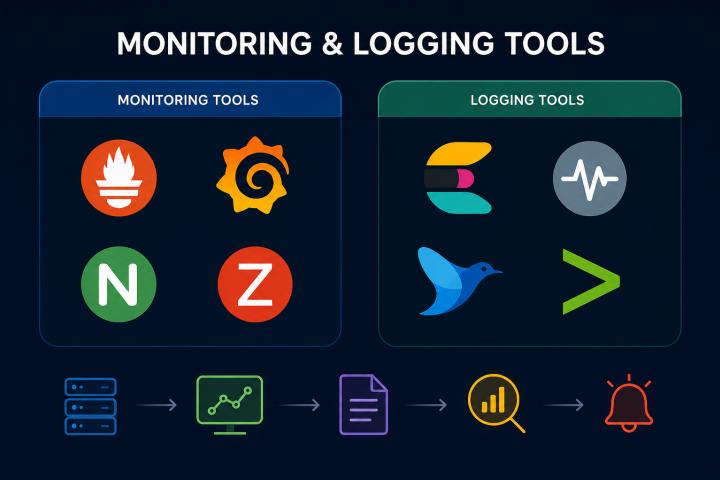
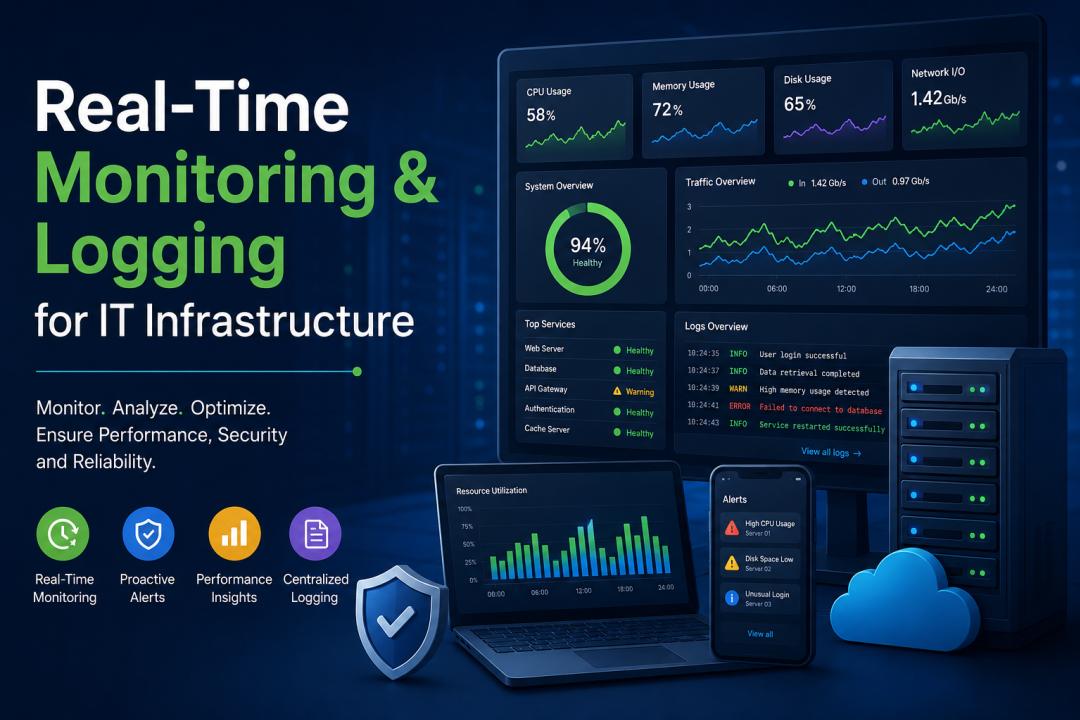
At this stage, businesses increasingly adopt Monitoring & Logging practices to collect system events, analyze security incidents, and maintain operational transparency across their environments. These solutions help security teams investigate incidents more efficiently while ensuring compliance with industry standards.
Continuous security visibility also improves threat detection and reduces the risk of major cyberattacks.
Benefits of Centralized Dashboards
Centralized dashboards simplify infrastructure management by providing real-time insights from multiple systems in one location. Instead of switching between different platforms, IT teams can access critical information through unified interfaces.
Key benefits include:
- Faster troubleshooting
- Improved team collaboration
- Better operational visibility
- Simplified reporting
- Real-time alert management
- Easier performance analysis
Dashboards also help management teams understand infrastructure performance through visual reports and analytics.
Importance of Log Analysis
System-generated logs contain valuable information about application behavior, user activity, and infrastructure events. Proper log analysis helps organizations identify issues, track changes, and investigate incidents effectively.
Logs can provide insights into:
- Error messages
- User actions
- System failures
- API activities
- Security incidents
- Database queries
By analyzing logs regularly, organizations can improve operational efficiency and strengthen system reliability.
Monitoring in DevOps Environments
DevOps practices emphasize collaboration, automation, and continuous delivery. Real-time infrastructure visibility plays a major role in DevOps success because it enables teams to quickly detect and resolve issues during development and deployment cycles.
Monitoring solutions in DevOps environments support:
- Continuous integration pipelines
- Automated deployment tracking
- Infrastructure health analysis
- Application performance optimization
- Incident response management
These practices improve software quality and accelerate deployment processes.
Scalability and Future Growth
As businesses grow, their IT infrastructure also becomes more complex. Scalable visibility solutions help organizations manage expanding workloads without compromising performance or reliability.
Scalable infrastructure strategies support:
- Hybrid cloud environments
- Container orchestration
- Distributed systems
- Multi-region deployments
- Enterprise-level applications
Future-ready monitoring systems ensure businesses can adapt to evolving technological demands.
Best Practices for Effective Infrastructure Management
Organizations can improve operational efficiency by following several industry best practices:
Implement Proactive Alerting
Set up automated alerts for performance thresholds, failures, and suspicious activities to enable faster response times.
Use Centralized Monitoring Platforms
Centralized tools simplify infrastructure oversight and reduce operational complexity.
Analyze Historical Data
Historical analytics help identify trends, predict failures, and improve capacity planning.
Automate Incident Response
Automation minimizes downtime and accelerates problem resolution.
Focus on Security Visibility
Integrate security analysis into infrastructure management processes to improve threat detection.
Continuously Optimize Performance
Regular performance reviews help businesses maintain efficient and reliable systems.
Future Trends in Infrastructure Monitoring
The future of IT infrastructure management is evolving rapidly with technologies like artificial intelligence, machine learning, and predictive analytics.
Emerging trends include:
- AI-powered anomaly detection
- Predictive maintenance systems
- Intelligent alert correlation
- Automated root-cause analysis
- Cloud-native monitoring platforms
- Observability-driven infrastructure management
These innovations help organizations achieve higher efficiency, better reliability, and improved operational intelligence.
Conclusion
Modern businesses require reliable, scalable, and secure IT systems to remain competitive in the digital world. Real-time infrastructure visibility helps organizations detect issues early, optimize performance, strengthen cybersecurity, and improve overall operational efficiency.
As IT environments continue to evolve, businesses must adopt advanced monitoring strategies that support automation, scalability, and centralized management. Investing in effective infrastructure visibility solutions not only reduces downtime but also improves customer experience and business continuity.
Organizations that prioritize proactive monitoring and operational intelligence will be better prepared to handle future technological challenges while maintaining stable and high-performing digital environments.