There is a version of this story that every person in the tech industry has lived. It is 11:30 PM. The Slack notifications have finally stopped, but the browser still has twenty-two tabs open. The to-do list for tomorrow was written at 9 AM and has only gotten longer since. Somewhere between the third stand-up of the day and the fifth round of review comments, something that used to feel like passion started feeling like static.
Burnout in the tech sector is not a
soft issue. It is a performance crisis. A 2023 Blind survey found that over 60
percent of tech workers reported experiencing burnout, with founders, product
managers, and engineers at the top of the list. And yet the default response in
most startup cultures is to push through — to optimise sleep, batch the
meetings, and find a productivity framework that squeezes more output from the
same depleted system.
What neuroscience and a growing
body of organisational research now suggest is that the real productivity
unlock — the one most tech professionals consistently overlook — is not
optimisation. It is genuine recovery. And increasingly, that recovery is being
found not in a new app or a better morning routine, but in forests.
The Attention Economy Is Eating Your Best Work
The people building technology for a living are also, by
definition, the people most saturated by it. The average knowledge worker
checks email 74 times a day. The average developer is interrupted every 4
minutes and takes up to 23 minutes to fully regain deep focus after each
interruption. Founders and startup leaders fare no better — the always-on
culture of early-stage companies means that genuine cognitive rest is treated
as a luxury rather than a strategy.
The result is a workforce that is
technically present but cognitively diminished. Ideas that once came quickly
start requiring effort. Decisions that should be intuitive feel laboured. The
creative leaps that drove product breakthroughs in year one of a startup are
harder to access in year three — not because the problem got harder, but
because the brain's default mode network, which is responsible for creative
thinking, synthesis, and big-picture reasoning, is perpetually crowded out by
reactive, screen-driven work.
Stanford psychologist Emma Seppala and Harvard Business Review research both point to the same counterintuitive truth: rest, particularly nature-based rest, does not just restore productivity — it actively amplifies it. The brain problem-solves more effectively after genuine disconnection. The creative insight that eluded you in the office often arrives on a walk through a forest.
Why a Forest Retreat Is Not a Holiday — It Is Infrastructure
The science is clear. Exposure to natural environments — particularly forests — triggers measurable changes in the brain and body that directly support high performance. Japan's practice of Shinrin-yoku, or forest bathing, has been clinically shown to reduce cortisol levels by up to 12 percent, lower blood pressure, and improve immune function, all within two hours of entering a forest environment.
But beyond the physiology, there is
something more strategically valuable happening during a digital detox in
nature. When you remove the constant stream of inputs — the pings, the feeds,
the dashboards — the brain finally has the space to do what it does best when
left alone: connect dots, surface patterns, and generate insight. Many of the
most important decisions in business are not made in meetings. They are made in
the margins of experience, in the spaces that open up when the noise goes
quiet.
This is why progressive tech
companies — from global giants to well-funded startups — have begun investing
in structured nature retreats for their leadership teams. Not as a
team-building exercise with trust falls, but as a genuine cognitive reset that
makes the team sharper, more aligned, and more creatively capable when they
return.
What a High-Quality Digital Detox Retreat Actually Looks Like
For tech professionals used to high standards of execution,
the retreat environment matters. A truly effective digital detox is not about
roughing it in uncomfortable conditions — that just replaces one stress with
another. The most effective retreats share a few defining characteristics:
- Physical distance from the urban
environment. Not just physical
removal from the office, but genuine immersion in a landscape that engages
the senses differently — birdsong, forest light, the texture of soil
underfoot. The further you are from the rhythms of the city, the faster
the nervous system recalibrates.
- No reliable mobile signal. This is a feature, not a bug. The anxiety that spikes
in the first few hours of being genuinely offline is itself diagnostic —
it tells you exactly how dependent the default workday has become on
reactive input. That anxiety typically gives way, within 24 hours, to a
quality of attention that most tech workers have not experienced since
before their career began.
- Structured naturalist-led experiences. Guided forest walks, wildlife safaris, and
birdwatching sessions give the analytical mind something absorbing to
engage with that is entirely disconnected from work. The shift from
problem-solving about code or strategy to tracking a leopard's pugmarks in
the mud is more cognitively restorative than passive leisure.
- Quality food and sleep. Fresh, locally sourced meals and uninterrupted sleep
— the two things most consistently sacrificed in startup culture — are the
biological foundation of cognitive recovery. A retreat that delivers both
accelerates the reset dramatically.
- Comfort without distraction. The goal is not asceticism. Tech professionals perform better and recover more fully when the physical environment is comfortable. The disconnection should be digital, not experiential.
Where India's Tech Professionals Are Going to Reset: Ratapani, Madhya
Pradesh
For tech professionals and startup teams based across India,
one location has been quietly gaining a reputation as the ideal environment for
this kind of intentional reset: the Ratapani Tiger Reserve in Madhya Pradesh.
Located roughly an hour's drive from Bhopal — and within a four-hour drive of
Indore — Ratapani sits at the intersection of accessibility and genuine
wilderness.
The reserve covers over 890 square
kilometres of mixed-deciduous teak forest, home to tigers, leopards, sloth
bears, and over 250 species of birds. Mobile connectivity in the deeper forest
zones is patchy at best and absent at worst — a naturally enforced detox that
no app can replicate. The forest itself does the work.
For those looking for a resort in
Ratapani that matches the standards tech professionals expect — without
undercutting the purpose of the trip with unnecessary digital stimulation —
Madhuban Eco Retreat has emerged as a leading option. Positioned right at the
edge of the Ratapani Wildlife Sanctuary, the property is a Somaiya Group
initiative built on the principles of eco-luxury and sustainable hospitality.
What Makes Madhuban the Right Environment for a Tech Team Offsite or Solo
Reset
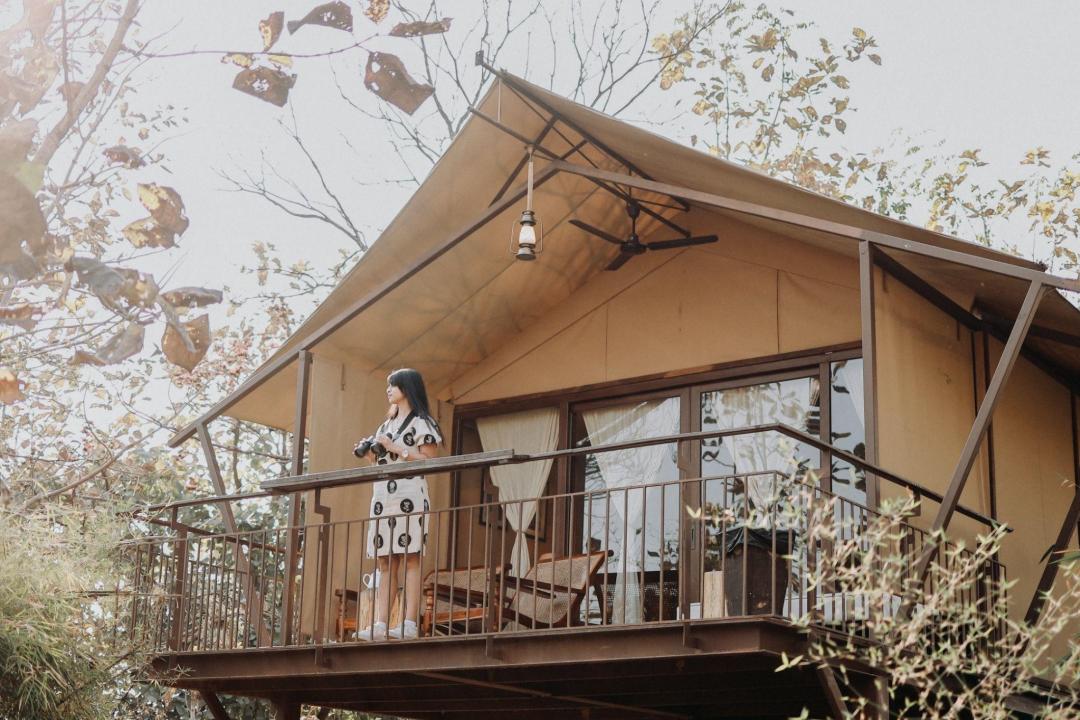
Madhuban Eco Retreat is not a conventional hotel, and that
is precisely the point. The property was designed to immerse guests in the
forest rather than insulate them from it. Here is what that looks like in
practice for a tech professional or startup team:
•
Five accommodation types — from eco-luxury safari tents and Gond-inspired mud
houses to poolside villas and glamping pods — accommodating solo travellers,
couples, and groups of up to 150 people, making it viable for both individual
retreats and full team offsites.
•
Guided forest walks and
wildlife safaris led by trained
naturalists — the kind of absorbing, screen-free activity that genuinely
occupies the analytical mind and allows the subconscious to process accumulated
cognitive load.
•
Birdwatching sessions covering 70-plus species — an activity that demands a
quality of patient, present-moment attention that is almost impossible to
cultivate in a digital work environment.
•
Stargazing under genuinely
dark skies — Ratapani's distance from
major urban light pollution makes the night sky an experience in itself, and
one that consistently ranks as a guest highlight.
•
Farm-to-table organic
vegetarian dining — the property grows its
own produce and sources locally, delivering the kind of clean, nutritionally
dense food that tech workers in particular are rarely getting during crunch
periods.
•
80 percent solar-powered
operations, rainwater harvesting, and 80
percent local employment — for tech teams increasingly accountable to ESG
values and sustainability metrics, staying at a genuinely responsible property
is not incidental.
The property has hosted guests ranging from individual executives seeking personal reset time to large corporate groups using the natural environment as the backdrop for strategy sessions, team alignment, and leadership development. Bollywood actress Vidya Balan has stayed there — for whatever it says about the calibre of the experience that attracts a certain kind of discerning, high-profile traveller.
Practical Considerations for Tech Teams Planning a Forest Offsite
If you are a founder, engineering manager, or HR leader
considering a forest retreat for your team, a few structural questions are
worth resolving before you book:
•
How long? Two nights is the minimum for genuine cognitive reset. One
night is a tease — the nervous system is still decompressing by the time you
are packing to leave. Three nights is optimal for leadership teams working
through strategic questions.
•
Fully off or semi-connected? A fully offline policy for the duration of the retreat
produces significantly better outcomes — both in terms of individual recovery
and group cohesion. If operational responsibilities make full offline
impossible, designate a single point of contact for emergencies and keep it to
one check-in per day.
•
Structured or
unstructured? The most effective team
retreats balance guided activities (safaris, walks) with genuinely unstructured
time. Filling every hour with facilitated sessions defeats the purpose. Some of
the most productive conversations in startup history happened over an unplanned
walk, not a whiteboard session.
•
When to go? October through February offers the most comfortable
conditions and the best wildlife sighting probability. For teams that prefer
fewer crowds and lower rates, the summer months (March–May) deliver equally
rich experiences at better value.
The ROI Argument for Investing in Offline Recovery
The tech industry is fluent in return on investment. Here is
the ROI framing for a forest detox retreat, in terms that make sense to product
and growth thinkers:
A burned-out senior engineer costs
considerably more in lost output, retention risk, and recruitment cost than two
nights at an eco resort. A founder who makes a bad strategic decision at peak
cognitive depletion can cost a company months of runway. A product team that
returns from a forest offsite with a shared language, renewed energy, and three
ideas they would never have had in a Zoom call is arguably the cheapest and
highest-leverage investment a startup can make in its own velocity.
The tools, frameworks, and productivity stacks that dominate startup culture all operate at the margins of performance. The forest goes to the root.
Final Thought: The Best Performance Tool Is One That Has No Screen
The irony is not lost on anyone who works in tech: the industry
most responsible for building the attention economy is also the industry most
damaged by it. The notification, the infinite scroll, the always-on Slack
culture — these are products that the tech community built and now lives inside
of.
Stepping out of that environment —
deliberately, with a forest around you and no Wi-Fi in sight — is not an act of
retreat. It is a strategic investment in the cognitive capacity that drives
everything worthwhile in your work.
For tech professionals and startup
teams across India looking for a resort in Ratapani that meets this brief —
genuinely off-grid, ecologically responsible, comfortable enough to rest in
fully, and wild enough to genuinely reset — Madhuban Eco Retreat is worth
exploring. You can browse their accommodation, experiences, and group booking
options at Madhuban Eco Retreat. Your best ideas are probably waiting there
too.