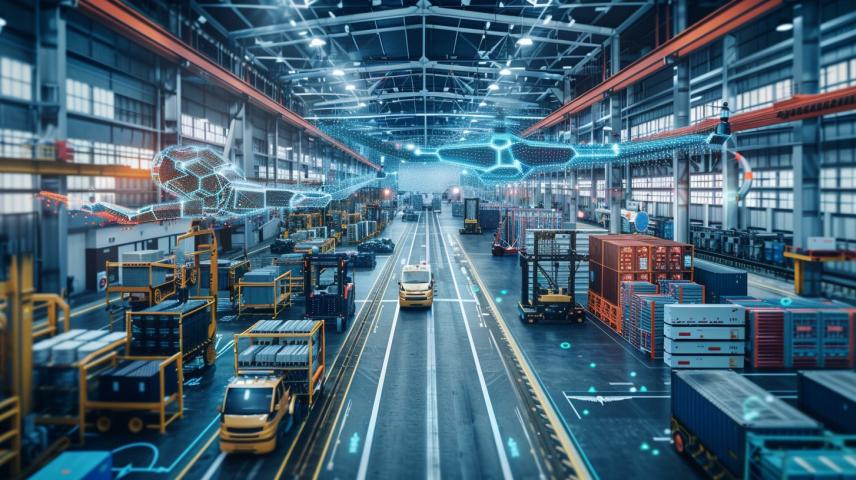
Manufacturing supply chains have become increasingly complex due to global sourcing networks, fluctuating demand, rising operational costs, and growing customer expectations. Manufacturers today must manage procurement, inventory, logistics, supplier coordination, production planning, and warehouse operations while maintaining speed, accuracy, and operational resilience.
To improve efficiency and visibility across these interconnected operations, manufacturers are increasingly deploying AI agents for Food supply chain optimization.
Unlike traditional automation systems that focus on isolated tasks, AI agents help manufacturers coordinate workflows, analyze operational data, automate decision-making, and improve supply chain responsiveness in real time.
As supply chain disruptions continue affecting industries worldwide, AI-powered operational automation is becoming a major competitive advantage for manufacturing organizations.
What Are AI Agents in Manufacturing Supply Chains?
AI agents are intelligent software systems designed to automate operational workflows, process data, coordinate tasks, and support business decisions across enterprise environments.
In manufacturing supply chains, AI agents can:
- Monitor inventory levels
- Forecast demand
- Coordinate procurement workflows
- Track shipments
- Optimize warehouse operations
- Analyze supplier performance
- Automate reporting
- Identify operational bottlenecks
- Improve logistics planning
These intelligent systems help manufacturers create more connected and adaptive supply chain operations.
Why Manufacturers Are Investing in AI Supply Chain Automation
Manufacturing supply chains face increasing challenges, including:
- Supply chain disruptions
- Inventory imbalances
- Rising transportation costs
- Supplier delays
- Demand forecasting uncertainty
- Manual operational workflows
- Limited real-time visibility
Traditional supply chain systems often struggle to respond dynamically to changing operational conditions.
AI agents help manufacturers improve operational agility while reducing inefficiencies and delays.
How AI Agents Improve Supply Chain Efficiency
Demand Forecasting
AI agents analyze historical sales data, market trends, production schedules, and operational patterns to improve demand forecasting accuracy.
This helps manufacturers:
- Reduce overstock situations
- Prevent inventory shortages
- Improve production planning
- Optimize procurement timing
More accurate forecasting improves operational stability across the supply chain.
Inventory Optimization
AI-powered systems continuously monitor inventory levels across facilities and warehouses.
AI agents can automatically:
- Reorder materials
- Adjust inventory thresholds
- Identify slow-moving stock
- Optimize warehouse allocation
This improves inventory efficiency while reducing storage costs.
Supplier Coordination
Manufacturers often work with multiple suppliers across different regions.
AI agents help monitor:
- Supplier performance
- Delivery timelines
- Procurement workflows
- Contract compliance
- Material availability
Operational visibility improves supplier management and reduces procurement disruptions.
Logistics and Shipment Tracking
AI systems track shipments in real time and help optimize transportation planning.
AI agents can identify:
- Delivery delays
- Route inefficiencies
- Shipping bottlenecks
- Inventory movement issues
This improves logistics responsiveness and operational visibility.
Workflow Automation
AI agents coordinate operational workflows across:
- Procurement teams
- Warehouses
- Logistics operations
- Production planning
- Inventory systems
This reduces manual handoffs and improves workflow continuity.
Benefits of AI Agents for Manufacturing Supply Chains
Improved Operational Efficiency
AI automation reduces repetitive tasks and streamlines supply chain workflows.
Better Supply Chain Visibility
Manufacturers gain real-time insights across procurement, inventory, production, and logistics operations.
Reduced Operational Costs
AI optimization helps reduce waste, unnecessary inventory holding, transportation inefficiencies, and operational delays.
Faster Decision-Making
AI systems analyze operational data quickly and support faster supply chain responses.
Improved Supply Chain Resilience
AI agents help organizations adapt more effectively to disruptions and operational changes.
Greater Scalability
Manufacturers can scale supply chain operations without proportionally increasing manual coordination efforts.
Role of Multi-Agent AI Systems in Supply Chain Operations
Many manufacturers are moving toward multi-agent AI systems where multiple AI agents coordinate operational tasks simultaneously.
For example:
- One AI agent may forecast demand
- Another may optimize inventory
- Another may monitor supplier performance
- Another may coordinate logistics workflows
- Another may track production schedules
These connected AI agents collaborate across operational systems to improve supply chain coordination.
Manufacturing Use Cases for AI Supply Chain Automation
Smart Warehouse Management
AI agents automate inventory tracking, warehouse organization, and stock movement coordination.
Procurement Workflow Automation
AI systems streamline procurement approvals, vendor coordination, and purchasing workflows.
Predictive Maintenance Coordination
Supply chain AI systems can coordinate equipment maintenance scheduling to avoid production disruptions.
Production Planning Optimization
AI agents align production schedules with inventory availability and demand forecasts.
Risk Monitoring
AI-powered systems identify operational risks such as supplier disruptions, transportation delays, and inventory shortages.
Challenges Manufacturers Face During AI Adoption
Legacy Infrastructure
Many manufacturing environments still rely on outdated systems that create integration complexity.
Data Fragmentation
Operational data is often spread across disconnected systems and facilities.
Change Management
AI implementation may require workflow redesign and employee adaptation.
Security and Governance
Manufacturers require AI systems that support:
- Operational security
- Data governance
- Audit visibility
- Human oversight
- Compliance controls
Successful AI adoption requires balancing automation with operational control.
Why Manufacturers Prefer Custom AI Solutions
Generic supply chain software often struggles to support manufacturing-specific operational environments.
Custom AI systems provide:
- Workflow-specific automation
- Better enterprise integration
- Industry-specific intelligence
- Improved scalability
- Greater operational flexibility
- Stronger alignment with production environments
Manufacturers increasingly prefer AI solutions tailored to operational realities instead of relying entirely on generic platforms.
How Intellectyx Supports Manufacturing AI Automation
Intellectyx develops custom AI agent systems for manufacturers seeking to automate supply chain operations, improve workflow coordination, and modernize enterprise operations.
Its manufacturing AI capabilities include:
- AI workflow automation
- Supply chain intelligence
- Operational AI systems
- Inventory optimization
- Predictive analytics
- Enterprise AI integration
- Multi-agent AI systems
The company focuses on building AI systems aligned with manufacturing workflows, enterprise infrastructure, and operational requirements.
Future of AI in Manufacturing Supply Chains
Manufacturing supply chains are rapidly evolving toward intelligent operational ecosystems powered by connected AI agents.
Emerging trends include:
- Autonomous supply chain coordination
- AI-powered logistics optimization
- Intelligent inventory orchestration
- Multi-agent manufacturing systems
- Real-time operational AI monitoring
- AI-assisted procurement workflows
- Predictive supply chain analytics
Manufacturers that successfully implement scalable AI systems will likely gain long-term advantages in operational efficiency, agility, and supply chain resilience.
Conclusion
AI agents are transforming manufacturing supply chains by improving operational efficiency, increasing visibility, automating workflows, and enabling faster decision-making.
Unlike traditional automation tools that focus on isolated tasks, AI-powered supply chain systems coordinate operations across procurement, inventory management, logistics, and production planning.
As manufacturing environments continue becoming more complex, organizations that successfully integrate intelligent AI systems into their supply chains will likely gain significant advantages in operational scalability, resilience, and long-term competitiveness.
The future of manufacturing supply chain management is increasingly being shaped by intelligent AI-driven operational ecosystems.