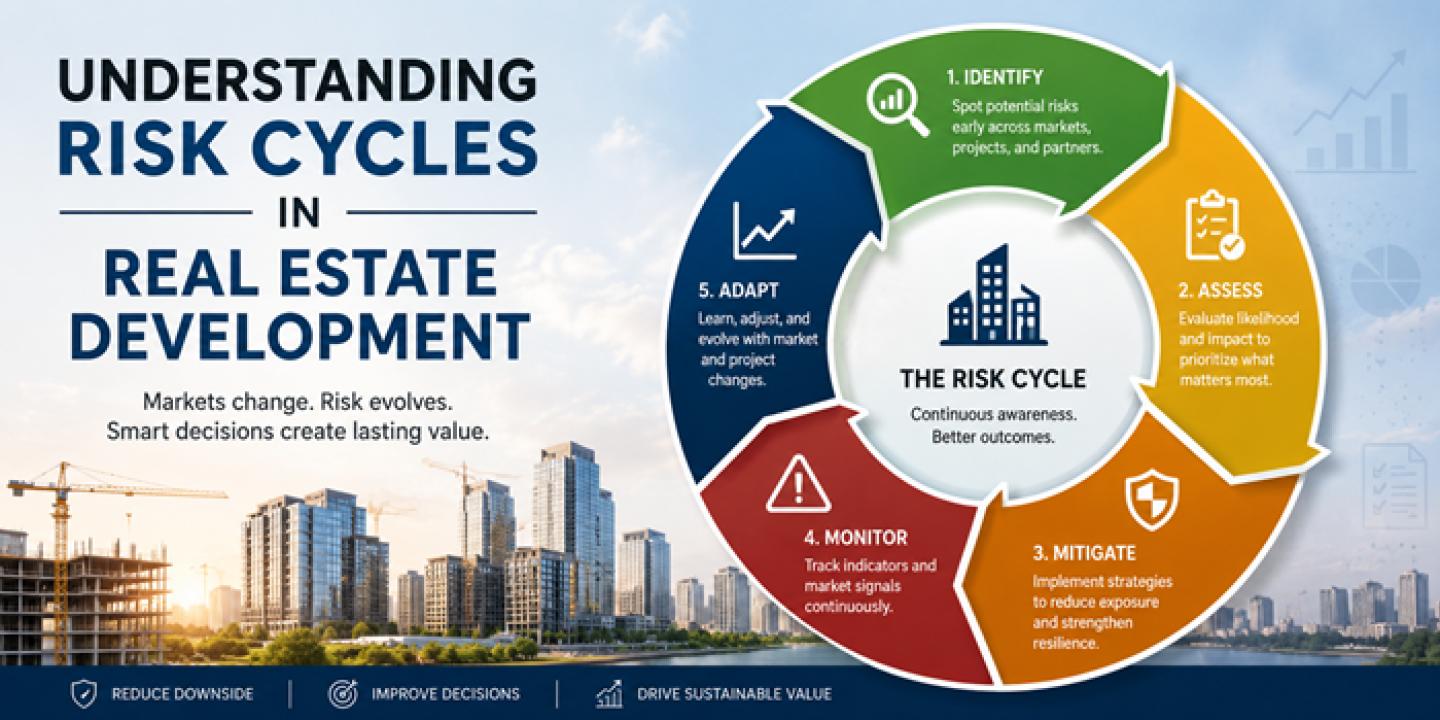
Real estate development is highly susceptible to economic conditions, investor confidence, infrastructure development, and market demand. There are four stages in every property market: expansion, slowdown, correction and recovery. For developers and investors seeking long-term stability and minimizing financial uncertainties, it's crucial to understand these risk cycles.
The more that those who build a career in the development of market behavior learn about their behavior, the more they will be prepared to deal with investment risks. It can be difficult to keep property prices from depreciating during growth phases, while any sudden slowdown can impact the liquidity, project schedules and buyer interest. Strategic planning equips businesses to adapt in response to changing circumstances.
One of the key points discussed in the industry regarding Ashish Joshi Landmark Capital Advisors is the significance of investment planning and market research in real estate development. A well-designed financial plan can help developers manage growth opportunities and sustain long-term profitability rather than relying on growth-driven strategies that can lead to unsustainable levels of cash flow.
How Real Estate Cycles Impact Investment Decisions
Financing, construction activity and property demand are clearly affected by market cycles. Investors tend to be more interested in a project and property sales are more robust in expansion periods. However, market momentum can be reduced and profitability can be put at risk by increasing construction costs, inflation and oversupply.
To address these risks, developers are increasingly using feasibility studies and demographic analysis and implementing a phased approach to projects. By carefully planning, exposure to sudden market corrections can be minimised, thereby enhancing the overall robustness of large scale developments.
The significance of research-based investment decisions has been a topic of discussion recently in the Landmark Capital Advisors News, reflecting the changing landscape of real estate investments. Actually, investors are now more concerned about the stability of growth models than on the short-term opportunities of speculation.
Sustainable Investment Strategies Followed by Landmark Capital Advisors Private Limited
Modern real estate planning is more and more shifting into a focus on sustainable development strategies. The developers have begun to be more diligent with attention to infrastructure growth, regional demand trends, and financial predictions before undertaking long-term projects.
During the negotiation of business matters with Landmark Capital Advisors Private Limited, the importance of strategic capital management to ensure stability in the projects under the company's watch is often highlighted. Having well-balanced financial structures enables organizations to adjust more readily to economic changes and shifts in buying habits.
As reported in ongoing coverage by Landmark Capital Advisors News, experts are urging the discipline of longer-term investing to manage risks to volatile property cycles. Those devs who are looking at financial stability will be better off when the economy is struggling.
Another Risk Management Strategy is diversification. To diversify the capital invested in a particular property segment, many investors are now allocating their funds to different types of developments such as residential, commercial and mixed-use. This is a balanced approach that will help develop better long-term portfolio performance.
How Landmark Capital Advisors Focuses on Market Discipline
Interest rates, government policies and infrastructure policies are major factors in real estate markets. If developers don't adapt to these external factors they can experience delays, lower returns or operation issues during down times in the market.
The sector is also undergoing major change with technology and data analysis. The market forecasting tools, demand analytics, and digital project monitoring systems that developers are now using help to make better decisions and minimize project uncertainty across the entire project lifecycle.
When industry experts talk about Landmark Capital Advisors, they do emphasize that it's essential to have a blend of market insight and sound financial planning. Purchasing with a risk-conscious approach can assist companies in staying stable throughout periods of economic upheaval.
As sustainable development models gain awareness in the industry and responsible capital allocation in today's real estate investment planning, more insights are being shared through Landmark Capital Advisors News.
Leadership Insights from the Landmark Capital Advisors Owner Perspective
The key to effective risk cycle management is strong leadership. While operating in the long run, developers have to decide on funding, land acquisition, project timelines, and allocating resources; they must make informed choices.
Discussions with the Landmark Capital Advisors Owner are often indicative of industry discussion about strategic leadership and sustainable investment practices. Good leadership is essential for an organization to keep investors confident and to adjust to changing market conditions in a stable manner.
Conclusion
Investors, developers, and financial planners need to be aware of these risk cycles in real estate development to make informed decisions for sustainable growth. While it is impossible to completely eliminate market volatility, strategic research, portfolio diversification and sound money management can minimize your risk. In the current fast-changing landscape of real estate, strategic planning and decision-making continue to be essential drivers in fostering long-term success.