QuickBooks Payroll Calculator: Complete Guide to Accurate Employee Pay
Introduction
Are you struggling to calculate employee payroll accurately? Managing wages, taxes, overtime, commissions, and bonuses can become complex for any business. This is where the QuickBooks Payroll Calculator becomes extremely useful.
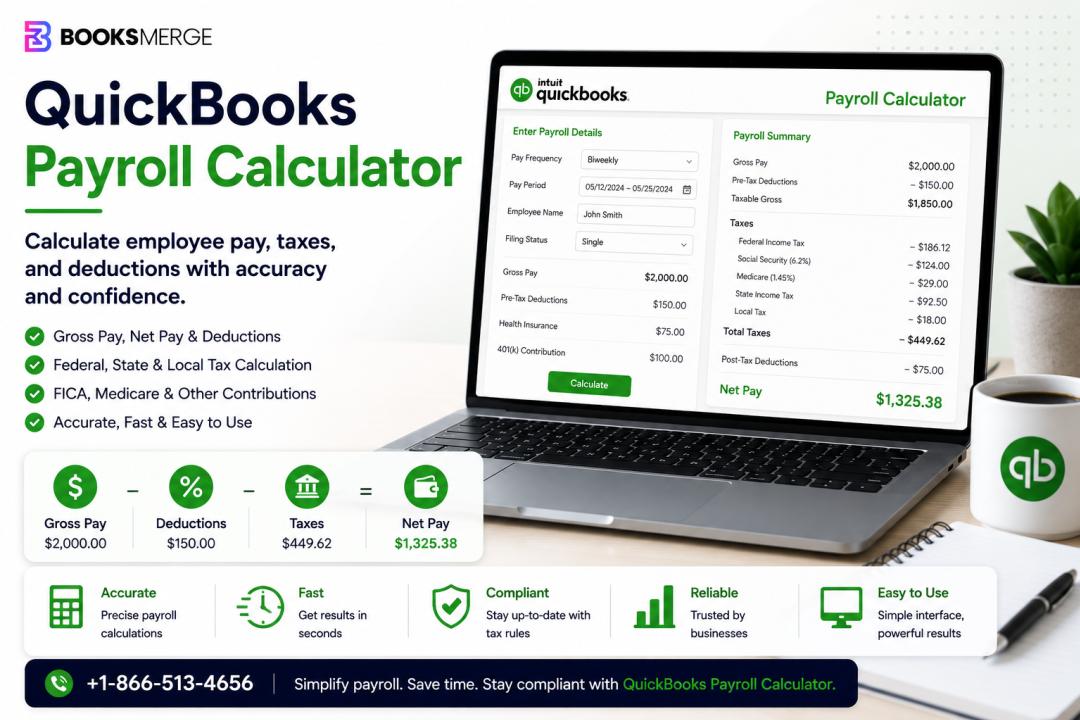
The QuickBooks Payroll Calculator is a free tool designed to help businesses estimate employee pay with accuracy. It calculates gross pay, applies deductions, and provides an estimated net pay based on federal, state, and local tax rules.
In this guide, we will explain how the QuickBooks Payroll Calculator works, its benefits, and how you can use it to simplify payroll processing.
What is QuickBooks Payroll Calculator?
The QuickBooks Payroll Calculator is a free online tool that helps employers estimate employee pay after taxes and deductions. It calculates:
Hourly wages and salaries
Overtime pay
Bonuses and commissions
Federal, state, and local taxes
Payroll deductions
It is designed to give businesses a clear idea of employee net pay before running actual payroll.
This tool helps reduce errors and ensures better financial planning for payroll expenses.
Why Accurate Payroll Calculation is Important
Accurate payroll processing is essential for every business. Incorrect calculations can lead to:
Employee dissatisfaction
Tax penalties
Legal compliance issues
Financial losses
Proper payroll calculation ensures that employees are paid correctly and on time while keeping your business compliant with tax regulations.
Using a payroll calculator helps avoid manual errors and saves valuable time.
How QuickBooks Payroll Calculator Works
The payroll calculator works in a simple step-by-step process to estimate employee pay:
1. Enter Employee Details
You begin by entering basic information such as employee location and pay type. Location helps calculate applicable state and local taxes.
2. Add Pay Information
You must select whether the employee is hourly or salaried.
For hourly employees: Enter hourly rate and hours worked
For salaried employees: Enter salary per pay period
You can also choose pay frequency such as weekly, bi-weekly, or monthly.
3. Include Additional Earnings
You can add extra income such as:
Overtime pay
Bonuses
Commissions
This helps calculate total earnings for the pay period.
4. Enter Tax Information
The calculator uses employee tax details such as:
Filing status
Allowances
Additional withholdings
This helps estimate federal tax deductions.
5. State Tax Details
You may also enter state-specific tax information depending on employee location.
6. Generate Paycheck Estimate
Finally, click on calculate to view the estimated net pay after deductions.
Benefits of Using QuickBooks Payroll Calculator
Using a payroll calculator provides several advantages:
1. Accurate Payroll Estimates
It helps reduce human errors in payroll processing.
2. Saves Time
Automates complex calculations and reduces manual work.
3. Better Financial Planning
Helps businesses understand total payroll costs in advance.
4. Tax Compliance Support
Ensures estimated taxes are aligned with current tax rules.
5. Supports Hourly and Salary Workers
Works for all types of employees, including part-time and full-time staff.
What Payroll Calculator Does Not Cover
While useful, the payroll calculator has certain limitations:
It does not fully account for complex deductions like insurance or retirement contributions
Some state-specific overtime rules may not be included
It provides estimates, not final payroll results
Double-time rules in certain states may not be applied
Businesses should always verify final payroll with official systems or professionals.
Understanding Payroll Deductions
Payroll includes several types of deductions:
Federal Income Tax
Based on employee income, filing status, and IRS guidelines.
FICA Taxes
Includes Social Security and Medicare contributions shared by employer and employee.
State and Local Taxes
Varies by location and funds public services.
Benefit Deductions
Includes health insurance, retirement plans, and other employee benefits.
Wage Garnishments
Court-ordered deductions such as child support or loan payments.
Tips for Accurate Payroll Calculation
To ensure correct payroll processing:
Keep employee data updated
Use correct tax filing information
Track overtime accurately
Review deductions regularly
Use automated payroll tools when possible
Final Thoughts
The QuickBooks Payroll Calculator is a helpful tool for businesses that want to simplify payroll management and improve accuracy. It reduces manual effort, improves financial planning, and helps estimate employee net pay with ease.
However, businesses should still review payroll details carefully and ensure compliance with tax laws.
For expert assistance, payroll setup help, or QuickBooks-related support, you can contact +1-866-513-4656 or visit Booksmerge for more guidance and resources.