Introduction
The average business now runs on a sprawling stack of cloud subscriptions. Industry surveys consistently show that small and mid-sized companies juggle dozens of separate SaaS applications, while larger organizations often pass the hundreds. For most teams, the day starts with logging into one tool for customer records, another for projects, a third for support tickets, and yet more for HR, payroll, and sales tracking.
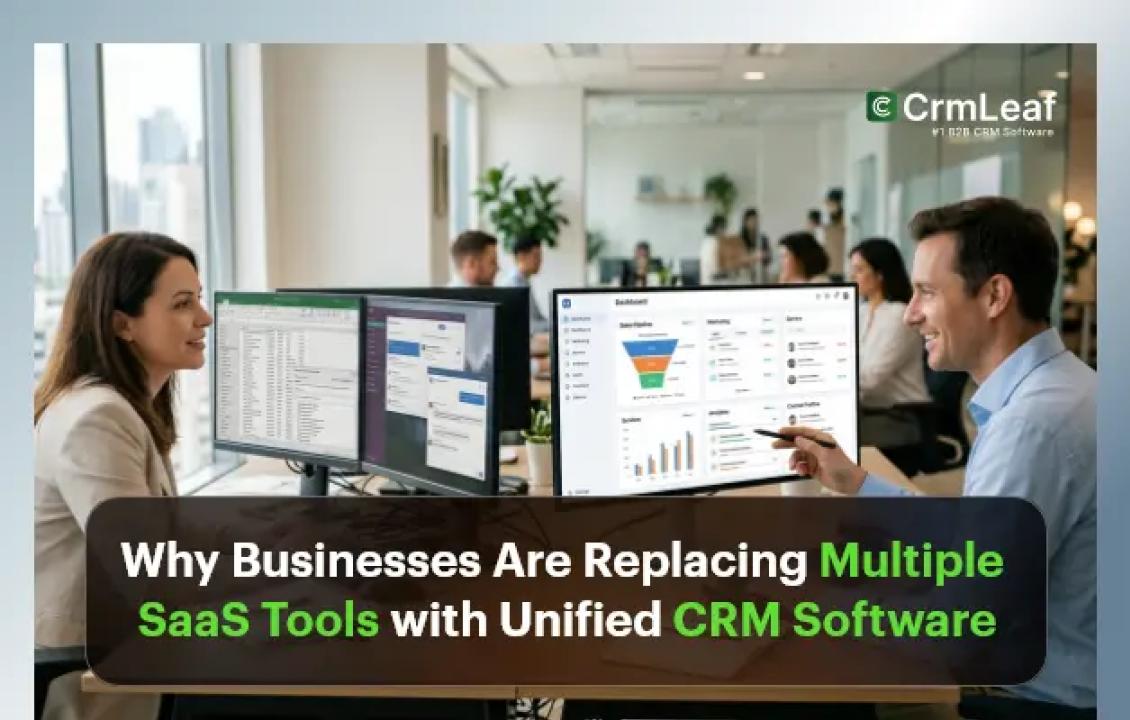
Each of those tools was adopted for a good reason. But stacked together, they create a quiet tax on productivity. Data lives in separate places, reports never quite line up, and staff spend more time moving information between systems than acting on it. That friction is exactly why a growing number of businesses are pursuing SaaS consolidation – replacing their patchwork of apps with a single unified CRM platform that doubles as their core business management software.
Why are businesses replacing multiple SaaS tools? Disconnected apps create data silos, duplicate work, rising costs, and reporting headaches. A unified platform centralizes CRM, projects, HR, and payroll so teams work from one accurate dataset, spend less, and move faster.
The SaaS Explosion Problem
Cloud software made it cheap and fast to solve almost any business problem. The downside is that it also made it easy to accumulate tools no one fully owns. The result is a familiar set of pain points:
- Software fatigue: staff constantly switch contexts between apps, each with its own login, layout, and logic.
- Data silos: customer, project, and employee data sit in separate databases that rarely talk to each other.
- Duplicate data entry: the same client or invoice is keyed into several systems, multiplying the chance of error.
- Integration issues: connectors break, APIs change, and “it should sync automatically” quietly stops being true.
- Rising subscription costs: per-user fees across six or seven products add up fast, especially as headcount grows.
- User adoption challenges: employees avoid tools that feel redundant, leaving expensive licenses unused.