LOGISTICS IS MOVING FASTER THAN EVER, AND TECHNOLOGY IS LEADING THE CHANGE
The logistics industry has always been driven by efficiency. However, in 2026, efficiency alone is no longer enough. Customers expect real-time tracking, faster deliveries, complete transparency, and seamless communication throughout the shipping process. At the same time, logistics companies must deal with rising fuel costs, supply chain disruptions, labor shortages, and increasing operational complexity.
This growing pressure is pushing businesses to rethink how they manage transportation, warehousing, fleet operations, and customer service. According to a report by the World Economic Forum, digital technologies could create more than $1.5 trillion in value for the logistics industry by improving operational efficiency, reducing costs, and enhancing supply chain performance. This highlights why technology investment has become a strategic priority rather than an optional upgrade.
As a result, many logistics providers are moving away from generic software and investing in custom-built solutions designed specifically for their business needs. In this article, we explore the key reasons behind this shift and how custom software is helping logistics companies stay competitive in an increasingly demanding market.
WHY OFF-THE-SHELF SOFTWARE IS NO LONGER ENOUGH
Many logistics businesses initially adopt ready-made software because it offers a quick and affordable solution. However, as operations expand, these systems often struggle to support complex workflows and unique business requirements.
Common challenges include:
Limited customization options
Difficulty integrating with existing systems
Lack of advanced reporting capabilities
Inflexible workflows
Scalability limitations
As companies grow, these limitations can slow operations and reduce efficiency. Custom software addresses these issues by providing solutions tailored to specific operational requirements.
REAL-TIME VISIBILITY HAS BECOME A BUSINESS REQUIREMENT
Customers no longer want to wait for updates regarding their shipments. They expect instant access to accurate information throughout the delivery process.
Custom logistics software enables businesses to provide:
Live shipment tracking
Real-time delivery updates
Automated notifications
Route monitoring
Inventory visibility
This level of transparency improves customer satisfaction while helping logistics teams respond quickly to unexpected disruptions.
AUTOMATION IS HELPING COMPANIES REDUCE OPERATIONAL COSTS
Manual processes remain one of the biggest obstacles to efficiency in logistics operations. Tasks such as dispatch planning, invoice generation, shipment scheduling, and reporting often consume significant time and resources.
Custom software automates many of these repetitive activities, allowing employees to focus on higher-value tasks.
Benefits of automation include:
Faster order processing
Reduced administrative workload
Fewer human errors
Improved operational accuracy
Better resource utilization
Over time, these improvements contribute to substantial cost savings and increased profitability.
SMARTER FLEET MANAGEMENT IS DRIVING BETTER PERFORMANCE
Fleet operations are at the heart of many logistics' businesses. Managing vehicles, drivers, maintenance schedules, fuel consumption, and route optimization can become increasingly complex without the right technology.
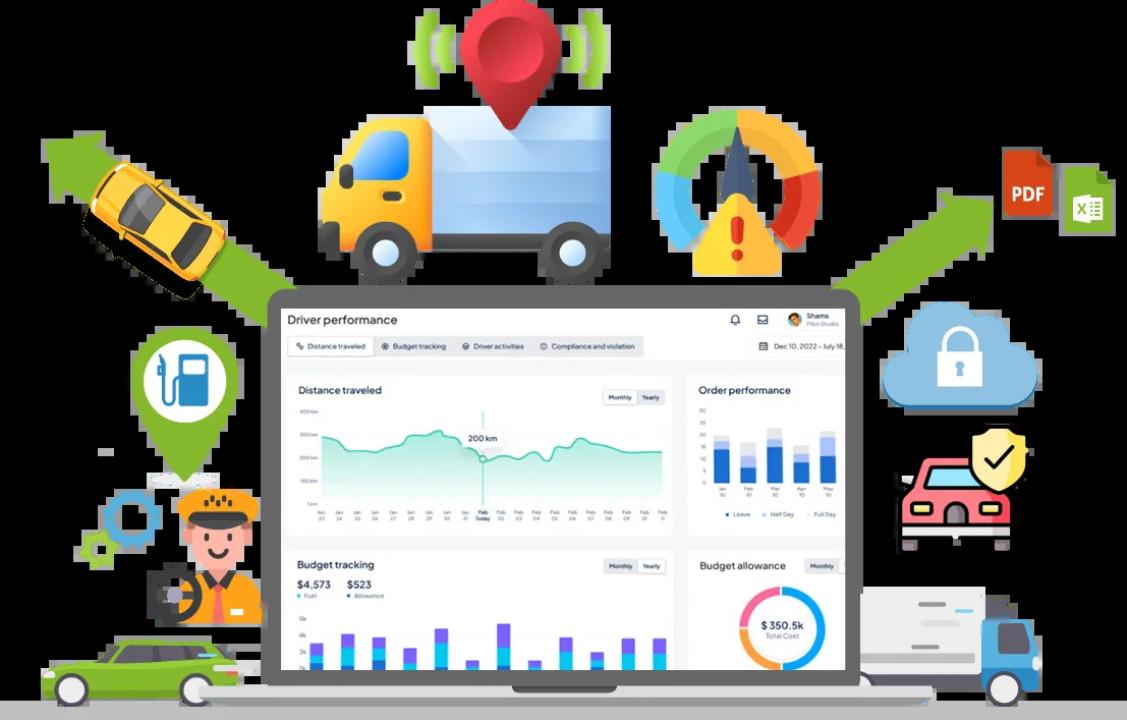
This is where fleet management software development plays a critical role. Custom fleet management solutions provide businesses with greater visibility and control over daily operations.
Key capabilities often include:
GPS tracking
Driver performance monitoring
Fuel management
Preventive maintenance scheduling
Route optimization
Vehicle utilization analytics
These insights help companies improve efficiency while reducing operational risks.
DATA-DRIVEN DECISIONS ARE REPLACING GUESSWORK
Modern logistics generates large volumes of operational data every day. However, data only becomes valuable when it can be transformed into actionable insights.
Custom software provides advanced dashboards and reporting tools that help decision-makers monitor:
Delivery performance
Fleet utilization
Customer satisfaction
Transportation costs
Warehouse productivity
Instead of relying on assumptions, logistics leaders can use real-time data to make informed business decisions.
INTEGRATION IS ESSENTIAL FOR MODERN LOGISTICS OPERATIONS
Most logistics companies use multiple systems to manage different aspects of their business.
These may include:
Warehouse management platforms
Accounting software
Customer relationship management systems
Supplier portals
Transportation solutions
Unfortunately, disconnected systems often create data silos and inefficiencies.
Custom software can integrate these platforms into a unified ecosystem, improving communication and ensuring information flows seamlessly across departments.
CUSTOMER EXPECTATIONS CONTINUE TO RISE
Today's customers want more than timely deliveries. They expect convenience, transparency, and proactive communication throughout the shipping process.
Custom logistics software helps businesses meet these expectations by offering:
Self-service customer portals
Shipment tracking tools
Automated notifications
Digital documentation
Personalized customer experiences
Providing these capabilities can strengthen customer relationships and improve retention rates.
SCALABILITY SUPPORTS LONG-TERM BUSINESS GROWTH
A solution that works for a company today may not be suitable in three or five years.
One of the biggest advantages of custom software is scalability. Businesses can add new features, support additional users, integrate emerging technologies, and expand operations without replacing their entire system.
This flexibility helps organizations future-proof their technology investments while supporting long-term growth objectives.
SPECIALIZED SOLUTIONS DELIVER GREATER OPERATIONAL CONTROL
Many logistics organizations require technology designed specifically for transportation and supply chain operations.
For example, businesses often invest in fleet management software development services to create customized solutions that align with their operational processes and compliance requirements.
Similarly, some organizations adopt tms software development strategies to improve transportation planning, route optimization, carrier management, and shipment execution.
These specialized systems provide a level of control and functionality that generic software platforms often cannot deliver.
SECURITY AND COMPLIANCE ARE BECOMING TOP PRIORITIES
As logistics operations become increasingly digital, cybersecurity risks continue to grow.
Custom software allows businesses to implement:
Advanced security protocols
Role-based access controls
Data encryption
Compliance monitoring
Secure integrations
This helps protect sensitive operational and customer data while supporting industry compliance requirements.
FINAL THOUGHTS
The logistics industry is undergoing a significant digital transformation. Companies that continue relying on outdated processes and inflexible software may struggle to meet growing customer expectations and operational demands.
Custom software development offers a practical solution by providing the flexibility, scalability, and functionality needed to support modern logistics operations. From automation and analytics to real-time visibility and system integration, tailored solutions help businesses operate more efficiently and remain competitive in a rapidly evolving market.
As 2026 progresses, logistics companies investing in purpose-built technology will be better positioned to improve performance, reduce costs, and create stronger customer experiences across the entire supply chain.