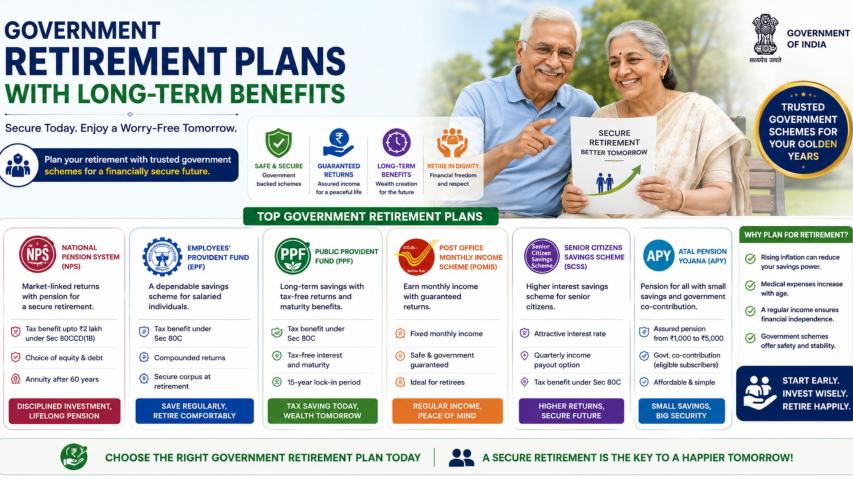

Retirement may seem like a distant milestone, but the decisions you make today can shape the quality of your life decades from now. With increasing life expectancy and rising living costs, relying solely on savings is no longer enough. A well-chosen pension scheme can provide financial stability and help you maintain your desired life>
However, with numerous pension plans available in India, selecting the right one can be challenging. Some offer guaranteed income, while others focus on market-linked growth. The ideal pension scheme depends on your retirement goals, risk appetite, income level, and future financial needs.
If you're planning for retirement in 2026, here's a practical guide to help you choose the best pension scheme in India.
Why Choosing the Right Pension Scheme Matters
A pension scheme is designed to create a steady source of income after retirement. The right plan can help you cover daily expenses, manage healthcare costs, maintain financial independence, and avoid becoming dependent on family members.
Choosing wisely also allows you to take advantage of tax benefits, long-term wealth accumulation, and the power of compounding.
Retirement planning isn't just about saving money. It's about ensuring peace of mind and financial security during the years when regular employment income stops.
Define Your Retirement Goals
Before comparing pension schemes, identify what you want your retirement to look like.
Ask yourself:
- At what age do you plan to retire?
- How much monthly income will you need?
- What life>
- Will you have any outstanding loans?
- Do you expect significant healthcare expenses?
- Do you want to leave a financial legacy for your family?
Having clear answers to these questions will help you estimate the retirement corpus you need and narrow down suitable options.
Assess Your Risk Appetite
Different pension schemes come with different levels of risk.
Conservative Investors
If preserving capital is your priority, government-backed schemes may be suitable. These plans generally provide stable and predictable returns.
Moderate Investors
Those comfortable with moderate fluctuations can consider plans that combine debt and equity investments.
Aggressive Investors
Younger individuals with a long investment horizon may benefit from market-linked pension options that offer higher growth potential over time.
Understanding your comfort with risk is crucial when selecting a retirement plan.
Consider Your Current Age
Age plays a major role in pension planning.
In Your 20s and 30s
You have time on your side. Market-linked schemes with growth potential can help build a larger retirement corpus through compounding.
In Your 40s
Focus on balancing growth with stability while increasing retirement contributions.
In Your 50s and Beyond
Preserving accumulated wealth becomes more important than aggressive growth. Guaranteed income options often become more attractive.
The earlier you start, the easier it becomes to build substantial retirement savings.
Compare Different Pension Schemes
India offers several pension products designed for varying needs.
National Pension System (NPS)
A market-linked retirement solution that offers flexibility and tax benefits.
Suitable for:
- Salaried employees
- Self-employed individuals
- Long-term investors seeking growth
Atal Pension Yojana (APY)
Provides guaranteed monthly pension benefits after retirement.
Suitable for:
- Workers in the unorganized sector
- Individuals seeking predictable income
Public Provident Fund (PPF)
A government-backed savings option with tax advantages.
Suitable for:
- Conservative investors
- Long-term retirement planning
Senior Citizens Savings Scheme (SCSS)
Offers stable returns and regular income after retirement.
Suitable for:
- Retirees seeking safety
- Individuals requiring dependable cash flow
Pension Plans from Insurance Companies
These plans provide retirement income through annuity options.
Suitable for:
- Investors seeking guaranteed payouts
- Those looking for structured retirement income.
Understanding the strengths of each scheme helps align investments with your goals.
Evaluate Tax Benefits
Tax efficiency can significantly improve your retirement savings.
Several pension schemes offer deductions and exemptions under different sections of the Income Tax Act.
Before investing, examine:
- Eligibility for tax deductions.
- Tax treatment of maturity proceeds.
- Taxability of pension income.
- Additional retirement-related exemptions.
A tax-efficient retirement plan maximizes the value of your investments.
Check Liquidity and Withdrawal Rules
Not all pension schemes offer the same level of flexibility.
Review the following carefully:
- Lock-in periods.
- Partial withdrawal provisions.
- Premature exit conditions.
- Annuity purchase requirements.
- Penalties for early withdrawal.
Understanding these conditions prevents unexpected limitations later.
Estimate Your Retirement Corpus
Many individuals underestimate the amount required for retirement.
When calculating your target corpus, consider:
- Inflation.
- Life expectancy.
- Medical expenses.
- Life>
- Emergency funds.
- Existing assets and investments.
A realistic estimate ensures your retirement income remains adequate throughout your later years.
Diversify Instead of Depending on One Scheme
Putting all your retirement savings into a single product may not always be the best strategy.
Combining different pension solutions can offer multiple advantages:
- Growth potential through market-linked investments.
- Stability through government-backed schemes.
- Guaranteed income through annuity plans.
- Liquidity through diversified assets.
Diversification helps balance risk and improve overall retirement readiness.
Common Mistakes to Avoid
Avoiding common retirement planning errors can significantly strengthen your financial future.
Do not:
- Delay retirement planning.
- Ignore inflation.
- Choose schemes without understanding them.
- Focus only on tax savings.
- Underestimate healthcare costs.
- Depend entirely on employer-sponsored benefits.
- Withdraw retirement savings prematurely.
Thoughtful planning today can prevent financial stress later.
Conclusion
Choosing the best pension scheme in India for your retirement goals is not about finding a one-size-fits-all solution. It requires careful consideration of your age, financial responsibilities, risk tolerance, and future aspirations.
Start by defining your retirement objectives, compare available pension options, understand their benefits and limitations, and create a diversified strategy that aligns with your needs. Most importantly, begin as early as possible. Time and disciplined investing remain your greatest allies in building a secure retirement.
A well-planned pension strategy doesn't just provide income after retirement—it gives you confidence, independence, and the freedom to enjoy the years you've worked so hard to achieve.