A driving licence is one of the most
important documents for anyone who wishes to drive legally on Indian roads.
Apart from serving as proof of driving authorization, it also specifies the category
of vehicles a person is permitted to operate. If you have ever looked closely
at an Indian driving licence, you may have noticed abbreviations such as LMV,
MCWG, HMV, or TRANS printed on it.
Understanding What
Is LMV in a Driving Licence is important not only for legal compliance
but also for vehicle registration, insurance, and road safety purposes. The LMV
category determines the types of vehicles a licence holder is authorized to drive
and helps ensure adherence to transport regulations.
What
Is LMV in a Driving Licence?
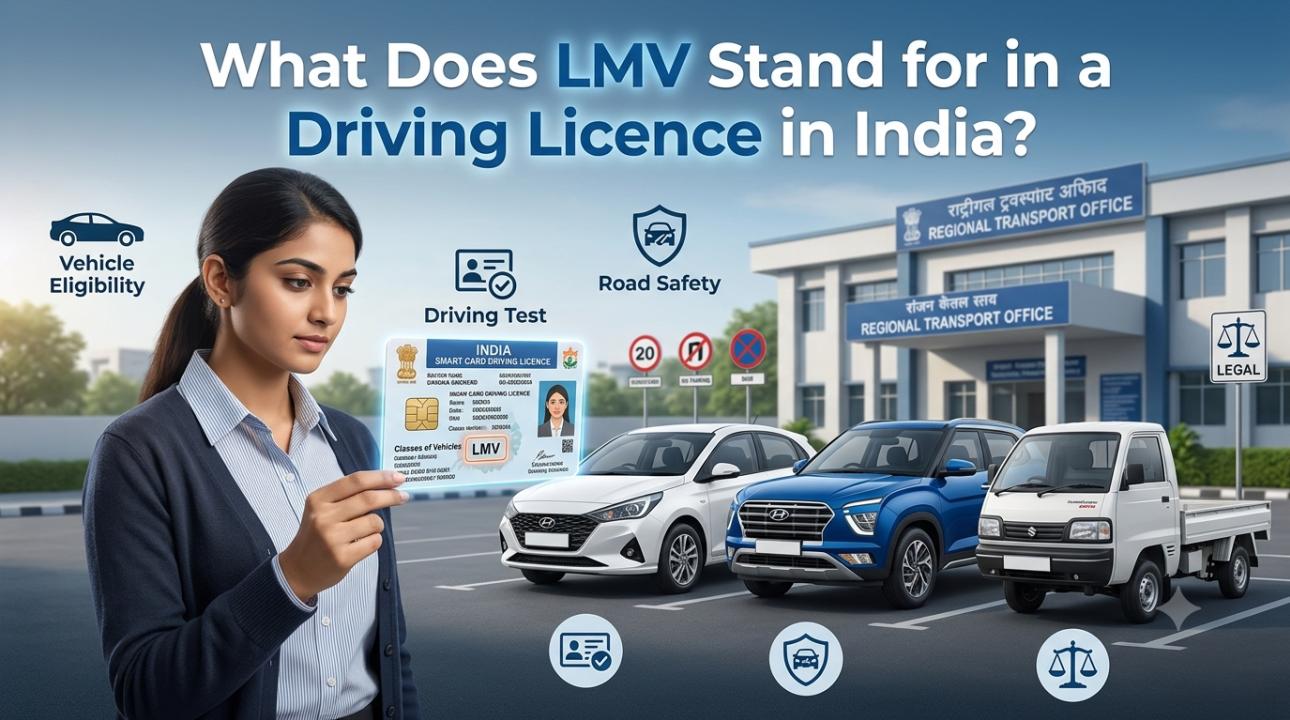
LMV stands for Light Motor
Vehicle.
It is a category on a driving
licence that authorizes an individual to drive certain types of motor vehicles
that fall within a specified weight limit.
The LMV category is primarily
designed for private vehicle users and includes commonly used vehicles such as
cars, jeeps, and small vans.
Having an LMV endorsement on your
driving licence indicates that you have successfully completed the required
driving test and are legally eligible to operate approved light motor vehicles
on public roads.
Why
Is the LMV Category Important?
The LMV classification helps
transport authorities identify the type of vehicle a licence holder is legally
permitted to drive.
It serves several important
purposes:
- Ensures road safety
- Defines driving eligibility
- Supports legal compliance
- Helps insurers verify driver qualifications
- Simplifies vehicle categorization
- Assists law enforcement during inspections
Driving a vehicle outside the
category authorized on your licence can lead to penalties and legal
consequences.
Types
of Vehicles Covered Under LMV
One of the most common questions
among drivers is what vehicles are included under the LMV category.
Generally, LMV covers:
Private
Cars
Most passenger cars used for
personal transportation fall under the LMV category.
Examples include:
- Hatchbacks
- Sedans
- SUVs
- Crossovers
Jeeps
Personal and utility jeeps that fall
within prescribed weight limits are generally covered.
Small
Vans
Light vans used for personal
transportation are often included under LMV.
Pickup
Vehicles
Certain light commercial pickup
vehicles may also qualify under this category depending on their specifications
and applicable regulations.
Non-Transport
Light Vehicles
Vehicles used for non-commercial
purposes and falling within prescribed weight limits are usually covered under
LMV.
Vehicle classification may vary
depending on applicable transport regulations and vehicle specifications.
Weight
Criteria for LMV Vehicles
The LMV category is primarily based
on vehicle weight.
Traditionally, a light motor vehicle
refers to vehicles whose Gross Vehicle Weight (GVW) or unladen weight falls
within prescribed regulatory limits.
This classification distinguishes
LMVs from medium and heavy motor vehicles that require separate licence
categories and additional training.
Understanding vehicle weight
classifications helps drivers ensure compliance with licensing requirements.
Eligibility
Criteria for Obtaining an LMV Licence
Applicants must satisfy certain
conditions before obtaining an LMV driving licence.
Minimum
Age Requirement
Typically, an applicant must be at
least:
- 18 years old for private LMV vehicles
Learner's
Licence
Applicants generally need to obtain
a learner's licence before applying for a permanent driving licence.
Knowledge
of Traffic Rules
Candidates should possess a basic
understanding of:
- Road signs
- Traffic signals
- Driving regulations
- Safety practices
Driving
Test
Applicants must successfully
complete the prescribed driving test conducted by the relevant transport
authority.
Meeting these eligibility requirements
ensures that drivers possess the skills necessary for safe vehicle operation.
How
to Apply for an LMV Driving Licence
The process of obtaining an LMV
licence generally involves several steps.
Step
1: Obtain a Learner's Licence
Applicants first apply for a
learner's licence and complete the required knowledge assessment.
Step
2: Practice Driving
After receiving the learner's
licence, individuals can practice driving under applicable rules and
supervision requirements.
Step
3: Schedule a Driving Test
Once eligible, candidates can apply
for a permanent driving licence and schedule a driving test.
Step
4: Pass the Driving Test
The driving test evaluates:
- Vehicle control
- Road awareness
- Parking skills
- Traffic rule compliance
Step
5: Receive the LMV Licence
Upon successful completion of the
test, the LMV category is added to the applicant's driving licence.
LMV
Licence and Car Insurance
Many vehicle owners are unaware that
their driving licence category can impact insurance-related matters.
Insurance companies may verify:
- Licence validity
- Vehicle category authorization
- Driver eligibility
If a person drives a vehicle without
the appropriate licence category, claim complications may arise.
Therefore, maintaining a valid LMV
licence is important not only for legal compliance but also for smooth
insurance claim processing.
Difference
Between LMV and HMV
Many people confuse LMV with HMV.
LMV
(Light Motor Vehicle)
Covers:
- Cars
- Jeeps
- Small vans
- Light vehicles
HMV
(Heavy Motor Vehicle)
Covers:
- Trucks
- Large buses
- Heavy transport vehicles
- Commercial freight carriers
HMV licences typically require
additional training and eligibility requirements due to the complexity of
operating larger vehicles.
Common
Mistakes Drivers Make Regarding LMV
Several misconceptions exist
regarding LMV licences.
Common mistakes include:
- Assuming LMV covers all commercial vehicles
- Driving unauthorized vehicle categories
- Not renewing licences on time
- Ignoring licence endorsements
- Failing to update licence information
Understanding the scope of the LMV
category helps drivers avoid legal and administrative issues.
Benefits
of Holding a Valid LMV Licence
Possessing a valid LMV driving
licence offers several advantages.
Legal
Driving Authorization
It permits lawful operation of
approved light motor vehicles.
Identity
Proof
Driving licences are widely accepted
as government-issued identification documents.
Insurance
Compliance
A valid licence supports smoother
claim verification.
Increased
Mobility
Drivers gain greater convenience for
personal and professional transportation.
Road
Safety
Proper training and testing help
improve driving standards and reduce accident risks.
Importance
of Licence Renewal
Holding an LMV licence is not
sufficient on its own; it must remain valid.
Timely renewal helps:
- Avoid penalties
- Maintain legal compliance
- Prevent insurance complications
- Ensure uninterrupted driving privileges
Drivers should monitor expiry dates
and complete renewal procedures as required.
Conclusion
The term LMV stands for Light Motor
Vehicle and represents one of the most common driving licence categories in
India. It authorizes individuals to drive various light vehicles, including
cars, jeeps, and certain vans, subject to applicable regulations and weight
limits.
Understanding what LMV means, the
vehicles it covers, and the eligibility requirements associated with it is
essential for every driver. A valid LMV licence ensures legal compliance,
supports road safety, and plays an important role in vehicle ownership and
insurance-related processes. At Square Insurance, vehicle owners
can also explore motor insurance solutions that complement responsible driving
practices and provide financial protection against unforeseen road risks.
Frequently
Asked Questions (FAQs)
1.
What does LMV stand for in a driving licence?
LMV stands for Light Motor Vehicle.
2.
What vehicles can I drive with an LMV licence?
An LMV licence generally permits the
holder to drive cars, jeeps, small vans, and other approved light motor vehicles.
3.
Is an LMV licence sufficient for driving a private car?
Yes, an LMV licence is typically the
required category for driving most private cars in India.
4.
What is the minimum age for obtaining an LMV licence?
Applicants generally must be at least
18 years old to obtain an LMV driving licence.
5.
Does LMV include heavy trucks and buses?
No, heavy trucks and buses require
separate heavy motor vehicle licence categories.
6.
Why is the LMV category important for insurance claims?
Insurance companies may verify
whether the driver held a valid licence for the vehicle being operated at the
time of an incident.